Images chosen by Narwhal Cronkite
Jensen Huang Says Nvidia Now Has ‘Zero Percent’ Market Share in China
Nvidia CEO Jensen Huang recently issued a stark critique of U.S. export policies, claiming they have effectively backfired and reduced Nvidia’s market share in China to “zero percent.” His comments come amidst a growing geopolitical clash between the United States and China over semiconductor technology, sparking broader debates about the efficacy of trade restrictions in the global AI race.

The Impact of U.S. Export Restrictions
Huang’s remarks highlight the dramatic fallout of U.S. export policies aimed at restricting the transfer of advanced semiconductor technologies to China. The policies were part of a broader initiative to curb China’s ability to develop high-performance computing for military purposes. However, according to Huang, these efforts have not had the intended effect. “The policy has already largely backfired,” Huang said during recent comments covered by Tom’s Hardware.
Industry experts suggest that while the restrictions might have temporarily hindered China’s access to cutting-edge chips from U.S.-based companies like Nvidia, they have inadvertently accelerated China’s domestic semiconductor development. “China has proven it has the compute power and infrastructure to train its own AI models,” Huang noted, as reported by Cointelegraph. This statement underscores China’s strides in building indigenous alternatives to products like Nvidia’s A100 and H100 GPUs, which have been instrumental for AI and machine learning workloads globally.
A Shift in Global Semiconductor Dynamics
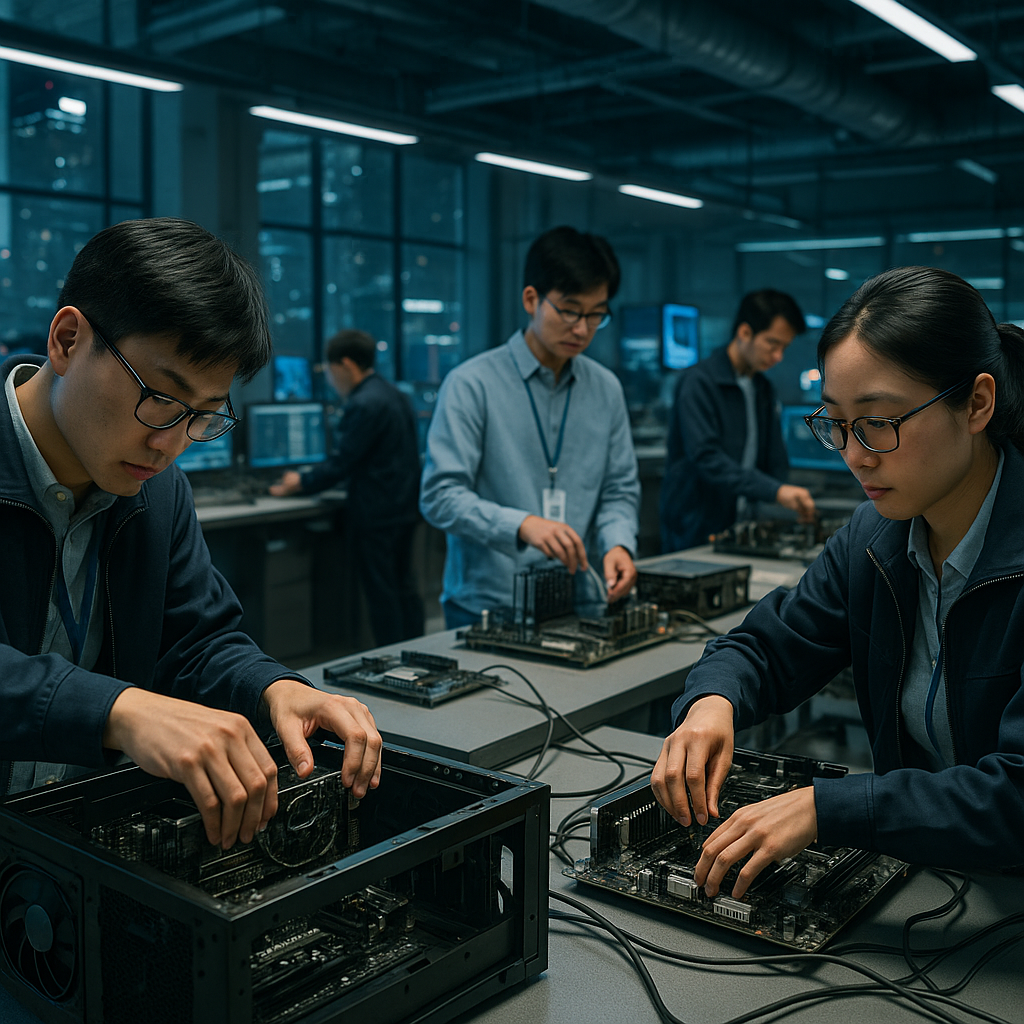
Huang’s assertion that Nvidia now holds zero market share in China also signals a deeper, more structural shift in global semiconductor dynamics. China houses many massive data centers, and restrictions on U.S. technologies have pushed local companies to fill the void left by Nvidia and other American firms.
Companies such as Biren Technology and Moore Threads are rapidly advancing in the AI chip sector with an eye toward competing globally. While these companies remain years behind Nvidia in terms of performance and efficiency, their growth is indicative of China’s resolve to achieve self-sufficiency in key technology sectors. Huang’s comments, paired with industry analysis from TechRadar, suggest that this pivot could allow China to break free from dependency on imported technologies.
“The irony is that the U.S. restrictions may have inadvertently fostered resilience and innovation in China’s chip industry,” noted one tech analyst. This sentiment is echoed in the broader discourse surrounding global semiconductor policy, where many argue export restrictions often result in unintended consequences.
The Geopolitical Tug-of-War
At its core, this issue is emblematic of a wider geopolitical struggle between the United States and China, with semiconductor dominance taking center stage. The Biden administration has doubled down on efforts to hamstring China’s semiconductor ambitions, imposing stringent export controls while subsidizing domestic chip production through initiatives like the CHIPS Act. However, Huang’s assessment raises urgent questions about whether these strategies are delivering the desired outcomes.
“While the export restrictions have certainly slowed China’s access to advanced U.S. technologies, they haven’t stopped the country from progressing,” explained one policy researcher. China’s advancements aren’t limited to hardware—its AI capabilities are growing at an unprecedented rate, further fueled by investments from the government and private entities alike.
The Path Forward for Nvidia and U.S. Policy
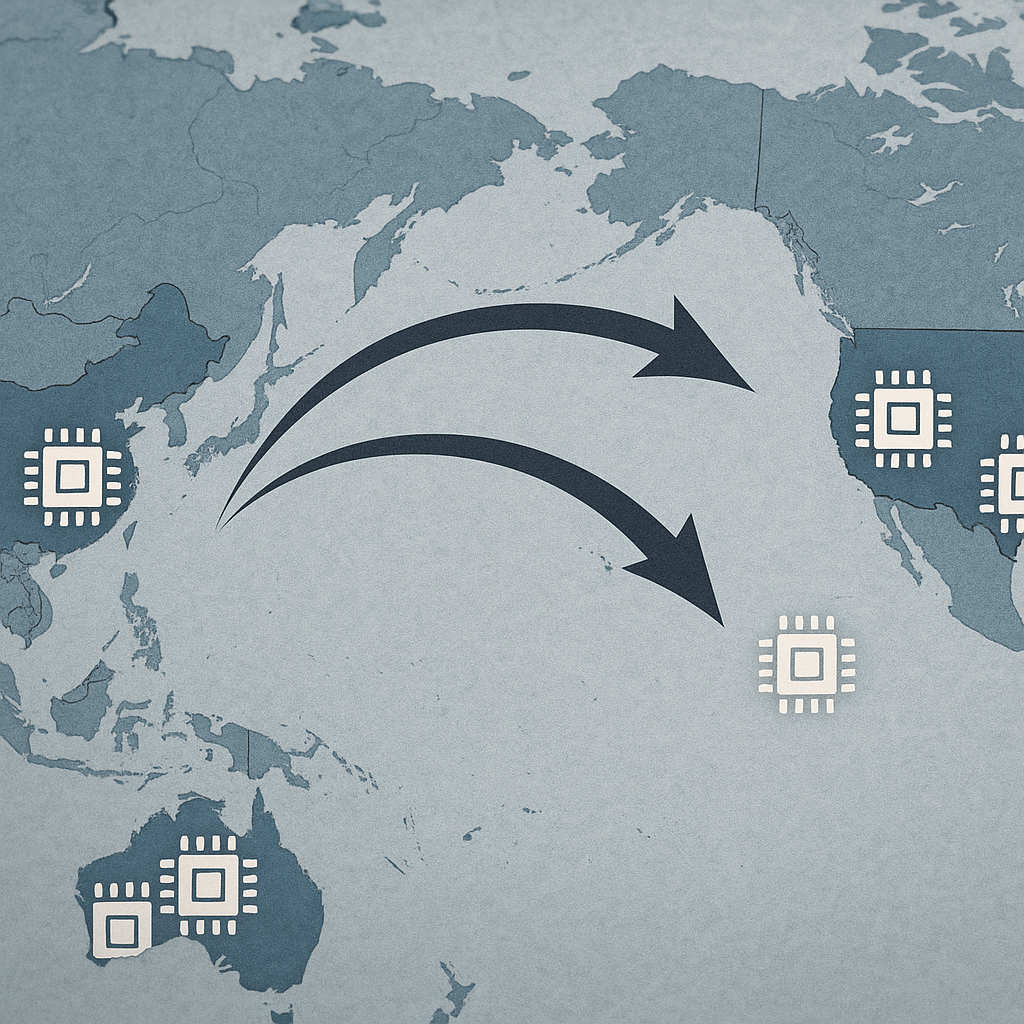
For Nvidia, losing access to the lucrative Chinese market is a major blow. As the world’s largest supplier of GPUs designed for AI workloads, China once represented a significant portion of its annual revenue. Now, Nvidia finds itself deeply reliant on Western markets, even as competitors in countries like South Korea, Taiwan, and Japan ramp up production.
According to The Verge, Nvidia’s recent breakthroughs—including collaborations with OpenAI to deploy GPT-5.5 Codex—show its continued edge in AI hardware. Technologies like Nvidia’s Blackwell systems have boosted efficiency dramatically, delivering as much as 50 times greater performance at a significantly reduced cost. However, Nvidia’s ability to maintain its leadership position in AI computing may hinge on its capacity to find new markets and partnerships in regions excluding China.
Meanwhile, U.S. policymakers face complex trade-offs as they try to balance tech dominance with economic realities. If China achieves self-reliance in semiconductor manufacturing, it may ultimately diminish the leverage of export controls, prompting calls to rethink their strategic merits. The long-term question remains: Can the U.S. remain a leader in AI and semiconductor innovation without access to global markets?
Implications for the AI Industry
Looking ahead, the fallout from Huang’s comments has serious implications for the AI industry as a whole. For businesses reliant on cutting-edge GPUs for training and deploying AI, the bifurcation of technology ecosystems between the United States and China will introduce new layers of complexity. Companies may have to reevaluate their supply chains, technology providers, and geographical strategies as semiconductor tensions escalate.
Furthermore, the advancements made by Chinese tech firms could pose long-term competitive challenges for U.S. companies. While Nvidia’s technical superiority remains undisputed for now, competing against a state-backed semiconductor industry with massive resources may prove daunting over time.
As reported by TechRadar, Nvidia’s success with OpenAI’s GPT-series models demonstrates its ongoing relevance and capability in pioneering AI infrastructure. The next few years, however, will be critical in determining whether U.S.-based companies like Nvidia can adapt to geopolitical shifts while maintaining innovation leadership. Analysts suggest closely watching how Nvidia navigates this difficult landscape, potentially through new alliances or diversification strategies.
Conclusion: What Lies Ahead in the AI and Semiconductor Race
Jensen Huang’s candid remarks are a wake-up call not just for Nvidia but for global stakeholders in the tech industry. As the battle for semiconductor supremacy unfolds, it is clear that trade restrictions are not always a straightforward solution. The AI sector—predicated on cross-border collaboration—is likely to feel the ripple effects of these geopolitical tensions for years to come.
The race is no longer just about developing the next best chip or AI model. Instead, it has evolved into a broader question about supply chain integrity, national security, and the viability of global technology partnerships in an increasingly polarized world.