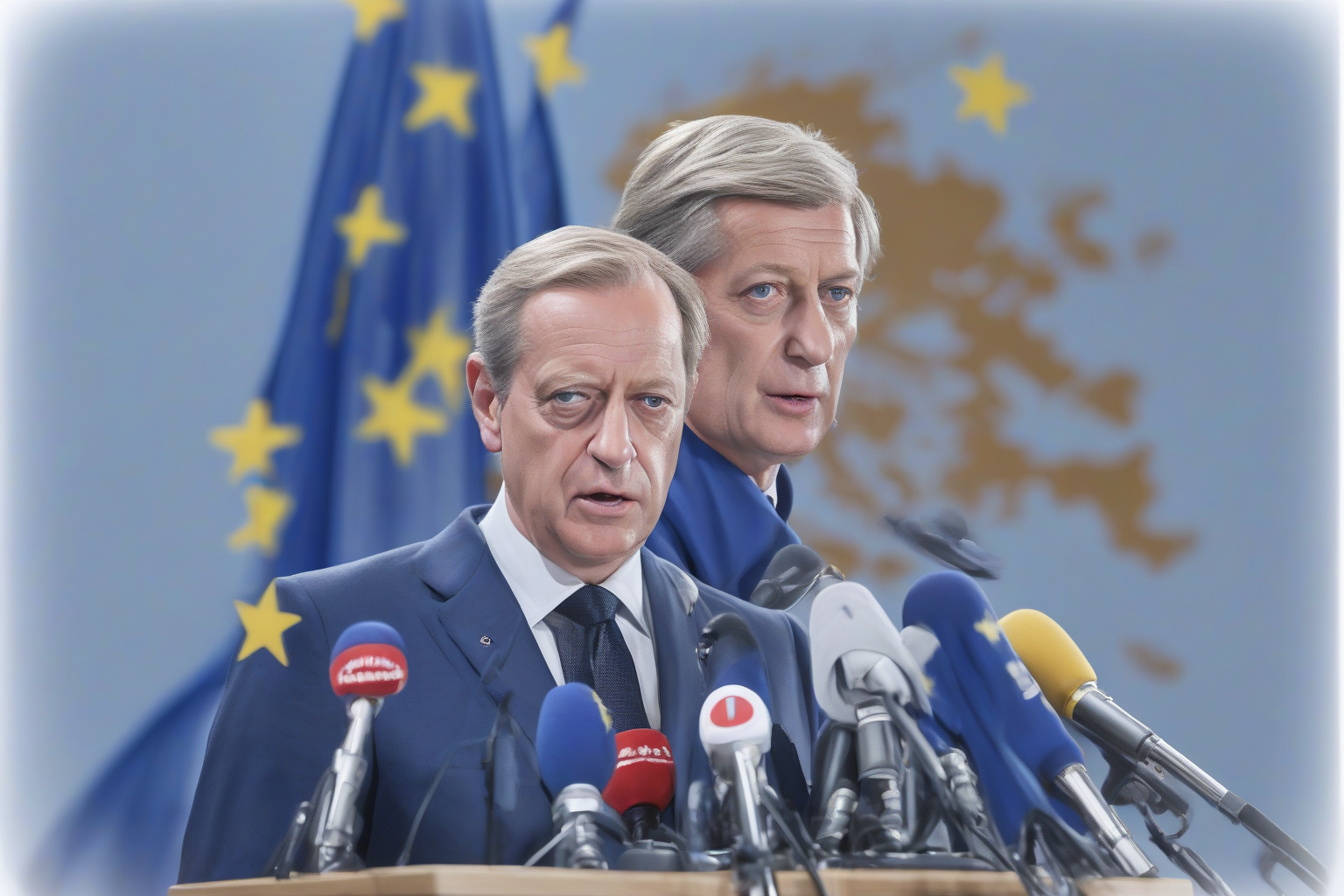
French President Emmanuel Macron said this week that it is “crucial to give Ukraine all the means it needs to defend and protect its civilian population and its infrastructure,” restating Paris’s position as Russia intensifies long-range strikes on Ukraine’s power grid at the start of the heating season. The comments, circulated widely online and picked up by international outlets on Thursday, land in the middle of a European argument that is no longer about whether to help Kyiv but about how much, how fast, and who pays.
The remarks and their timing
Macron’s framing is deliberate. By placing emphasis on civilian protection and infrastructure, the French president anchors continued support in international humanitarian law and in Ukraine’s right of self-defence under Article 51 of the UN Charter, rather than in the contested language of offensive capability. That distinction matters politically in several European capitals, where governments have faced domestic pressure over the scale and cost of military assistance.
It also reflects the shape of the war in late 2026. Russia’s campaign against Ukrainian generation and transmission assets has become a recurring seasonal feature, with Ukrainian officials repeatedly reporting mass drone and missile salvoes aimed at substations, thermal plants and gas facilities. Each wave forces emergency load-shedding in Ukrainian cities and raises the humanitarian cost of the winter months. Protecting that grid is less a matter of frontline advantage than of whether millions of households have heat and light.
Air defence is the bottleneck
Ukrainian and Western officials have consistently identified the same constraint: interceptors. Ukraine operates a layered mix of Patriot, SAMP/T, NASAMS, IRIS-T and legacy Soviet-era systems, alongside a rapidly expanding domestic drone-interceptor programme. The limiting factor is not launchers alone but the magazine depth behind them — the number of missiles available per night when Russia launches hundreds of Shahed-type drones and a smaller number of ballistic and cruise missiles.
France has supplied SAMP/T batteries jointly with Italy, Crotale systems, AASM Hammer guided munitions and Mirage 2000-5F fighters, and has trained Ukrainian pilots and brigades on French soil. Paris has also championed the “coalition of the willing” framework with the United Kingdom, intended to coordinate long-term security guarantees for Ukraine, including reassurance forces in the event of a ceasefire. Macron’s latest comments are consistent with that track: keep Ukraine defensible now, so that any negotiation later happens from a position of strength rather than collapse.
What “all the means” could include in practice
- Additional surface-to-air missile batteries and, critically, interceptor restocks.
- Electronic warfare and counter-drone systems to blunt cheap mass attacks.
- Spare parts, transformers and mobile generation units to repair the grid between strikes.
- Funding for Ukraine’s domestic defence industry, which now produces a large share of the drones used at the front.
- Longer-range strike capability to hit launch sites — the most politically sensitive item on the list.
The money question Europe has not settled
Behind the rhetoric sits an unresolved financing problem. The International Monetary Fund and the European Commission have both flagged a substantial Ukrainian budget gap for 2027, and EU member states remain divided over the proposal to use immobilised Russian sovereign assets — the bulk of them held through Belgium’s Euroclear — as the basis for a large “reparations loan” to Kyiv. Belgium has pressed for watertight legal cover and shared risk; the European Central Bank has warned about precedent and financial-stability effects.
France has backed strong support for Ukraine while navigating its own fiscal consolidation and a volatile domestic agenda. Paris has spent recent weeks managing a fuel supply crisis that prompted emergency talks, alongside continuing unrest and contested claims circulating about injuries during school protests. Those pressures shape how much new money any French government can credibly promise.
Resilience beyond weapons
Ukraine’s defence of its infrastructure also depends on systems that are not conventional arms. Connectivity is one: Ukrainian officials have previously raised alarm over restrictions on Starlink access imposed without warning, a reminder that commercially owned networks underpin both military coordination and civilian emergency services. European efforts to build sovereign satellite communications capacity, including the IRIS² constellation, are partly a response to that dependency.
Data and software procurement have drawn similar scrutiny across the continent, with governments weighing capability against dependence on a small number of suppliers — a debate visible in the ongoing examination of Palantir’s contracts with the British state.
Where the war stands
On the ground, the front has moved in increments measured in square kilometres rather than regions. President Volodymyr Zelensky has said Ukrainian forces liberated 590 square kilometres of territory this year, arguing that battlefield resilience is what pushes Moscow toward negotiation. Russian forces have continued pressure around Pokrovsk and in the Zaporizhzhia and Kharkiv directions, while both sides expand deep-strike drone campaigns — Ukraine against refineries and logistics inside Russia, Russia against Ukrainian cities and the grid.
Independent monitors, including the UN Human Rights Monitoring Mission in Ukraine, have documented civilian casualties from strikes on populated areas throughout the year. Attacks that knowingly target or indiscriminately endanger civilian infrastructure are prohibited under international humanitarian law, and several international bodies continue to collect evidence for potential accountability proceedings.
What to watch next
Three tests will show whether Macron’s words translate into capability. First, whether EU leaders reach agreement on the asset-backed loan mechanism at their next European Council session. Second, whether interceptor production in Europe and the United States rises fast enough to keep Ukrainian batteries loaded through winter. Third, whether the coalition of the willing converts planning documents into committed force structures and timelines.
Macron has made versions of this argument before, and European declarations have often outpaced deliveries. The measure of this one will be counted in missiles delivered, transformers replaced and nights in which Ukrainian cities keep their power on.