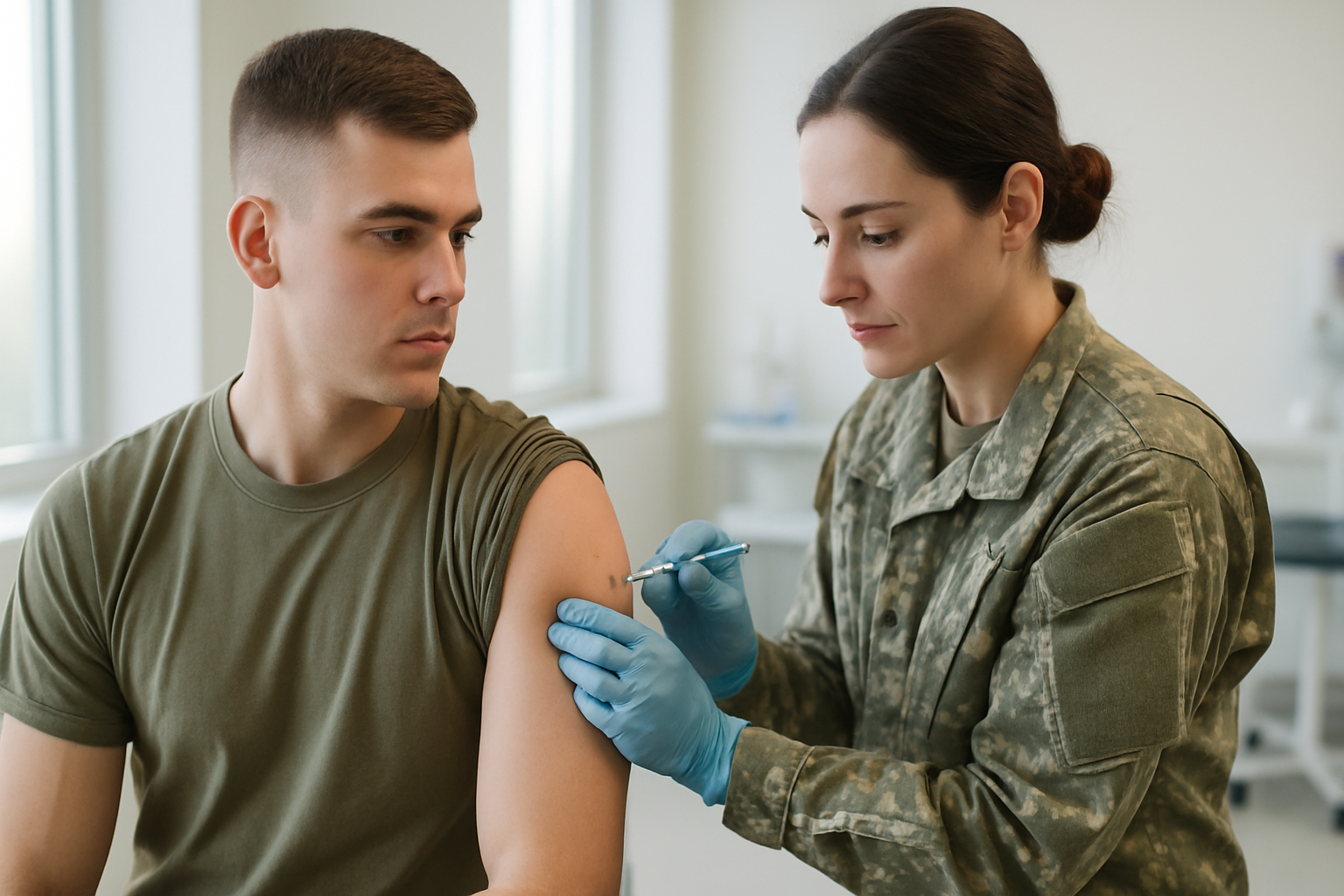
The U.S. military is reinstating mandatory flu vaccination for new recruits across all service branches after a significant influenza outbreak spread through Air Force basic training, ABC News reported this week. The policy reversal comes after the flu shot requirement was quietly dropped in recent years, leaving boot camp populations — some of the most densely housed groups in the country — exposed heading into summer training cycles.
The non-obvious detail here: the flu outbreak hitting Air Force recruits is occurring in summer 2026, well outside the traditional October–March influenza season. That timing has caught military health officials off guard and accelerated the decision to restore the vaccination mandate across all branches simultaneously rather than branch by branch.
How the Air Force Flu Outbreak Triggered a Military-Wide Policy Shift
The Air Force outbreak grew large enough to strain medical resources at basic military training facilities. Recruits living, eating, and training in close quarters are especially vulnerable to respiratory illnesses — a dynamic that military medicine has long recognized. When case counts climbed, commanders escalated the issue to the Pentagon level, and the other service branches followed with reinstatement of their own flu vaccination requirements for incoming recruits.
Military officials have not released a specific case count publicly, but the scale was significant enough to prompt a joint policy response rather than an isolated Air Force fix. The Army, Navy, Marine Corps, and Coast Guard are all returning flu shots to their standard entry-level vaccination schedules.
Why Recruit Populations Are So Vulnerable to Flu Outbreaks
Military trainees are a uniquely high-risk group for influenza prevention failures. They sleep in open bay barracks, share mess hall spaces, and undergo intense physical stress — all factors that lower immune defenses and accelerate person-to-person transmission. A single unvaccinated recruit with influenza can infect dozens of bunkmates within 48 hours.
The military has historically understood this. Flu vaccination was a standard part of the entry processing vaccination protocol for decades. Its removal created a gap that, according to military health officials, directly contributed to the current Air Force situation.
Summer outbreaks, while less common than winter ones, are not unprecedented in closed institutional settings. The CDC notes that influenza can circulate year-round, particularly in settings with high population density and frequent new arrivals — exactly the profile of a military basic training facility.
What the Reinstated Requirement Means for New Recruits
Under the reinstated policy, recruits will receive flu shots during in-processing — the first few days after arriving at basic training — alongside other standard vaccinations including MMR, hepatitis, and meningococcal shots. The timing is designed to build immunity before recruits enter the full training population.
For people currently enlisting or preparing to ship to basic training in mid-to-late 2026, this means flu vaccination is back on the checklist regardless of which branch they are joining. Recruits who have already received a flu shot from a civilian provider may still be required to show documentation or receive a second dose depending on the timing and formulation.
Military vaccination policy sits separately from broader civilian vaccine debates. The Department of Defense maintains independent authority over force health protection requirements, and courts have consistently upheld the military’s right to mandate vaccinations for service members.
Broader Context: Vaccination Gaps and Military Readiness
The reinstatement highlights a tension that military health experts have flagged for years: any loosening of preventive health standards in recruit populations creates readiness risks quickly, because basic training pipelines are continuous. Unlike a civilian workplace where flu season causes scattered absences, a recruit class that gets sick en masse can be set back weeks — disrupting graduation timelines and downstream unit staffing.
Influenza prevention in the military is ultimately a readiness issue, not just a health one. A training flight or platoon sidelined by flu directly delays the delivery of trained personnel to operational units. That calculus is what pushed the military-wide reinstatement rather than a slower, branch-by-branch review.
For readers tracking the broader public health picture, this development fits into a wider pattern of institutions reassessing which pandemic-era policy relaxations have created unexpected gaps. The military’s move could also put pressure on other high-density residential settings — colleges, correctional facilities, and long-term care facilities — to revisit their own flu vaccination policies ahead of the fall 2026 season.
Watch for an official Pentagon statement in the coming days detailing the implementation timeline and whether the requirement will eventually extend beyond recruits to the broader active-duty force.