New York has imposed the country’s first statewide moratorium on approvals for new AI data centers, pausing permitting for large-scale facilities while state regulators assess their growing toll on the electricity grid and local water supplies. The move, reported by Yahoo News, makes New York the first state in the U.S. to take this kind of sweeping regulatory step against the AI infrastructure boom.
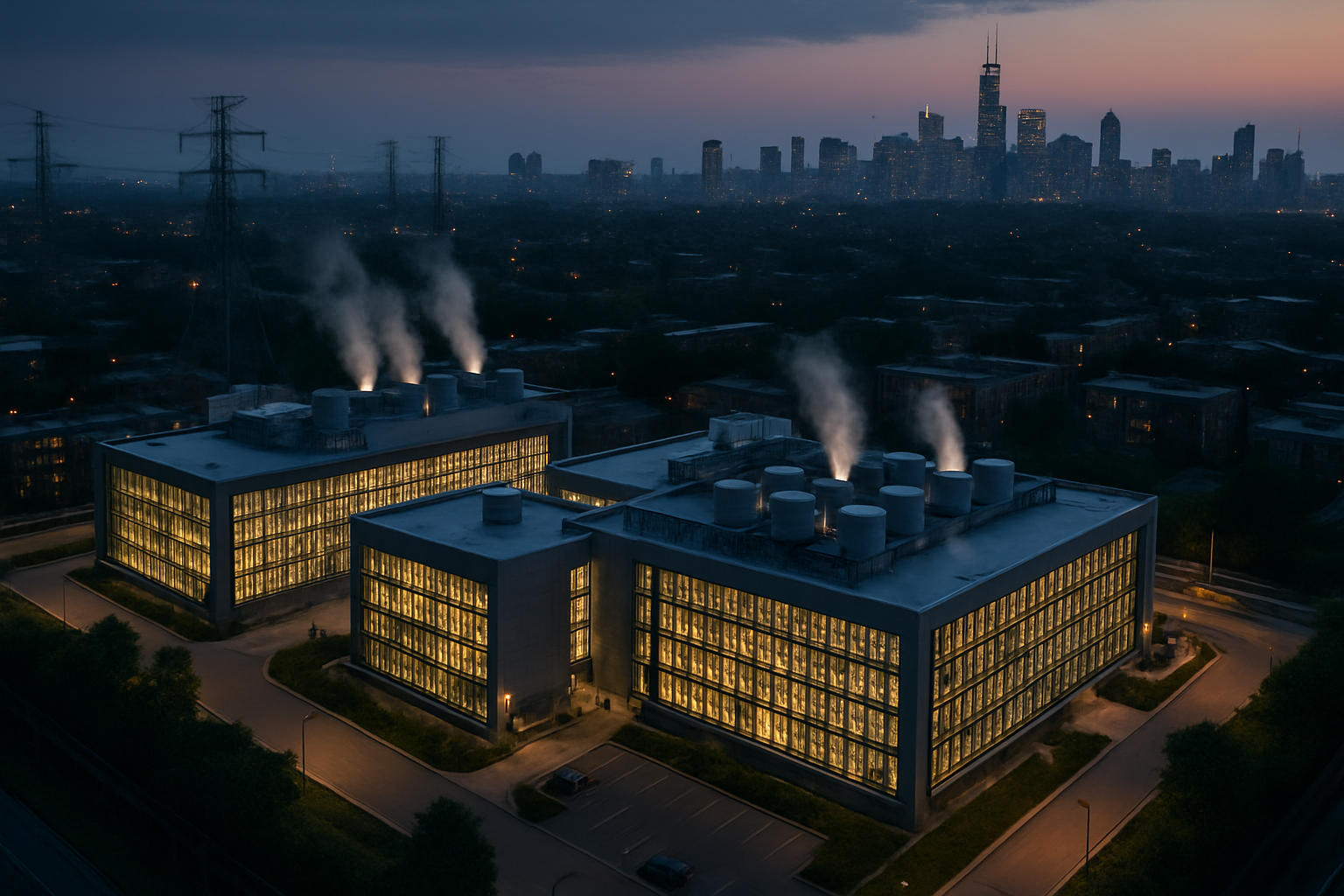
The freeze applies to data centers drawing more than 10 megawatts of power — a threshold that covers hyperscale facilities run by major cloud and AI companies, but largely spares smaller commercial operations. Ten megawatts is roughly enough electricity to supply 8,000 average American households, illustrating just how energy-hungry these facilities are at scale.
Why New York’s grid pushed regulators to act
New York’s power grid has been under increasing strain as data center construction accelerated over the past two years alongside the explosion in AI model training and inference workloads. State regulators flagged that approving new large-draw facilities without reviewing cumulative grid impact risked reliability for residential and commercial customers alike, particularly during summer peak demand periods.
Water consumption added a second pressure point. Many AI data centers rely on evaporative cooling systems that can consume millions of gallons of water per day. In a state where several municipalities already face water stress, regulators argued that each individual permitting decision had been made without accounting for the regional total.
The moratorium is explicitly framed as a pause for study, not a permanent ban. State officials indicated they want a comprehensive review of both energy and water impacts before any new approvals resume — though no specific end date for the freeze has been announced.
The AI power demand problem isn’t unique to New York
New York’s action puts a policy name to a problem that has been building across the country. Data centers already account for roughly 2–3% of total U.S. electricity consumption, and the International Energy Agency projected in early 2026 that AI-driven demand could push that share significantly higher by the end of the decade. Grid operators in Virginia, Texas, and Georgia — states that host the largest concentrations of data centers in the U.S. — have all flagged capacity concerns, but none had moved to a formal moratorium before New York acted.
For AI developers and cloud providers, the freeze adds a new layer of site-selection risk. New York had been attracting data center investment partly because of its proximity to financial services firms in Manhattan and its access to relatively clean electricity from hydropower in the northern part of the state. A prolonged pause could redirect billions in planned capital expenditure to other states or offshore locations.
The energy pressure from AI infrastructure connects to broader questions about how the U.S. will manage AI power demand — a topic that has also surfaced in debates over global energy supply chains and trade policy.
What developers and environmental groups are each watching
Tech industry groups have so far responded cautiously, with some arguing that a blanket megawatt threshold is too blunt — penalizing facilities that may have invested in on-site renewable generation or battery storage alongside those that haven’t. They are expected to push for a review process that credits carbon-free power agreements and efficiency improvements rather than simply freezing capacity.
Environmental advocates, by contrast, are largely supportive of the pause, pointing out that several proposed data center campuses in upstate New York had sought grid connections that would have required burning more fossil gas during peak hours, effectively increasing the state’s emissions while it is legally committed to cutting them under the Climate Leadership and Community Protection Act.
Renewable energy developers see an opening here too. A moratorium that eventually rewards low-carbon facilities over conventional ones could accelerate co-location deals — pairing data centers directly with solar farms or wind installations — which several major AI companies had already been exploring nationally.
No other state has gone this far — yet
State legislatures in California, Illinois, and North Carolina have all seen data center energy bills introduced in 2026, but none has advanced to a full permitting freeze. New York’s move gives other state regulators a concrete model to study, and grid operators in those states are likely to watch how the review process unfolds before deciding whether to push for similar authority.
For New York residents, the immediate practical effect is that no new large data center projects will receive state approval while the review is underway. Projects already permitted are not affected. The review’s findings — on how much grid capacity AI facilities are actually consuming and what mitigation measures are technically feasible — will likely shape data center regulation well beyond New York’s borders.
The next concrete milestone to watch is the state’s publication of the formal review scope, which will indicate how long the process is expected to take and whether the 10-megawatt threshold will be adjusted once regulators have full consumption data in hand.