An 80-year-old woman with late-stage Alzheimer’s disease regained the ability to speak after being administered a 5-gram dose of psilocybin mushrooms, according to a case report covered by TechFixated. The case is drawing significant attention from researchers and the public alike, not just for the outcome, but for what the dosage reveals: 5 grams is considered a high, or “heroic,” dose — far above what most clinical trials currently use.
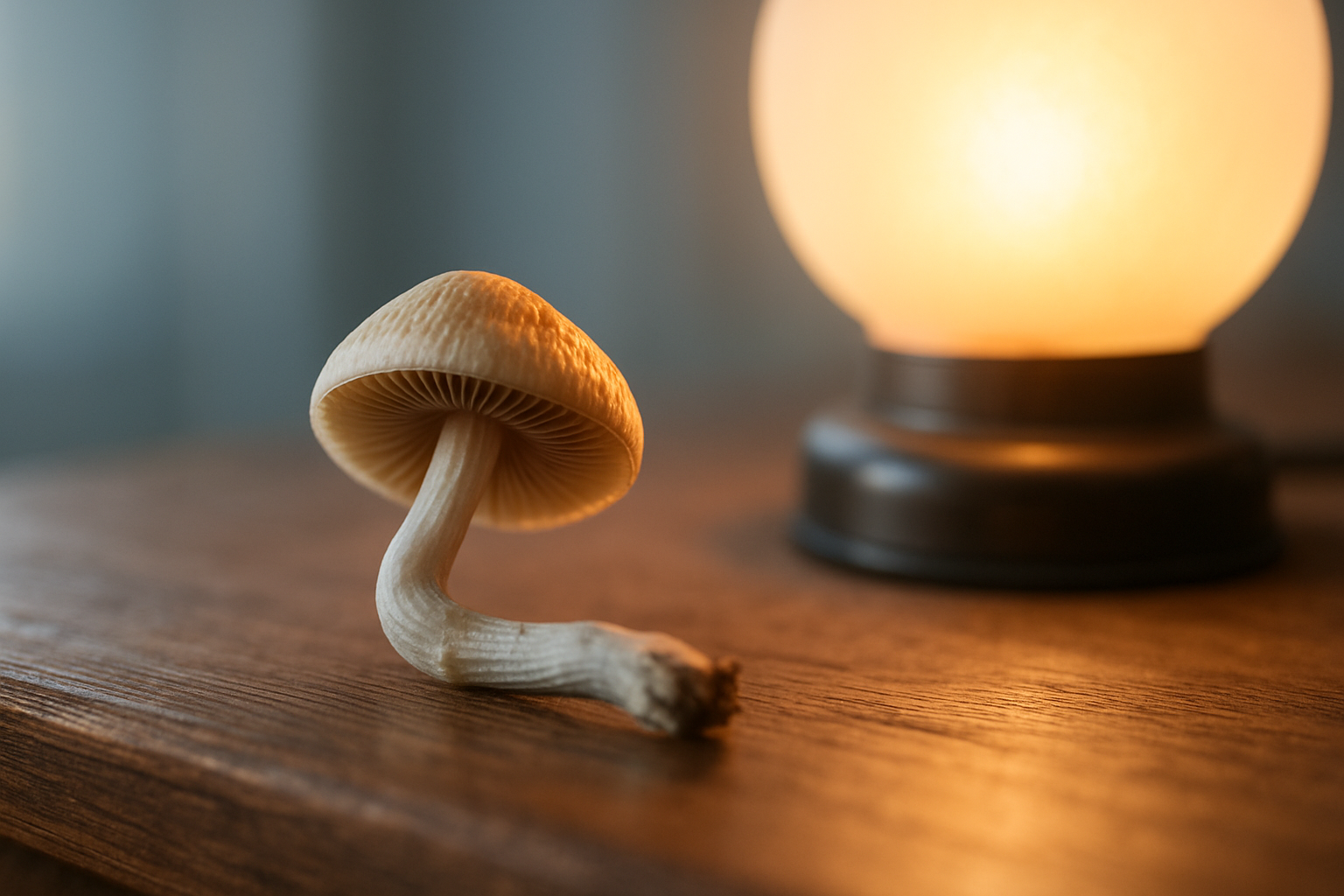
That dosage detail is the one most people gloss over. Standard psilocybin therapy studies typically use 25 milligrams of synthesized psilocybin, equivalent to roughly 1–2 grams of dried mushrooms. This woman received more than double that. The fact that a late-stage Alzheimer’s patient — someone whose verbal communication had already collapsed — responded to that level of exposure is what has researchers paying close attention.
What Happened and Why It Matters for Psilocybin Alzheimer’s Research
Late-stage Alzheimer’s is defined by a near-total loss of language, motor function, and recognition of loved ones. The disease has dismantled billions of synaptic connections over years, and conventional medicine offers no reversal — only management. Against that backdrop, a reported return of speech, even briefly, after a single psilocybin session is extraordinary enough to demand serious scientific scrutiny.
Psilocybin, the active compound in so-called magic mushrooms, works primarily by binding to serotonin receptors — particularly the 5-HT2A receptor — which are densely distributed across the brain’s cortex. Neuroimaging research has shown that psilocybin dramatically increases neuroplasticity and promotes new synaptic connections, sometimes described as the brain entering a more flexible, “fluid” state. In healthy subjects, this typically produces profound perceptual shifts. In a brain ravaged by Alzheimer’s, the theory is that it may temporarily reactivate dormant neural pathways.
Psychedelic therapy for cognitive and psychiatric conditions has gained serious momentum in 2026. Multiple Phase 2 and Phase 3 clinical trials are now underway in the U.S. and Europe, examining psilocybin’s effects on depression, PTSD, and addiction. Alzheimer’s-specific trials remain earlier stage, but this case report adds urgency to expanding that research.
Is This Proof? Not Yet — But Here’s What Scientists Say
Researchers are careful to note that a single case report is not clinical evidence of efficacy. There is no control group, no standardized measurement of the woman’s baseline verbal capacity, and no way to rule out coincidental fluctuation — a known feature of Alzheimer’s called “lucid episodes,” where patients briefly regain clarity without any external intervention.
Still, the case aligns with a growing body of preclinical work. Animal studies have shown that psilocybin can reduce amyloid-beta plaque accumulation — one of the hallmark features of Alzheimer’s — and promote neurogenesis in the hippocampus, the brain region most damaged in early Alzheimer’s progression. Human trials exploring this link are still in their infancy, but this report is likely to accelerate interest and funding.
The risk profile at high doses is also a legitimate concern. A 5-gram psilocybin experience can be psychologically overwhelming even for a healthy adult in a controlled setting. Administering it to an elderly woman with severe cognitive decline raises serious questions about informed consent, psychological safety, and monitoring — questions the broader research community will need to answer before this becomes any kind of standard approach.
The Bigger Picture: Psychedelic Therapy in 2026
The U.S. has seen a rapid shift in how regulators and clinicians view psychedelic therapy over the past several years. Several states have moved to decriminalize or regulate psilocybin for therapeutic use, and the FDA has granted “breakthrough therapy” designation to psilocybin for treatment-resistant depression. Institutional caution around novel treatments remains strong, but the appetite for alternatives — especially in conditions like late-stage dementia where no effective treatments exist — is pushing the science forward faster than many expected.
For families of Alzheimer’s patients, the emotional weight of this story is enormous. An estimated 7 million Americans currently live with Alzheimer’s, and that number is projected to nearly double by 2050. Most families have watched a loved one disappear into silence, and the idea of a single session returning even a fragment of that person is almost impossible not to cling to.
That hope is valid. But experts consistently urge that individual cases — however striking — should drive further research, not self-experimentation. Psilocybin remains a Schedule I controlled substance under federal law in the U.S., and administering it outside a clinical setting carries serious legal and medical risks, particularly for elderly or cognitively vulnerable individuals.
What Comes Next
The case is expected to be cited in upcoming grant applications and research proposals targeting psilocybin’s role in late-stage dementia. Institutions like Johns Hopkins and NYU — both leaders in psychedelic research at Johns Hopkins Medicine — are well-positioned to design the kind of rigorous, controlled trials that could either confirm or contextualize what this 80-year-old woman experienced.
If even a fraction of the effect is reproducible under clinical conditions, psilocybin Alzheimer’s research could become one of the most consequential medical frontiers of the decade. For now, the story of one woman finding her voice again is both a reason for cautious optimism and a compelling argument for funding the science to find out why.