Iran fired a barrage of missiles at northern Israel on June 8, 2026, marking one of the most significant direct escalations between the two countries in recent memory. Ynet News, one of Israel’s leading English-language outlets, was among the first to report the launch and its impact on communities across the north of the country.
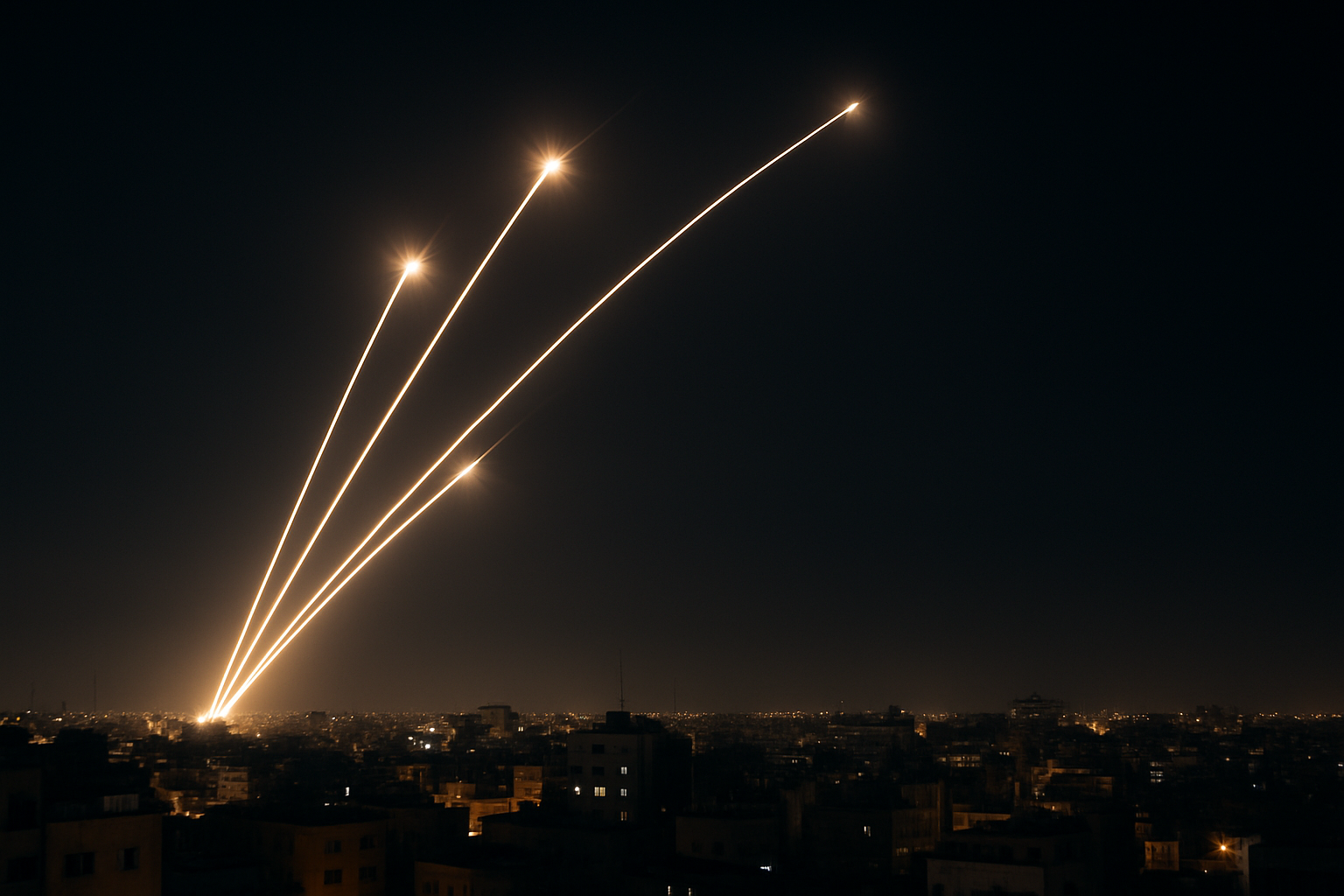
The strike targeted populated areas in Israel’s northern region, triggering air raid sirens across multiple cities and towns. Residents were ordered to seek shelter immediately as Israeli air defense systems were activated to intercept incoming projectiles.
Iran Fires Missiles: What Made This Attack Different
One non-obvious detail that sets this strike apart from previous exchanges: the trajectory of the missiles suggested launches from Iranian territory itself — not from proxy forces in Lebanon, Syria, or Iraq — pointing to a direct state-on-state military action rather than the indirect warfare that has defined much of the Iran-Israel conflict in recent years.
That distinction matters. Iran has historically used regional proxies — including Hezbollah and various Iraqi militia groups — to maintain a degree of deniability in its attacks on Israel. A direct missile launch from Iranian soil removes that buffer entirely and represents a sharp shift in the conflict’s nature.
Air Defense Activated Across the North
Israeli defense forces confirmed that air defense batteries were engaged to counter the incoming missiles. Israel operates a layered missile defense architecture that includes the Iron Dome for short-range threats, David’s Sling for medium-range missiles, and the Arrow system designed specifically to intercept ballistic missiles at high altitude — the category most relevant to a strike originating from Iran.
Emergency services were placed on high alert throughout the Galilee region and other northern communities. Local authorities urged civilians to remain in protected spaces until the all-clear was issued.
A Region Already on Edge
The missile strike comes as the broader Middle East remains deeply volatile. Tensions between Iran and Israel have been building for months, with both sides engaged in a shadow war involving cyberattacks, assassinations, and targeted strikes. This latest escalation, however, crosses into open, declared hostility at a scale that demands a response — and raises immediate questions about what that response will look like.
Iran has consistently stated that its actions are in retaliation for Israeli operations it holds responsible for killing senior military and scientific figures. Israel, for its part, has maintained that it will not allow Iran to develop nuclear capability or establish a permanent military foothold in Syria. Neither side has shown willingness to de-escalate through diplomatic channels in recent months.
The strike also arrives at a sensitive moment for the wider region. Lebanon is still recovering from years of political and economic crisis, and any significant Israeli counter-strike risks drawing Hezbollah back into active hostilities — a scenario that European and American diplomats have spent considerable effort trying to prevent.
International Reaction and What Comes Next
Major world governments are being closely watched for their responses. The United Nations Security Council is expected to convene an emergency session to address the attack. Historically, such sessions produce statements of concern but rarely binding resolutions, given the veto dynamics among permanent members.
Israel has not publicly announced a counter-operation as of the time of publication, but Israeli leadership has a consistent doctrine of responding to direct attacks. Analysts watching the situation expect some form of military response, the scale and timing of which will define the next chapter of this confrontation.
For civilians in northern Israel, the immediate priority is safety. The country has experience managing mass rocket and missile attacks — particularly from the 2006 Lebanon war and repeated Gaza conflicts — but a sustained Iranian ballistic missile campaign would test even Israel’s robust civil defense infrastructure.
The situation is developing rapidly. As more details emerge about casualties, interception rates, and the Iranian government’s official statements, the full picture of this strike will come into focus. For now, the central fact is stark: Iran has fired missiles directly at Israeli territory, and the Middle East is navigating one of its most dangerous moments in years.
For more on how geopolitical flashpoints are reshaping international security relationships, see our coverage of how the Dutch Defense Ministry’s data security concerns over Palantir reflect growing anxieties about defense infrastructure across allied nations. And for a closer look at how investigative bodies pursue accountability in high-stakes cases, read about the Epstein Truth Commission issuing 14 subpoenas at its first meeting.