Two powerful earthquakes struck Venezuela in rapid succession on June 26, 2026, causing buildings to collapse in Caracas and sending residents fleeing into the streets, according to the Associated Press, which was first to report confirmed structural collapses in the capital.
The back-to-back nature of the strikes — two strong tremors hitting within a short window rather than a single mainshock — is what made this event particularly destructive. Buildings weakened by the first quake had no time to be assessed before the second hit, accelerating structural failures that might otherwise have been survivable.
What the Venezuela earthquakes did to Caracas
Caracas, a city of roughly three million people built across a narrow mountain valley, sits near the San Sebastián fault system — one of the most seismically active zones in northern South America. The valley’s geography amplifies ground shaking, a factor that has historically worsened earthquake damage in the capital.
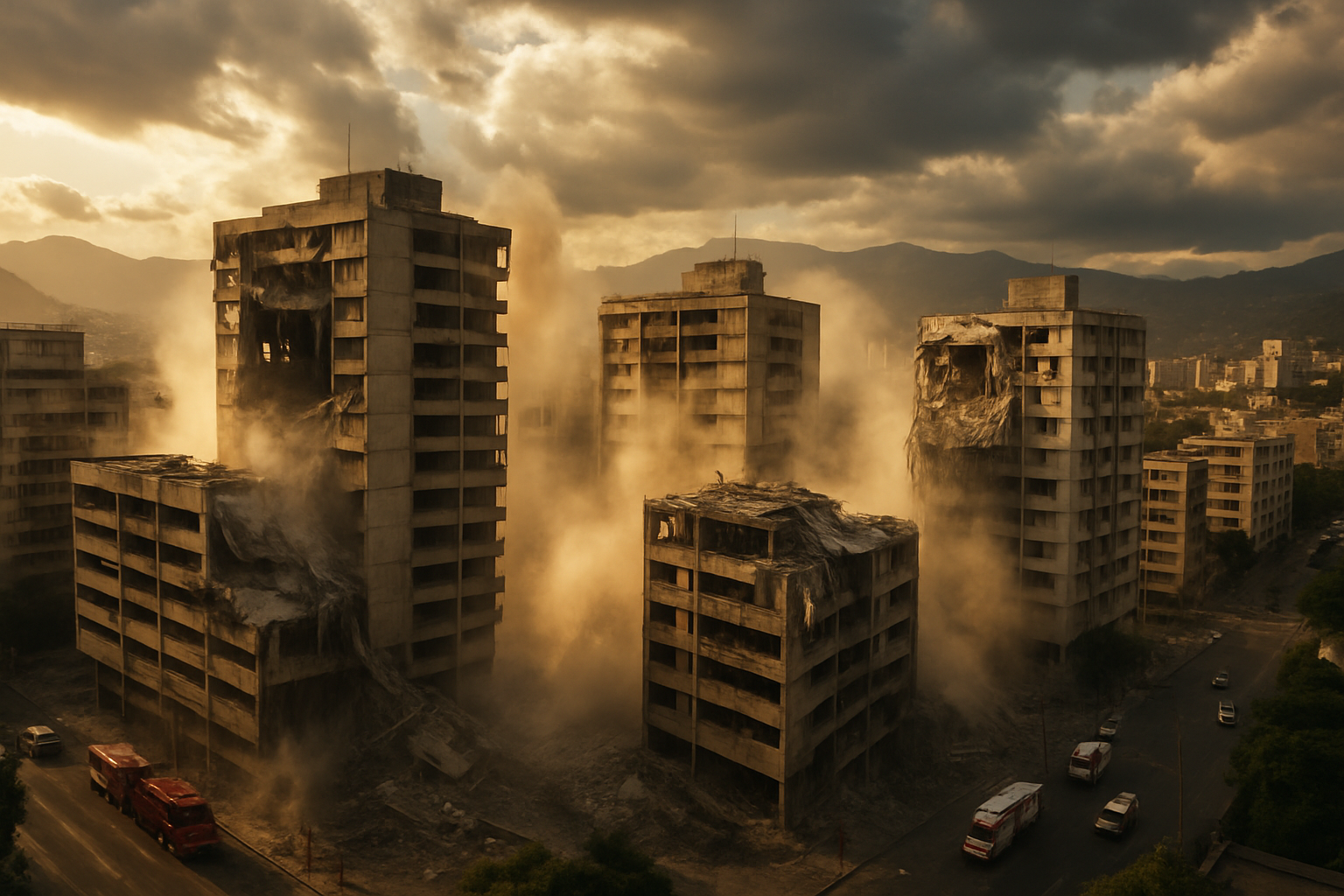
Buildings collapsed in multiple neighborhoods, with emergency teams scrambling to reach trapped residents. Venezuela’s aging urban infrastructure, much of it constructed before modern seismic codes were widely enforced, is especially vulnerable to this kind of seismic activity. The combination of deferred maintenance and outdated construction standards has long put Caracas residents at elevated risk.
Images circulating on social media showed cracked facades, pancaked floors on low-rise apartment blocks, and crowds gathered around rubble piles in residential districts. Dust clouds were visible from several kilometers away.
Search and rescue operations get underway
Venezuelan emergency services deployed rescue teams across the city following the earthquake damage reports. Officials confirmed the government activated its national civil protection system, coordinating response from both military units and civilian first responders.
Power outages were reported in several districts of Caracas, complicating nighttime rescue efforts. Hospitals in the capital began receiving injured patients, though a full casualty count had not been confirmed at the time of publication. Structural engineers were also called in to assess which standing buildings were safe to reoccupy.
Neighboring countries and international observers were monitoring the situation closely. Venezuela’s existing humanitarian challenges — persistent shortages of medical supplies and equipment — raised immediate concerns about the country’s capacity to manage a large-scale disaster response.
A fault line that has rattled Caracas before
Venezuela is no stranger to destructive seismic events. A 1967 earthquake of similar severity killed nearly 300 people in Caracas and exposed the city’s vulnerability to the Caribbean-South American plate boundary, which runs roughly east-west across the northern part of the country.
Seismologists have repeatedly warned that Caracas faces a high probability of a major earthquake in any given decade, given the strain accumulated along the San Sebastián and El Pilar fault systems. The city’s expansion into hillside neighborhoods — many built informally without engineering oversight — has pushed more residents into high-risk zones over the past 40 years.
The Caracas earthquake in 2026 follows a period of increased seismic activity across the broader Caribbean region. Geophysicists have noted that stress redistribution along plate boundaries can trigger clustered events, which may explain the back-to-back pattern observed today.
What comes next for residents and relief efforts
Aftershocks are considered highly likely in the hours and days following the initial Venezuela earthquakes. Authorities urged residents of damaged buildings to stay outside and avoid re-entering structures until professional inspections are completed.
The Venezuelan government has historically struggled to coordinate large-scale emergency responses due to resource constraints, and international aid organizations including the Red Cross were reported to be on standby. Whether foreign governments will offer formal disaster assistance — and whether Caracas will accept it — will shape how quickly the recovery operation scales up.
For a broader picture of how geopolitical tensions can complicate disaster response in the region, our earlier coverage of how national sovereignty disputes affect international cooperation offers useful context on how quickly political factors enter humanitarian situations.
The immediate priority remains search and rescue. With multiple buildings confirmed collapsed and power out in sections of the city, the next 72 hours are the window rescuers typically consider most critical for recovering survivors from rubble alive. Casualty figures are expected to be updated throughout the day as teams reach more affected areas.