Images chosen by Narwhal Cronkite
Volodymyr Zelenskyy Warns of Drone Threat to Russia’s Victory Day Parade
In a bold statement that underscores the escalating tensions between Ukraine and Russia, Ukrainian President Volodymyr Zelenskyy suggested that Ukrainian drones could potentially target Moscow’s May 9 Victory Day parade. This annual event, held at Red Square, commemorates the Soviet Union’s victory over Nazi Germany in World War II and has long been a symbolic pillar of Russian national pride. If Ukrainian drones do attempt such a strike, it would represent a significant milestone in Ukraine’s efforts to expand its military activities deep within Russian territory.

Rising Stakes Amid Intensified Drone Warfare
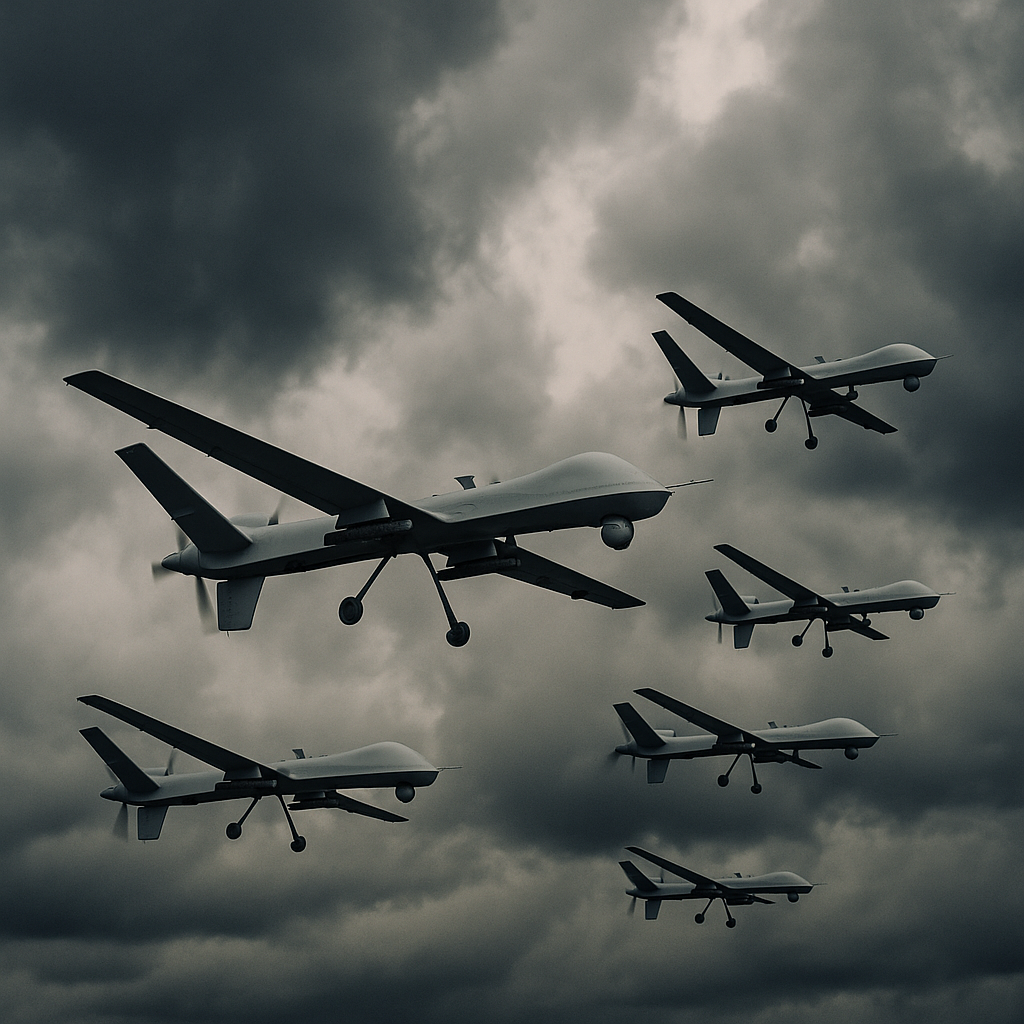
The possibility of a drone strike during such a significant event throws a spotlight on the evolving nature of modern warfare. As reported by Al Jazeera English, recent months have seen Ukraine conducting increasingly daring long-range drone operations, penetrating deep into Russian airspace. This technological leap has allowed Ukraine to strike oil facilities and military infrastructure far from the frontlines. The speculation about targeting the Victory Day parade exemplifies Kyiv’s willingness to challenge not only Russian military strength but also the Kremlin’s carefully crafted symbolism.
Russia’s reliance on drones has also been a defining feature of its military approach in Ukraine. According to Yahoo Entertainment, despite ceasefire agreements for Orthodox Easter, Russian drone strikes continued, prompting criticism from Ukrainian officials who accused Moscow of violating its own declared truce. The prevalence of drone warfare on both sides has transformed the nature of the conflict into one where unmanned systems play a pivotal role in both offensive actions and defense.
The Strategic and Symbolic Implications
Beyond its logistical impact, the potential targeting of Russia’s Victory Day parade carries heavy symbolic weight. Victory Day is deeply ingrained in Russian culture and is used by the Kremlin to rally domestic support and fortify nationalist sentiment. A successful Ukrainian attack on this occasion would not only be a blow to Moscow’s narrative of invulnerability but could also serve as a morale booster for Ukraine amidst an ongoing and grueling conflict.
Analysts remain divided about the feasibility and risks of such an operation, both military and political. On one hand, it could signal to the world that Ukraine retains the technological edge and resolve to hit high-value symbolic targets. On the other hand, escalating drone warfare risks provoking retaliatory strikes from Russia, potentially pushing Europe closer to the brink of further destabilization. As reported by Al Jazeera English, recent Ukrainian strikes have already prompted new threats from Russia against European states offering logistical support to Kyiv.
Lessons from Previous Drone Deployments
Ukraine’s drone capabilities have evolved significantly since the start of the conflict. According to reports from Al Jazeera English, Ukrainian forces have even operated beyond their borders, with Ukrainian interceptors recently deployed in the Middle East to down Iranian-manufactured drones. This expanding operational scope highlights Kyiv’s growing expertise in unmanned aerial systems (UAS), which many believe could be the defining factor in tilting the balance of power in the conflict.
Moscow, too, has leaned heavily on drone warfare, often relying on Iranian-made Shahed drones for its attacks on Ukrainian infrastructure. These aerial campaigns have devastated civilian and energy infrastructure across Ukraine, deepening the humanitarian crisis. However, Kyiv’s ability to retaliate with its own advanced drones indicates the tit-for-tat progression of aerial warfare capabilities in this conflict.

What Could Happen on May 9?
While President Zelenskyy’s warning has captured international headlines, questions remain about what Ukraine would hope to achieve through such a strike. Would it merely be a symbolic gesture to illustrate Moscow’s vulnerability, or would it aim to disrupt command-and-control structures or reinvigorate global attention on the conflict? These uncertainties leave military analysts and geopolitical observers speculating about Kyiv’s intentions.
For Russia, the stakes are equally high. Victory Day is not just an annual celebration but an assertion of Russia’s military legacy and projection of power. Any successful attack would therefore be a direct embarrassment for Moscow and an indictment of its ability to secure even its most high-profile events. In light of the threat, increased security measures—such as no-fly zones and drone-jamming systems—are likely to be deployed around Moscow to mitigate the risk.
What to Watch Next
The coming weeks will be critical in understanding how these dynamics evolve. Ukraine’s use of drones to target symbolic and logistical assets could further escalate tensions at a time when diplomatic avenues for resolution seem increasingly slim. Western allies of Kyiv may find themselves drawn yet deeper into the conflict as Russia continues to signal its hostility towards those aiding Ukraine.
Observers will closely monitor any Ukrainian military activity leading up to May 9, as well as Russia’s countermeasures to safeguard its event. The Kremlin’s response to Zelenskyy’s warning, whether through preventive action or heightened rhetorical posturing, will also offer insights into Moscow’s strategic calculations.
Ultimately, while the specter of drones disrupting Moscow’s Victory Day parade captures international attention, it also serves as a poignant reminder of how modern technologies are reshaping the contours of war—where symbolism and strategy increasingly coexist on the battlefield.