Images chosen by Narwhal Cronkite
As Economic Despair Mounts, Putin Faces Dissatisfaction Over Ukraine War
For nearly four years, Russian President Vladimir Putin has weathered the consequences of his invasion of Ukraine, but mounting economic despair and military failings may now be fracturing his authority at home. Amid failed offensives, growing economic pressure, and visible frustration from Russian officials, cracks in public and institutional support are beginning to show.
Public Sentiment Shifts After Years of Conflict
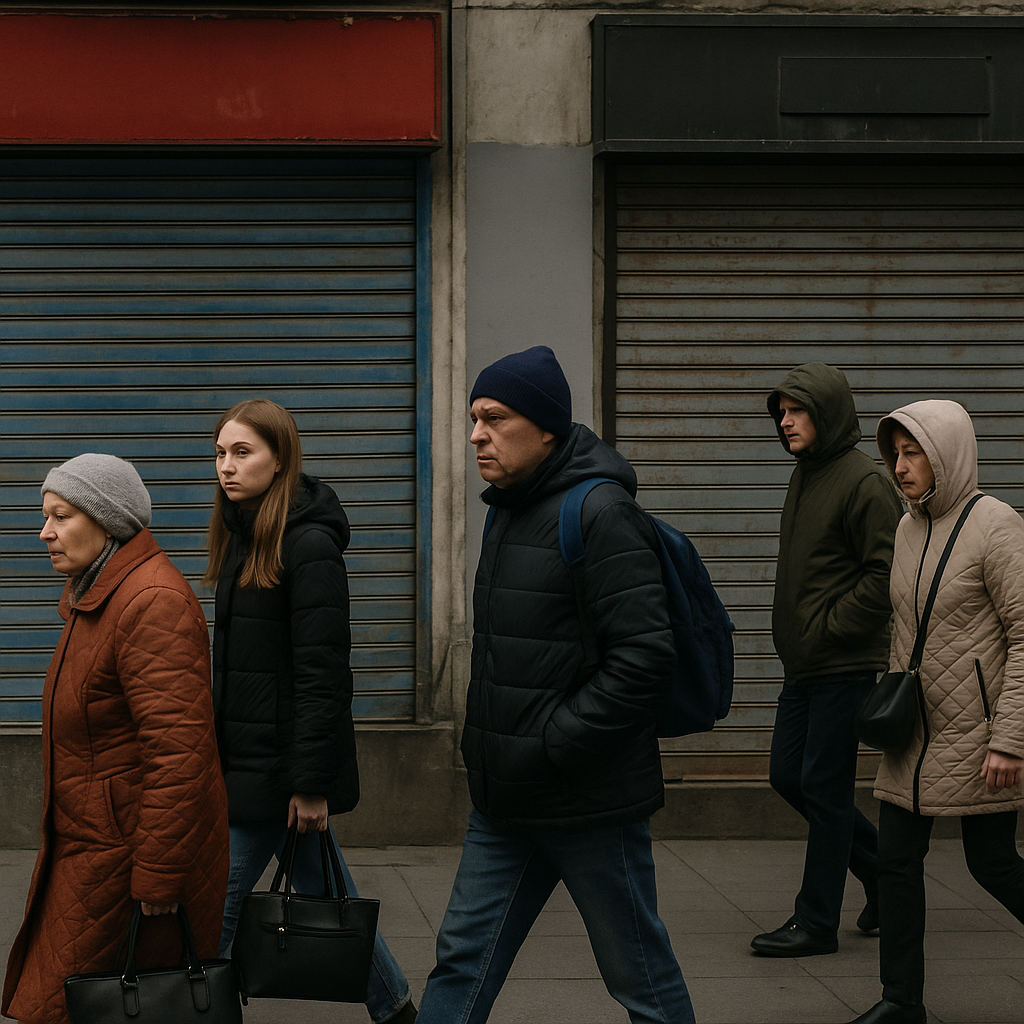
“The overall mood is that’s enough already,” one anonymous Russian official admitted last week, as reported by the Washington Post. “It seems to everyone that it’s been going on for longer than World War II…and at the same time, we can’t even take one region.” These comments come as Russian forces struggle to achieve lasting control in Ukraine’s Donetsk region, one of the Kremlin’s initial objectives when launching the war in February 2022.
Now, more than four years later, frustrations are being voiced not just by ordinary citizens but by officials within the government. Even Russia’s state-owned pollster reports a drop in Putin’s approval rating, which has fallen from 77.8% at the start of 2026 to just 65.6% in April. Comparatively, pre-war approval levels had regularly exceeded 80%, a near-consensus the Russian leader once appeared to enjoy.
At the root of this dissatisfaction lies a combination of economic hardship and battlefield losses. Putin’s failure to secure a decisive victory in Ukraine has left Russian forces overextended, with shrinking territorial hold and continual losses to Ukraine’s increasingly advanced weaponry. Combined with heavy Western sanctions, Russia’s long-term stability, both at home and abroad, faces unprecedented uncertainty.

Economic Pressure Takes Its Toll
On the economic front, the situation is no less grim. Earlier this year, Putin himself revealed that Russia’s GDP contracted during the first two months of 2026, signaling deeper struggles than the Kremlin predicted. Maxim Reshetnikov, Russia’s Economic Development Minister, recently underscored the stark challenges, acknowledging that “reserves have largely been used up,” placing an almost unmanageable strain on the country’s macroeconomic environment.
These difficulties have been compounded by Ukraine’s strategic strikes on key infrastructure within Russia. Long-range drones have hit oil-export hubs critical to the nation’s economy, cutting into government revenues needed to maintain military mobilization. Ukraine’s use of homegrown defense technology, combined with continued Western support, has created a scenario where even Russia’s largest state-owned enterprises are showing cracks under pressure.
The fallout extends beyond major institutions. Ordinary Russians are increasingly feeling the pinch of prolonged economic headwinds, with inflation climbing and localized labor shortages growing due to war mobilizations. As businesses attempt to cope with rising operational costs, wages have seen incremental increases, but these adjustments fail to meet the overarching economic demands families are grappling with daily.
Strategic and Morale Challenges Escalate
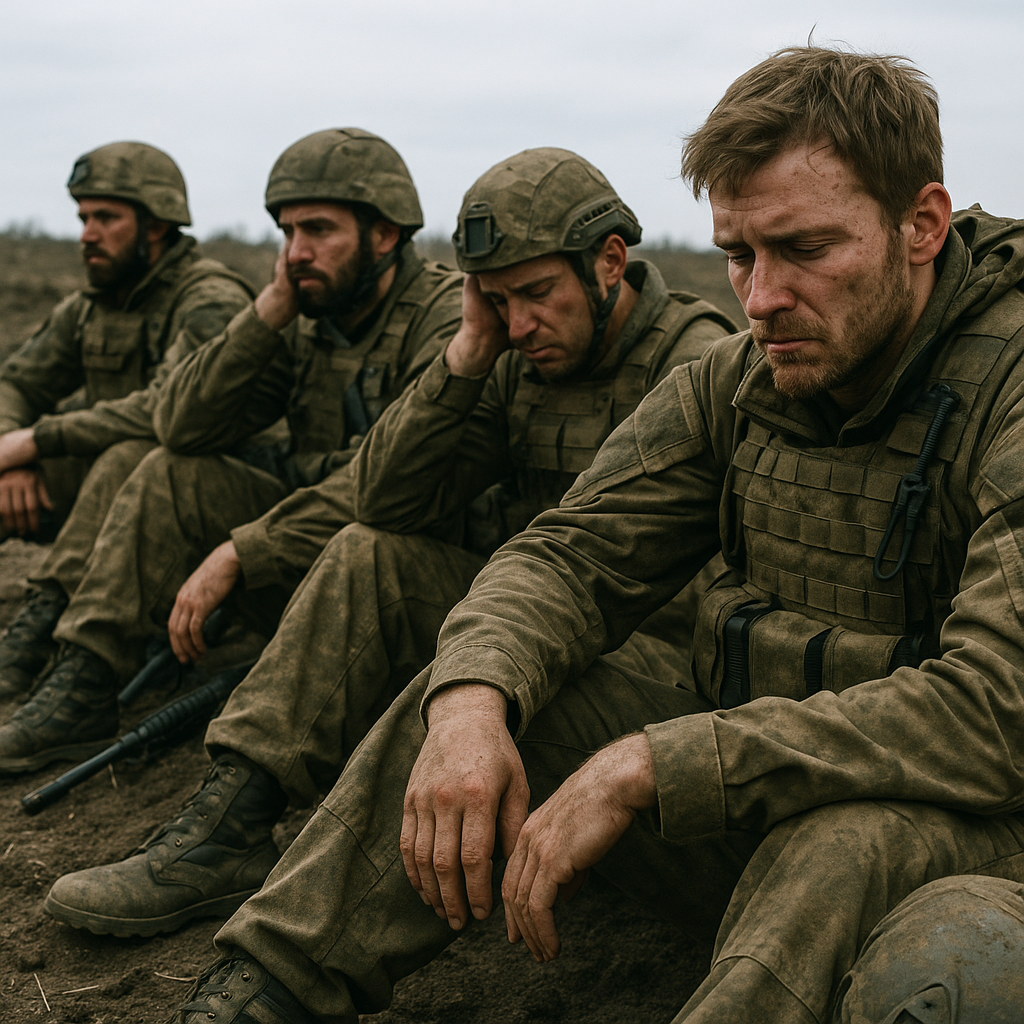
On the battlefield, Ukraine has turned the tide against Russian forces using a mix of Western-supplied weapons and cutting-edge drone technologies developed domestically. The paralysis of Russia’s forces has grown even more apparent as they failed to achieve significant territorial gains in April, marking the first net loss of land since 2024.
This military stagnation further exasperates political and public frustration. With troop morale already low, analysts believe the Kremlin’s decision to scale back this year’s Victory Day parade—a symbolic event highlighting Russia’s triumphs during World War II—may reflect concerns over how to manage public perception amid ongoing failures. Over the past few years, Victory Day celebrations have served as a critical tool to rally nationalistic sentiment, but this decision may signal that the Kremlin itself recognizes the celebration would now only highlight a lack of military success in Ukraine.
Putin’s Path Forward Grows Narrower
Political observers say Putin’s options for reversing the situation are dwindling. Internally, there have been calls to reallocate domestic resources to address labor shortages and economic stagnation. But efforts like central bank interest rate cuts—meant to spur economic activity—have yet to provide measurable relief.
Externally, Russia faces increasingly unified Western opposition. Kyiv’s successful long-range strikes and drone campaigns suggest that advanced technology, backed by a coalition of NATO countries, is elevating Ukraine’s expertise and further diminishing Russia’s battlefield leverage. Indeed, the lack of access to key technologies such as SpaceX’s Starlink internet service has created additional challenges for Russian military operations.
Perhaps most critical is the growing erosion of public trust in Putin’s leadership during one of the most turbulent periods in modern Russian history. With tangible signs pointing to a weakening grip on public confidence, experts argue that the window for Putin to make a decisive move in Ukraine is closing rapidly.
What Lies Ahead
In the short term, both Moscow’s leadership and ordinary citizens face harder decisions. Will Russia continue its war effort despite diminishing support, or will pragmatic voices within the government force Putin to reassess and pivot toward de-escalation? These questions highlight a crossroads not only for the Kremlin but for Russia’s place on the world stage.
Kyiv has signaled no intent to back down, buoyed by domestic resilience and strengthened alliances. In contrast, public frustration in Russia over inflation and the war’s human toll may encourage further pushback against continued escalations.
Observers also point to the potential for global repercussions. Should Russia scale its participation in the conflict, markets may stabilize slightly, offering relief to global supply chains currently impacted by energy and food price volatility. On the other hand, military adventurism may spur stronger sanctions, driving deeper economic crisis at home.
The next phase of this hard-fought conflict presents more uncertainty than stability. As Russia struggles to reclaim its footing, the world will watch how its internal and external strategies evolve in the face of growing economic despair and military losses.