Ukrainian President Volodymyr Zelenskyy publicly defended fires burning in Moscow on June 18, 2026, calling them a direct and “justified response” to years of Russian missile and drone strikes on Ukrainian cities. The statement, reported by Ukrainska Pravda, came as footage of fires in the Russian capital spread across social media and international news outlets.
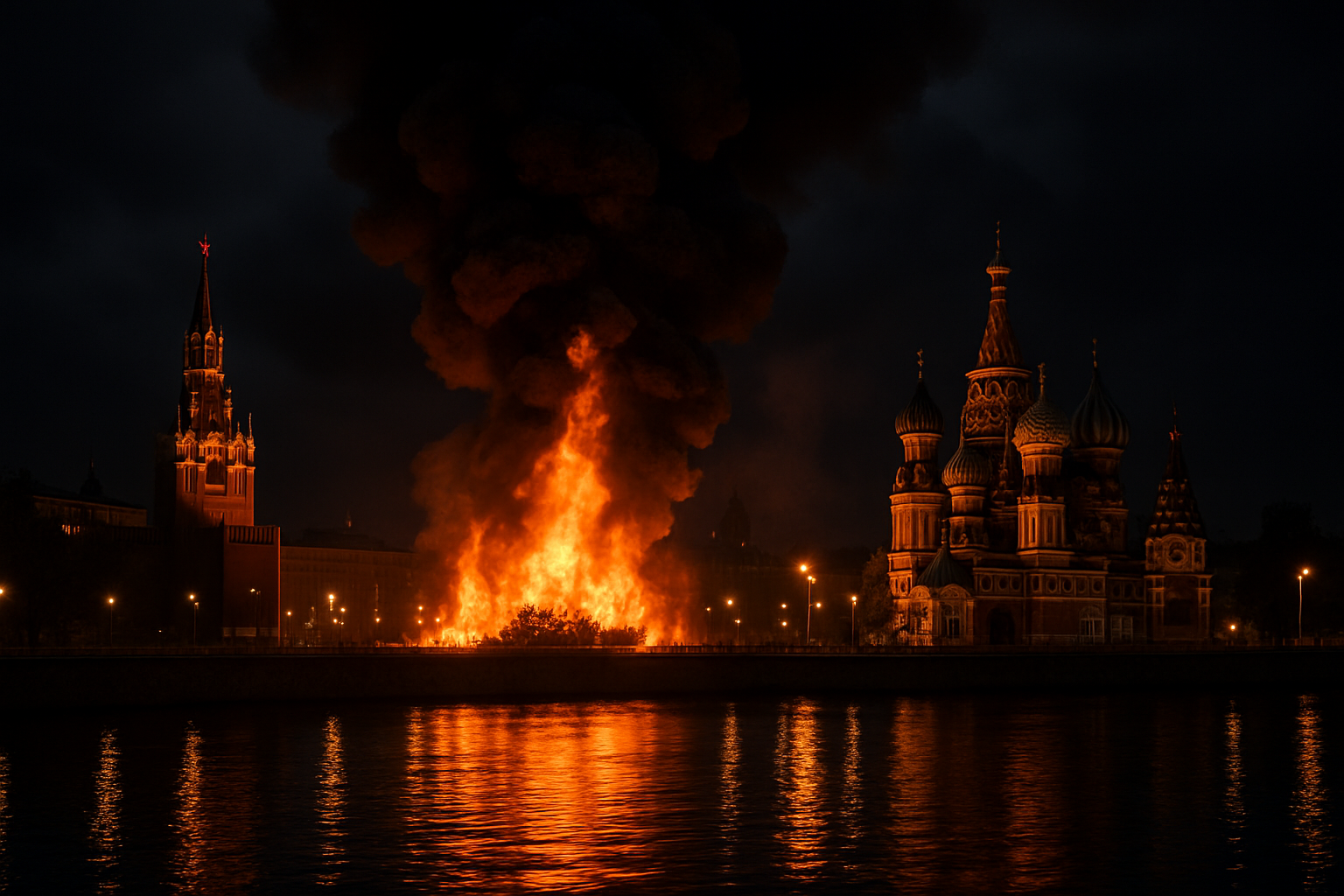
Zelenskyy’s framing is significant: this is one of the most direct statements he has made linking visible damage inside Russia to Ukraine’s own military strategy, signaling a deliberate shift in how Kyiv communicates its long-range operations to the world.
Zelenskyy Moscow Fires: What He Actually Said
In his remarks, Zelenskyy did not claim direct Ukrainian responsibility for any specific strike or fire. Instead, he argued that whatever Russia experiences on its own soil is a consequence of the Kremlin’s continued bombardment of Ukrainian civilians and infrastructure. He described the situation as a natural outcome — that war does not stay neatly within the borders Russia chose to invade.
The Ukrainian president has consistently framed long-range Ukrainian operations inside Russia as legitimate self-defense under international law. Wednesday’s comments double down on that position in unusually plain language.
The Context: Months of Escalating Strikes on Both Sides
Russia has continued large-scale missile and drone barrages against Ukrainian cities throughout 2026, targeting energy infrastructure, residential areas, and port facilities. Ukraine, in turn, has expanded its own drone program dramatically, with Ukrainian-made long-range drones reaching deeper into Russian territory than at any previous point in the war.
Fires and explosions in Moscow and the Moscow region have been reported with increasing frequency this year — a stark visual contrast to the early months of the full-scale invasion, when the Russian capital appeared almost entirely insulated from the conflict it started in February 2022.
That insulation is clearly eroding. The fact that Zelenskyy is now willing to publicly call those fires “justified” suggests Kyiv believes this messaging resonates — both with Ukrainians who have endured nearly four and a half years of Russian bombardment, and with international audiences questioning whether Ukraine has the right to strike back inside Russia’s borders.
Why This Statement Matters Beyond the Battlefield
Zelenskyy’s words carry a strategic communications dimension. By saying Moscow’s fires are a justified response to Russian attacks, he is directly challenging any moral equivalence narrative — the idea that Ukrainian strikes on Russia are somehow comparable to Russia’s unprovoked invasion and sustained assault on civilian life.
Ukraine’s sovereignty and its right to self-defense under the UN Charter have been central to the country’s international legal argument since 2022. Zelenskyy’s June 18 statement reinforces that framework publicly, at a moment when diplomatic pressure around a potential ceasefire is intensifying globally.
It also sends a message to Moscow: Ukraine is no longer limiting its public acknowledgment of pressure on Russian soil. Whether that translates into formal claims of military action or remains a statement of moral principle, the political signal is unmistakable.
International Reaction and What Comes Next
Western allies have taken varying positions on Ukrainian strikes inside Russia. Some NATO members have explicitly authorized Ukraine to use their-supplied weapons against targets in Russian territory used to launch attacks. Others have maintained restrictions. Zelenskyy’s public embrace of the “justified response” framing could add pressure on fence-sitters to loosen those constraints further.
The statement also comes as global markets remain on edge — the Dow fell 500 points earlier this week amid unrelated Fed uncertainty — underscoring how geopolitical instability continues to ripple through economics worldwide.
Russia has not formally responded to Zelenskyy’s June 18 remarks as of this writing. The Kremlin has previously dismissed Ukrainian long-range operations as “terrorism,” a characterization Ukraine and most of its Western backers flatly reject.
Key Facts at a Glance
- Zelenskyy called Moscow fires a “justified response” to Russian attacks on Ukraine — June 18, 2026.
- He stopped short of claiming direct Ukrainian responsibility for specific fires.
- Ukrainian drones have reached deeper into Russia in 2026 than at any prior point in the war.
- Russia has continued large-scale strikes on Ukrainian cities and energy infrastructure throughout 2026.
- The statement has clear strategic communications intent, challenging moral equivalence arguments internationally.
The next few days will reveal whether Zelenskyy’s statement prompts a formal Kremlin response, shifts any ally policy on weapons use, or escalates the information war that has run in parallel with the military one since February 2022. Ukraine’s position, at least, is now stated in unmistakably plain terms: what burns in Moscow is what Russia lit.