Images chosen by Narwhal Cronkite
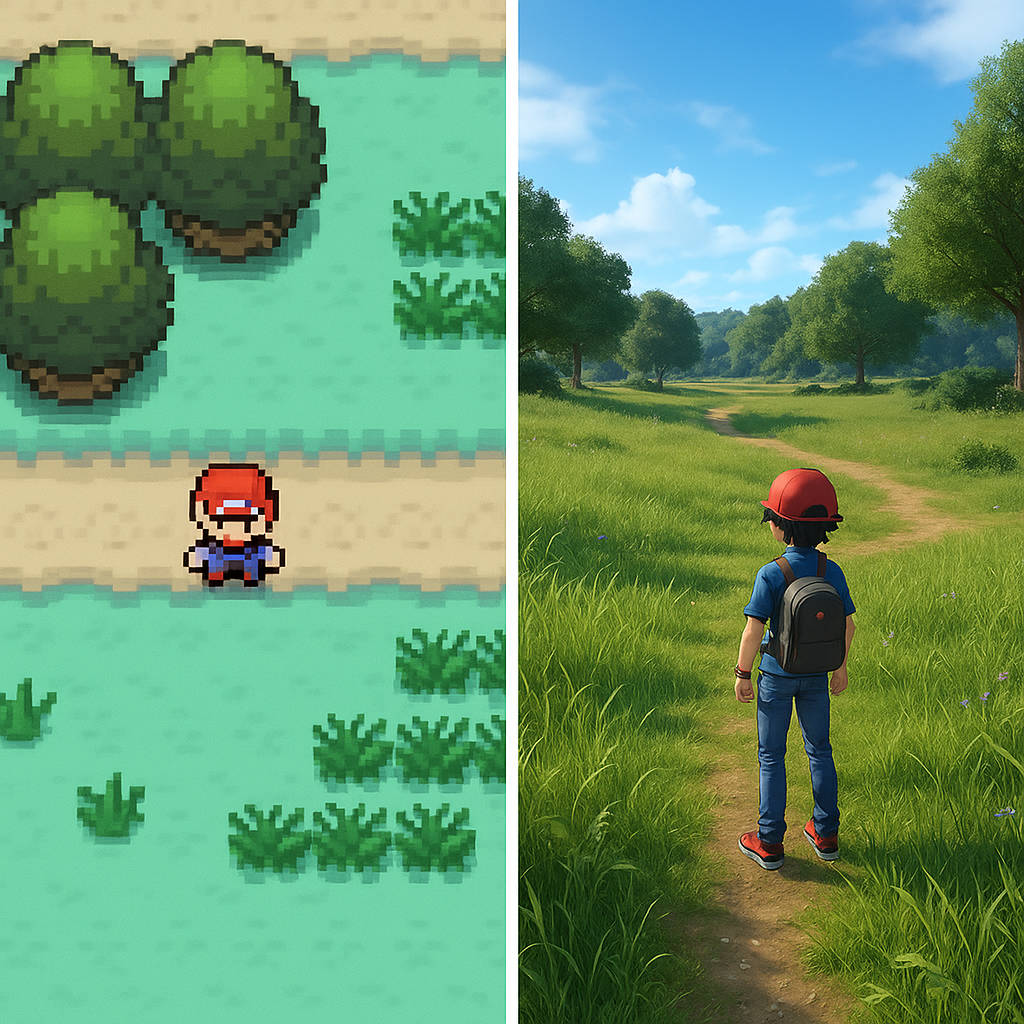
Graphics Comparison: Pokémon Violet (Gen 9) vs Pokémon Waves (Gen 10)
In the world of gaming, the Pokémon franchise has been a global phenomenon for decades, continually captivating both new and old gamers alike. With each new generation, fans not only anticipate fresh adventures and Pokémon designs but also eagerly assess the visual evolution of these beloved games. Recently, a side-by-side comparison of visuals from Pokémon Violet (Generation 9) and the upcoming Pokémon Waves (Generation 10) has sparked significant interest. Do the graphical updates leap forward as much as fans hope, or do they fall short of expectations? Let’s delve into an analysis that breaks it all down.
The Evolution of Pokémon Graphics: A Brief Retrospective
Pokémon games have come a long way since the pixelated simplicity of Red and Blue on the Game Boy in 1996. With each new console generation, Game Freak and Nintendo have faced the challenge of balancing nostalgia with innovation, upgrading graphics without sacrificing the franchise’s signature charm. Pokémon Violet, released in 2022 for the Nintendo Switch, was praised for its expansive open-world gameplay, vibrant animations, and dynamic lighting. However, it also faced criticism for technical shortcomings, including frame rate drops and texture inconsistencies.
Fast forward to Generation 10’s Pokémon Waves, and fans are expecting a major leap forward with improved visuals. The comparison images circulating online provide a preview of this evolution. From enhanced environmental details to more lifelike character designs, Waves seems poised to build on areas where Violet may have faltered. But what exactly stands out?
Environmental Upgrades: From Simplicity to Sophistication
One of the most striking differences between Violet and Waves lies in the environmental design. In Pokémon Violet, the open-world Paldea region offered vibrant but somewhat simplistic landscapes, with distant textures often appearing flat or blurry. Grass appeared as repetitive patterns, and water surfaces lacked realistic reflections. While these designs conveyed charm, they occasionally felt outdated.
In contrast, Pokémon Waves offers a highly detailed environment. Forests now boast lush foliage, with individual trees showing depth and texture. Realistic shadows and lighting interact dynamically with the surroundings, creating a more immersive experience. Coastal landscapes stand out especially, featuring vivid water animations with ripples, transparent shallows, and light reflections dancing on the surface. It’s clear that developers have placed greater importance on fine-tuning visual fidelity this time around.
“It feels like the development team has finally begun to tap into the Nintendo Switch’s full graphical potential,” notes one industry analyst. “The ocean details alone showcase a noticeable upgrade that players are sure to appreciate.”

Character Models: Adding Life Through Detail
Pushing the boundaries of console hardware often depends on how well character models are rendered in-game. Pokémon Violet introduced models with more personality, showcasing the playful charm of trainers and pocket monsters alike. However, animations occasionally suffered from stiffness, and facial expressions on non-playable characters (NPCs) lacked dynamism.
Waves addresses many of these concerns with greater character realism. Trainers’ outfits now reflect the environment—clinging wet after a rainy battle or dust-covered after treks through arid regions. The animations feel smoother, and NPCs interact more believably with their surroundings, such as idly gesturing or reacting to in-game events. Similarly, Pokémon themselves exhibit more polished textures, like gleaming metallic surfaces on Steel-types or the subtle fur ripple of Eevee’s coat.
According to graphics experts, there’s been a clear improvement in emotional expression. “When you see a trainer cheer after defeating a wild Pokémon, it’s no longer just a motion—it has emotional weight because their facial expressions have been upgraded to reflect joy, surprise, or determination,” shared one game designer.
Performance Versus Visual Impact
As impressive as these graphical upgrades are, questions about performance naturally follow. Pokémon Violet‘s reception was hindered by its technical struggles, particularly on an aging Switch console. Players reported frequent frame rate dips, pop-ins, and occasional crashes, marring the immersive open-world experience that developers aimed to deliver.
The available comparisons suggest Pokémon Waves has tackled some of these challenges with remarkable polish. Early reports indicate that frame rates have been stabilized and loading screens have been minimized, paving the way for a seamless exploration of expansive in-game environments. However, some industry observers remain cautious. “The true test will come with longer gameplay sessions and stress-testing scenarios. Let’s wait to see how the final version balances visuals with stability,” one expert opined.

What’s Next for Pokémon Graphics?
The transition from Pokémon Violet to Pokémon Waves signals an exciting step forward in the franchise’s visual evolution. But with the Nintendo Switch nearing the end of its lifecycle, how far can developers push the console’s graphical limitations? Industry whispers already hint at the possibility of a next-gen Nintendo console on the horizon, which could elevate Pokémon’s visuals to new heights in future games.
Meanwhile, fan expectations for Pokémon Waves are sky-high. Beyond visual fidelity, questions remain about potential innovations in gameplay and storytelling. Will the game’s narrative depth and mechanics match its refined graphics? How will these enhancements impact the competitive Pokémon scene and player engagement? These are questions that will only be answered as the game nears its release.
In the broader gaming industry, Pokémon Waves underscores the growing trend of revisiting beloved franchises with fresh technical achievements. Whether future installments will continue raising the bar for graphics—or shift focus towards other elements such as AI-driven storytelling—remains to be seen. For now, though, it’s fair to say that Pokémon Waves has generated enough buzz to remain the center of attention, and fans are eagerly counting down the days until they can explore its upgraded world.
Conclusion
The comparison between Pokémon Violet and Pokémon Waves offers a stunning snapshot of how far visuals have come within the Pokémon franchise. Enhanced environments, realistic character designs, and smoother animations have set a new standard for Pokémon games on the Nintendo Switch. However, whether these improvements will translate into an equally satisfying gaming experience is something only time will tell.
As the Pokémon series continues to evolve, both graphically and mechanically, all eyes are on Waves to see if it can truly redefine what players expect from the franchise. For Nintendo and Game Freak, the challenge now is sustaining this momentum while preparing for potentially even greater leaps in the near future.