Images chosen by Narwhal Cronkite
Trump Urges Allies to Step Up in Strait of Hormuz, But Japan and Australia Hold Back
The Strait of Hormuz, one of the most strategically critical waterways in the world, has become a flashpoint once again as former President Donald Trump called on allies to help secure the region. Trump’s renewed demand comes amid escalating tensions in the Middle East, but Japan and Australia have signaled that they have no immediate plans to send naval resources to the region, according to Reuters. This reluctance highlights a broader challenge for the U.S. in convincing allies to shoulder more of the burden in securing global trade routes without committing to their own resources.

The Strait of Hormuz: Why It Matters
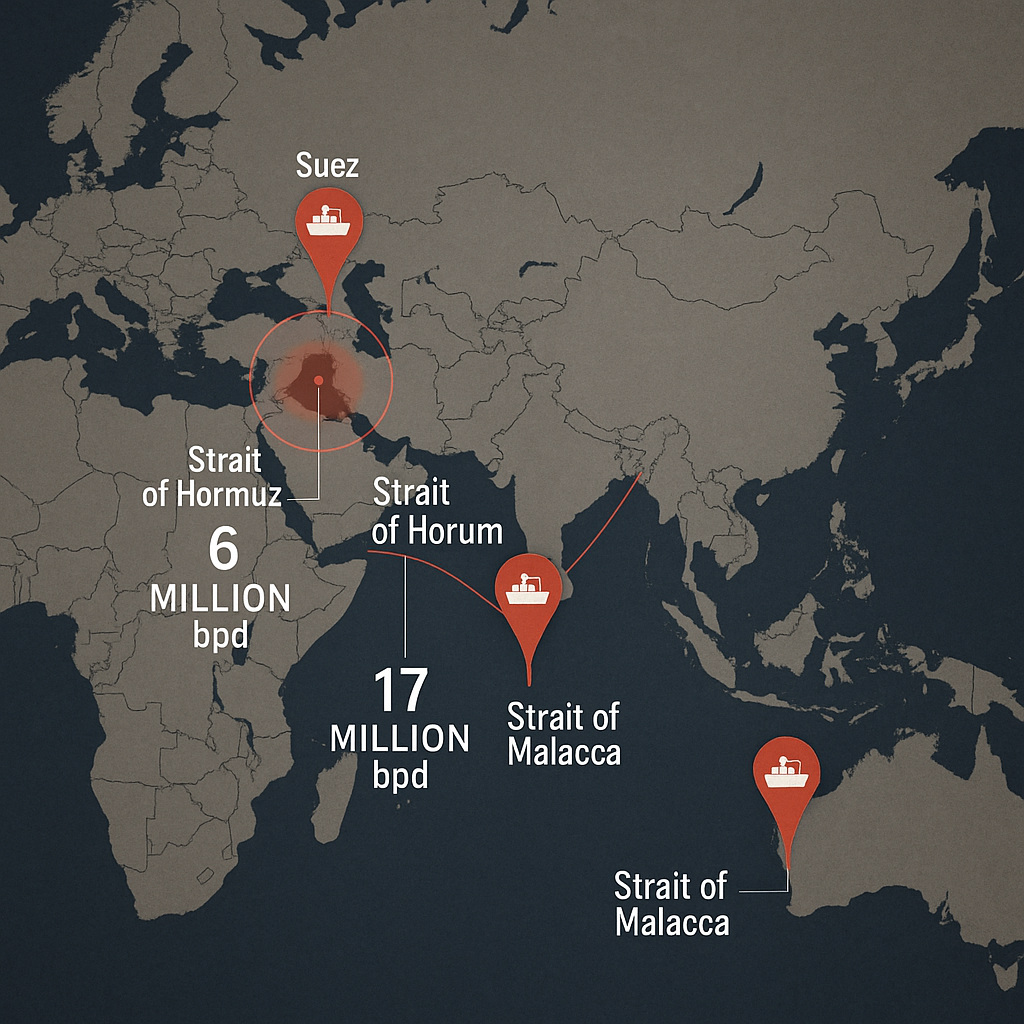
At its narrowest point, the Strait of Hormuz is barely 21 miles wide, yet it serves as a chokepoint for nearly 20% of the world’s oil supply. Oil tankers carrying crude from resource-rich Gulf nations like Saudi Arabia, the United Arab Emirates, and Iran navigate these waters to meet global energy demands. In recent years, the region has faced frequent disruptions due to rising geopolitical tensions, including attacks on oil tankers and threats from Iran to block the strait in retaliation for sanctions.
Given its vital role in global energy security, securing the Strait of Hormuz has long been a top priority for the United States. For decades, the U.S. has maintained a military presence in the region, often leading coalition efforts to ensure safe passage for commercial shipping. However, the Trump administration’s renewed push for allied contributions reflects a shift in Washington’s approach. “The United States shouldn’t be the only one paying the price to keep this vital waterway safe,” Trump said during a rally earlier this month. “Our allies benefit the most—they should do their part.”
Japan and Australia Resist Military Commitments
Despite the urgency conveyed by Trump, Japan and Australia—two prominent U.S. allies in the Indo-Pacific—appear to be taking a cautious approach. As reported by Reuters, both nations have publicly stated that they have no immediate plans to deploy naval forces to the region, citing the need to focus on other strategic priorities closer to home. Analysts suggest that this hesitation is rooted in a mix of domestic concerns and broader geopolitical calculations.
“Japan relies heavily on oil imports that pass through the Strait of Hormuz, yet their self-defense policy is heavily constrained by a pacifist constitution,” noted energy security expert Dr. Hiroshi Tanaka. “They may be unwilling to risk military entanglements that could compromise their neutrality.” Australia, meanwhile, has faced domestic pushback against deepening defense commitments beyond the Indo-Pacific, as Prime Minister Anthony Albanese navigates calls to balance alliances with an independent foreign policy. According to a recent article from ABC News, Australia has increasingly embraced its role as a “middle power” but remains hesitant to assume more responsibility in volatile regions divergent from its immediate sphere.

The Global Stakes: From Oil to Geopolitical Leverage
The reluctance of nations like Japan and Australia underscores a growing challenge for the U.S.: rallying allies to take on shared security responsibilities in a multipolar world. While the Strait of Hormuz is undeniably critical to global commerce, it also illustrates the delicate balance of international politics. Regional powers such as Iran seek to leverage their geographic control to extract concessions, even as global powers like China and Russia show increasing interest in the stability—or instability—of the region.
Moreover, analysts argue that the financial cost of policing shipping routes has shifted global perceptions of burden-sharing. “We’ve entered a new era where middle-sized powers are less inclined to align habitually with the U.S. on military missions,” said Professor Elena Markov of Georgetown University. “This is partly due to economic pressures and partly due to the strategic dilemmas posed by a multipolar world order.”
China, in particular, stands to benefit from any disruption in coordination among Western allies in the Strait of Hormuz. Beijing has made significant inroads in forging partnerships with Gulf states, including signing long-term energy contracts and expanding infrastructure investments under its Belt and Road Initiative. As tensions mount, the question remains: how far is the U.S. willing to act unilaterally, and at what cost?
Lessons from the Past: The Cost of Leadership
The debate over burden-sharing in the Strait of Hormuz isn’t new. During Trump’s presidency, the “America First” doctrine emphasized minimizing U.S. obligations in multilateral conflicts—a policy that many critics argued alienated traditional allies. However, past administrations have also struggled to balance U.S. leadership with allied contributions.
One telling parallel is the NATO defense spending debate, where repeated U.S. demands for member states to meet their 2% GDP commitments sparked wide-ranging discussions about dependency and autonomy within alliances. As highlighted in a recent Salon report, Trump’s call for allies to shoulder more responsibility resonated with segments of the American public weary of prolonged military engagements. Yet, this approach also risks alienating key partners in moments of crisis.
What to Watch For
Looking ahead, several factors will shape the evolving dynamics in the Strait of Hormuz and beyond. First, the Biden administration (or subsequent administrations) may reassess the U.S. military’s global posture and its reliance on allied support for maintaining stability. Any adjustments could influence allied nations’ calculations about their own roles in regional security frameworks.
Second, the increasing role of middle powers like Australia and Japan in navigating their positions between dominant powers, such as the United States and China, will be crucial. While both nations remain firmly aligned with the U.S. in spirit, their hesitancy to deploy resources to high-risk zones suggests an evolving calculus in responding to shifting geopolitical risks.
Finally, the Iranian government’s posture will remain a critical variable. Tehran’s ability to disrupt shipping lanes in the Strait of Hormuz gives it significant leverage in a region already fraught with tensions. Any military or diplomatic developments in the surrounding region will be closely watched for implications on global trade and energy markets.
Amid this uncertainty, one takeaway is clear: the future of the Strait of Hormuz hinges not just on the actions of great powers but also on the willingness of smaller allies to stake claims in one of the world’s most disputed waters. Whether Trump’s demands lead to tangible results or deepen divisions among U.S. allies remains an open question—one with global implications.