Images chosen by Narwhal Cronkite
White-Collar Rebellion: Why Workers Are Quietly Rejecting AI
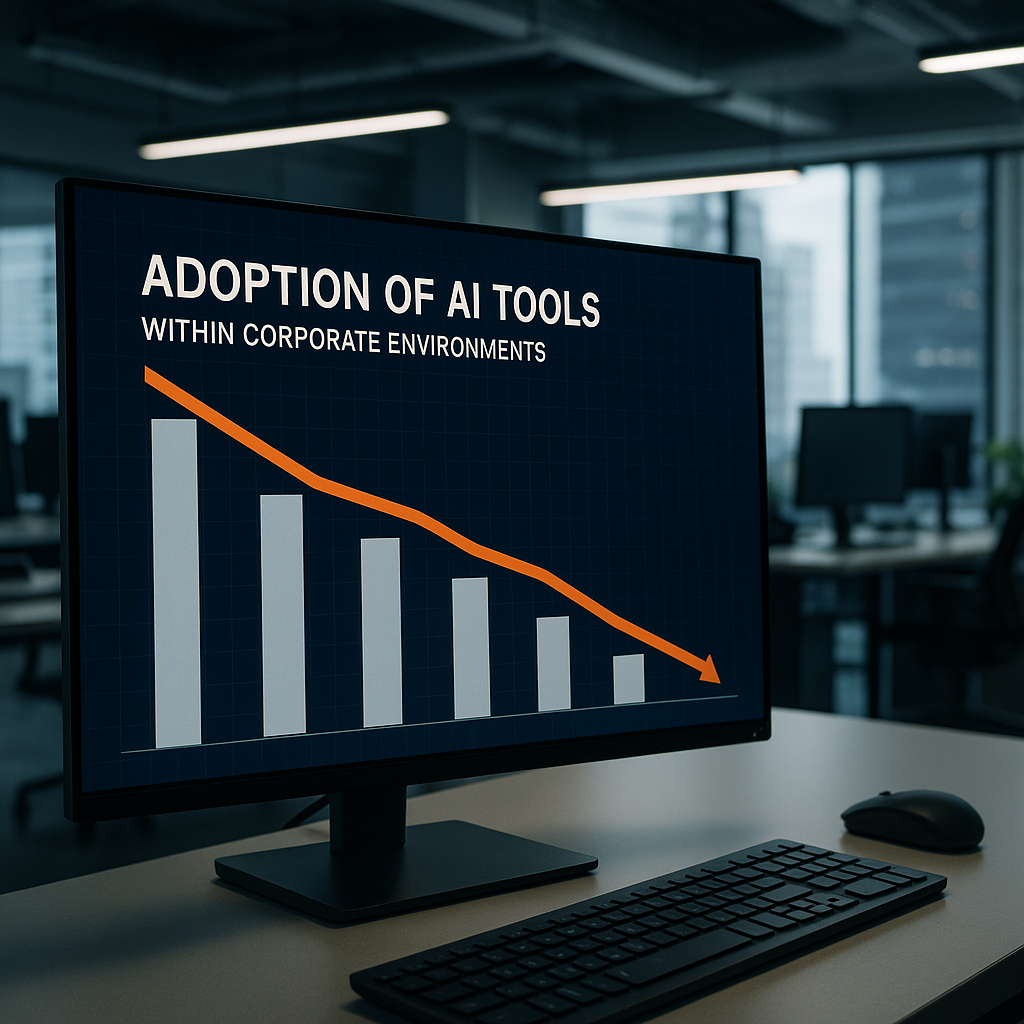
Artificial intelligence, once hailed as a transformative force in the workplace, is now facing an unexpected backlash. White-collar workers, particularly in enterprise settings, are quietly pushing back against corporate mandates to adopt AI tools. According to a recent report from WalkMe, a staggering 80% of employees either actively reject or completely avoid using AI solutions at work—a striking reversal from the initial enthusiasm seen just months ago.

Early Enthusiasm Gives Way to Doubt
Not long ago, AI adoption among workers was soaring—albeit under the radar. Employees eagerly leveraged personal accounts on tools like ChatGPT and Claude to expedite tedious tasks, circumventing IT restrictions. A 2022 MIT study found that 90% of companies had workers covertly using AI for everyday activities, even as fewer than half of these companies had official AI solutions. It felt like a win-win: employees were getting things done, and managers could see the productivity boost, even if they didn’t oversee it directly.
However, the honeymoon period is over. As enterprises began implementing official AI programs, employees appeared more skeptical than willing. WalkMe’s 2026 report revealed that 54% of surveyed workers purposefully bypass company AI tools in favor of manual processes, while 33% haven’t engaged with AI systems at all. Productivity gains, once touted as AI’s ultimate promise, remain elusive. As Steve Hanke, a Johns Hopkins economist, bluntly put it, “AI didn’t deliver … productivity would be way up if AI lived up to the hype.”
The Trust Divide Between Executives and Employees
The reluctance toward AI adoption is reinforced by stark differences in perceptions between employees and executives. WalkMe’s data shows that while 61% of executives trust AI for critical, complex decisions, only 9% of workers feel the same way—a massive 52-point gap. Similarly, 88% of executives believe their workforce has adequate tools to thrive; just 21% of employees agree.
“Executives and employees appear to be working in two entirely different realities,” says Dan Adika, CEO and founder of WalkMe. With enterprise spending on digital transformation soaring 38% year-on-year to $54.2 million, it’s clear that investments alone aren’t enough. “Adoption isn’t just about the technology—it requires genuine alignment between leadership and employees,” Adika explains.
Industry observers point out that part of the disconnect stems from fear. White-collar workers worry AI that performs too well will make them obsolete or expose weaknesses in their skill sets. These anxieties are compounded by a lack of sufficiently sophisticated user training, leaving employees feeling ill-equipped to work alongside AI systems designed to take over significant portions of their workload.
Productivity Metrics Fall Short of the Hype
Despite the corporate optimism surrounding AI, several experts are beginning to echo Hanke’s concerns: AI’s impact on productivity just isn’t materializing. “Silicon Valley has been promising sky-high productivity increases alongside GDP growth projections hitting the 5%-6% range,” says a senior analyst at Gartner. “But we’re not seeing measurable evidence that this tech push has translated into meaningful economic outcomes.” According to WalkMe, 40% of enterprise digital transformation budgets are currently underperforming, with adoption failures being the primary culprit.
Employees aren’t entirely rejecting AI’s potential; in fact, some tech-savvy workers feel frustrated that the tools are either too simplified or aimed solely at high-level executives. Over-reliance on automated decision-makers has also raised ethical questions about the accountability of these systems if they underperform—or make mistakes.

What’s Next for Enterprise AI?
The growing rebellion against workplace AI has implications for corporate culture and technology adoption strategies. For starters, companies need to rethink the deployment of these tools. “AI adoption programs can’t take a top-down approach,” says Adika. “If you ignore the grassroots feedback from employees, your investment will fail. Systems must prioritize usability and trust.”
Another consideration is the need for transparency. Workers often feel uneasy about AI’s opacity, particularly with tools they perceive as “black boxes” that make critical decisions without input or accountability. Building trust with employees may require companies to demonstrate AI’s capabilities while ensuring their job security won’t be endangered.
Finally, reworked training programs can bridge the gap between worker skepticism and practical usage. Analysts agree that higher adoption rates will only occur if employees feel confident in understanding how AI systems complement their roles, rather than replace them.
Implications to Watch For
The growing anti-AI sentiment among workers represents a turning point in the corporate adoption of emerging technologies. The gulf between employees and leadership perspectives on AI highlights an urgent need to address trust issues, enhance training, and reevaluate how tools are introduced into workflows.
For businesses eager to maximize their investments, tackling the white-collar rebellion head-on may prove to be the next frontier of digital transformation. Success hinges not just on acquiring advanced AI tools, but on aligning leadership vision with worker experiences to create a genuinely adaptive workplace.