Images chosen by Narwhal Cronkite
Ordinary WiFi: The Invisible Tool That Can Now Identify You with Stunning Accuracy
Imagine walking into your favorite café, a workplace, or even your living room, and being identified with near-perfect accuracy — without carrying a device, scanning a fingerprint, or stepping into the view of a camera. This may soon become our reality, thanks to breakthroughs in Germany where researchers have demonstrated how ordinary WiFi signals can be used for human identification.
From the bread-and-butter tool that gives us internet access, WiFi routers have now been shown to possess an alarming potential: the ability to become an invisible but pervasive surveillance system, raising serious ethical and privacy questions. According to ScienceDaily, scientists at Karlsruhe Institute of Technology (KIT) developed a sophisticated yet seemingly straightforward process to recognize individuals just from radio wave activity in an environment with WiFi. If this sounds like sci-fi, it’s not — and its implications are profound.

WiFi as an Unseen Camera: How Does It Work?
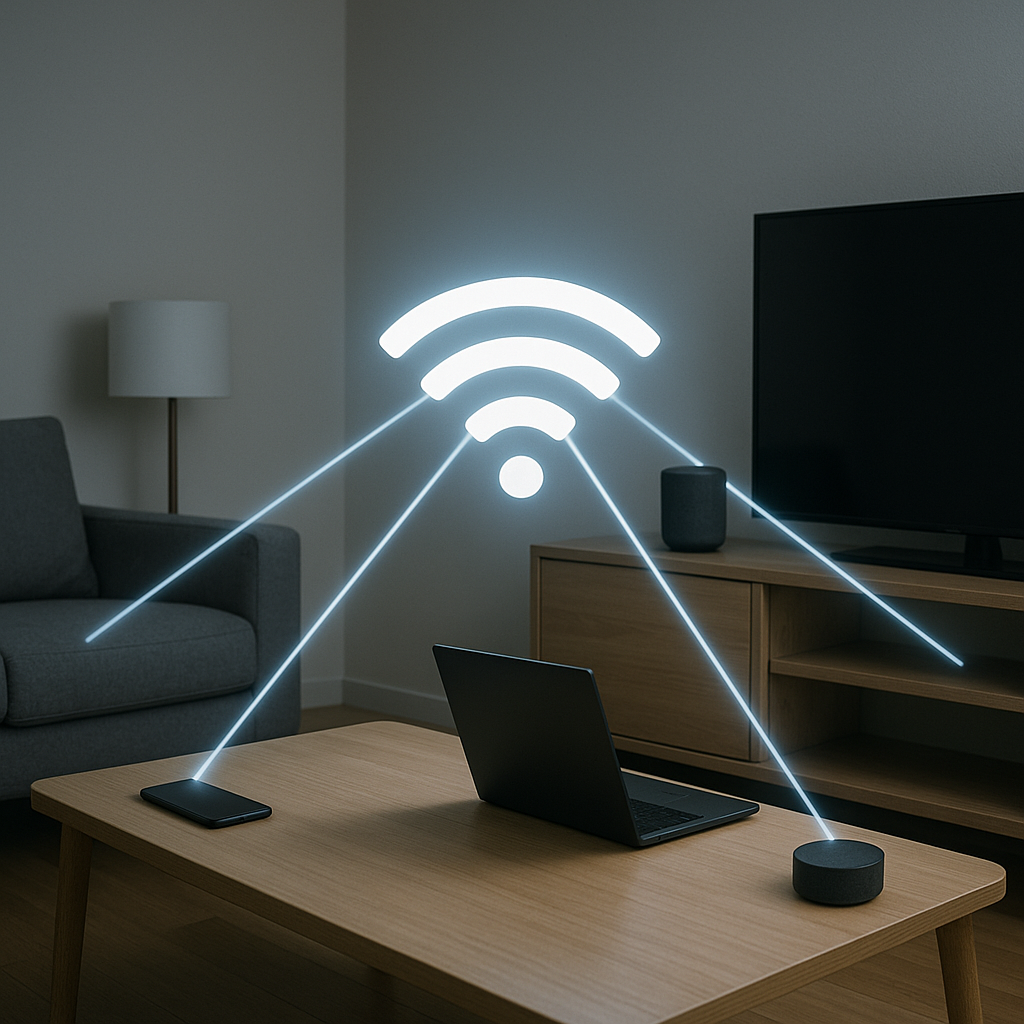
The concept of using radio waves for tracking is not entirely new, but the precision and practicality demonstrated by KIT researchers elevate it to an uncharted level. Just like light creates shadows when it hits objects, WiFi signals bounce off human bodies, creating subtle distortions researchers can interpret. But instead of light waves, the technique relies on the radio waves emitted by wireless networks.
Professor Thorsten Strufe, one of the scientists behind the study, stated, “By observing the propagation of radio waves, we can create an image of the surroundings and of persons who are present. This works similar to a normal camera, the difference being that in our case, radio waves instead of light waves are used for the recognition.” Such systems are bolstered by artificial intelligence algorithms that analyze movement patterns, physical dimensions, and how these affect the WiFi signals in a given space.
Here’s where it becomes particularly unsettling: the technology doesn’t require the individual being tracked to carry a device. Your cellphone or smartwatch being off won’t make much difference. As long as a device capable of emitting WiFi (like a router or a printer) exists in the environment, the system has enough data to recognize and track you.

The Pervasive Reach of Wireless Networks
Wireless networks are everywhere — whether in homes, shopping malls, airports, or restaurants, they form the backbone of our connected lives. This ubiquity gives the technology an unparalleled reach, which is part of what has experts worried. Unlike cameras, which require direct line-of-sight to monitor individuals, WiFi-based identification works in numerous scenarios — through walls, behind furniture, and in poorly lit spaces.
Explaining the scope of this technology, researcher Julian Todt remarked, “If you regularly pass by a café that operates a WiFi network, you could be identified there without noticing it and be recognized later — for example, by public authorities or companies.” What makes this a point of concern isn’t just the innovative method, but the lack of awareness around it. In most cases, people are acutely aware of cameras. With routers, there is no such visual or noticeable aspect, making the surveillance truly invisible.
While efforts to curb data breaches often focus on personal devices and online accounts, researchers warn WiFi surveillance presents a novel threat. In a connected world, a silent onlooker is far more troubling than the obvious camera.
Applications and Ethical Concerns: Boon or Bane?
On the surface, the idea of turning WiFi into a pervasive surveillance tool might seem like a convenient innovation for both private and public sectors. Potential applications could range from contactless security systems and automated workplace monitoring to disaster rescue processes where locating people in real-time could save lives. However, the ethical trade-offs demand equal scrutiny, if not more.
“The omnipresent wireless networks might become a nearly comprehensive surveillance infrastructure with one concerning property: they are invisible and raise no suspicion,” pointed out Felix Morsbach, a researcher on the project. The balance between utility and privacy is fraught. Once implemented, who gets to use this technology, and for what purposes? Could it become a tool abused by authoritarian regimes, or more worryingly, by unseen cybercriminals operating within the gray areas of legality?
Some experts cite parallels to existing surveillance technologies, such as facial recognition cameras. The presence of ethical dilemmas tied to racial bias, consent, and regulatory oversights in facial recognition systems are well-documented, explains Slashdot. The emergence of WiFi-based tracking amplifies those concerns, adding a layer of complete invisibility.
Why This Matters More Than Ever
The timing of this development comes as global conversations surrounding privacy rights, ethical AI, and cybersecurity reach new crescendos. Privacy advocates have already raised flags about the overreach of AI-driven technologies and how they’re silently implemented, often without public consent or understanding. WiFi-based recognition could easily follow this trend unless strict ethical guidelines are established beforehand.
In a broader context, recent years have seen an uptick in laws, such as the European Union’s GDPR (General Data Protection Regulation), aimed at granting individuals control over their personal data. But as WiFi-powered surveillance operates on a fundamentally different plane than traditional data monitoring, even the most robust regulations struggle to address such advances. For example, how would individuals opt out of being identified in a space where they’re not carrying any device, let alone using the WiFi network?
What We Should Be Watching
As the technology evolves, its oversight will become a focal point for stakeholders ranging from governments to corporations and advocacy groups. Transparent guidelines, ethical boundaries, and public awareness will all likely play central roles in determining how — and where — WiFi recognition systems are applied. Could the technology be banned in certain public spaces? Will hardware manufacturers be pressured to bake in privacy features by default? How soon can citizens expect regulatory bodies to address invisible tracking?
For now, awareness remains one of the most potent tools against misuse of this technology. As consumers, asking the right questions — particularly how our everyday devices and networks are being used — becomes an important responsibility in the age of ubiquitous connectivity.
Until clearer regulations take shape, one thing is certain: While WiFi networks have revolutionized communication, they may also rewrite the rules of surveillance. Whether this future enhances security or endangers privacy will depend on how society chooses to leverage it.
Conclusion: Walking the Tightrope
Ordinary WiFi networks becoming tools of identification underscores just how far technology can stretch boundaries that were once considered unbreachable. For developers, the challenge lies in innovating without compromising individual rights. For lawmakers and citizens alike, the task is to approach these capabilities with both caution and curiosity. As WiFi shifts from a means of connection to a potential eye in the room, asking whose interests it serves may be one of the most important questions of the decade.
For now, it appears the invisible world of radio waves may become all too visible.