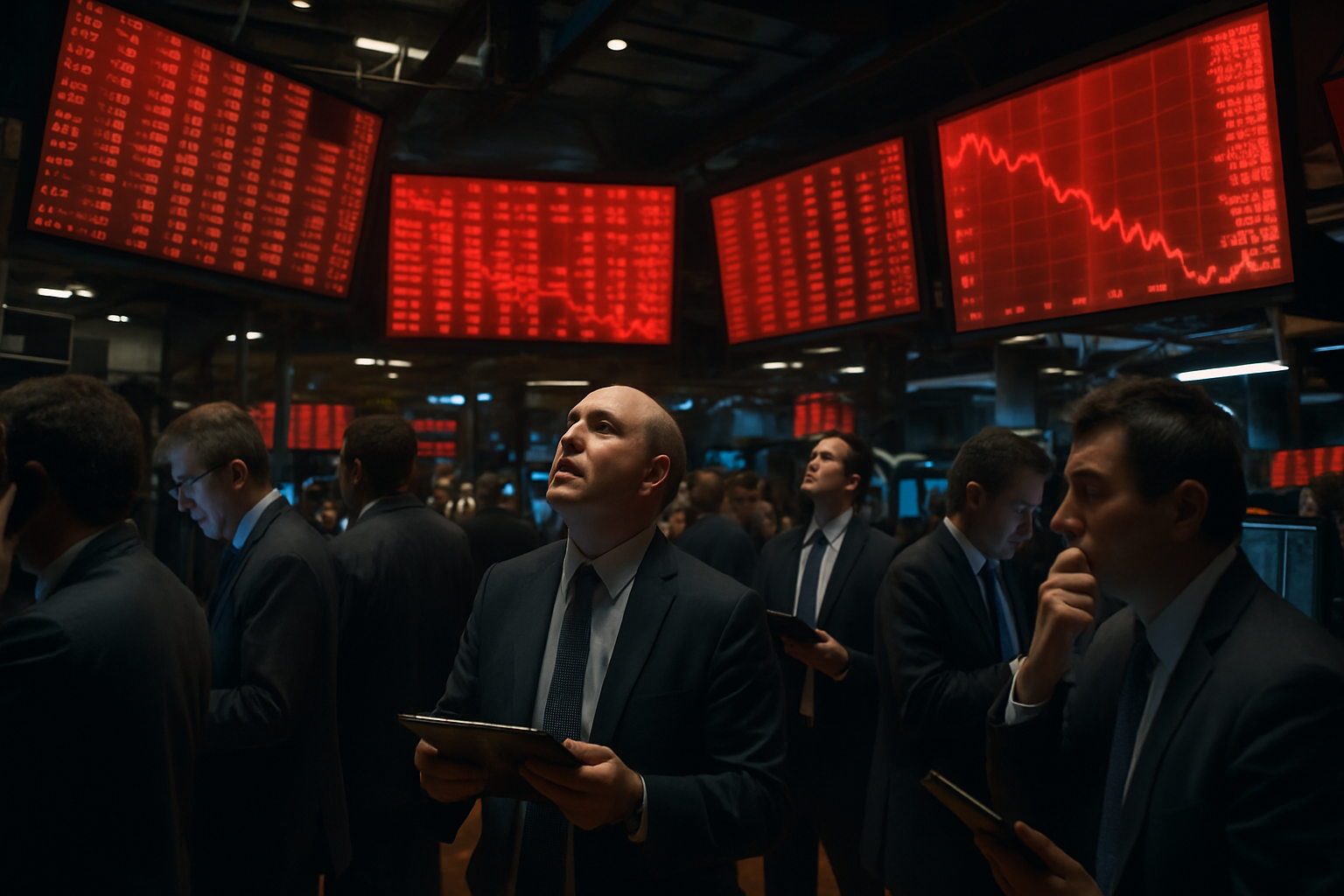
The Dow Jones Industrial Average closed more than 500 points lower on June 16, 2026, after Kevin Warsh’s first Federal Reserve policy meeting as Fed Chair sent bond yields sharply higher, spooking equity markets across the board. CNBC’s live market coverage tracked the sell-off in real time as investors digested the Fed’s latest signals on interest rates.
The non-obvious detail buried in the day’s chaos: it wasn’t a rate hike itself that drove the sell-off — the Fed held rates steady. It was the tone and language of Warsh’s post-meeting press conference that rattled traders, who read his remarks as signaling a longer-than-expected pause before any cuts arrive.
Why the Warsh Fed Meeting Moved Markets So Hard
Kevin Warsh, who replaced Jerome Powell earlier in 2026, has long been viewed by markets as more hawkish and less predictable than his predecessor. His first press conference as Chair gave traders little comfort. Warsh emphasized the Fed’s commitment to getting inflation durably back to target, and he pushed back firmly against expectations of rate cuts in the near term.
That sent the 10-year Treasury yield climbing sharply — a move that automatically pressures stock valuations, especially in rate-sensitive sectors like technology and real estate. When bond yields rise, the future earnings that growth stocks are priced on become worth less in today’s dollars. Traders sold first and asked questions later.
The S&P 500 and Nasdaq Composite also fell in sympathy with the Dow, with technology names among the hardest hit. Financial stocks showed more resilience, as higher-for-longer rates can widen bank lending margins — a rare bright spot in an otherwise red session.
Bond Yields Surge: What the Numbers Mean for Everyday Americans
A surge in bond yields isn’t just a Wall Street problem. When the 10-year Treasury yield rises, mortgage rates tend to follow. For anyone hoping to buy a home in the second half of 2026, the Fed’s newly hawkish posture could mean borrowing costs stay elevated — or climb further — through the end of the year.
Credit card rates, which are already near multi-decade highs, are also unlikely to fall quickly in this environment. The Federal Reserve’s interest rate decisions ripple into everything from auto loans to small business financing, making Warsh’s debut at the podium genuinely consequential for households well outside Manhattan.
Retirement savers with heavy equity exposure saw portfolio values dip on the day, though long-term investors are generally advised to avoid reacting to single-session swings. Bonds themselves — particularly short-duration Treasuries — became more attractive to yield-seekers as prices adjusted.
How Warsh Differs From Powell — and Why It Matters
Warsh served on the Federal Reserve Board of Governors during the 2008 financial crisis and has written extensively about central bank transparency and the risks of easy money. His appointment signaled a philosophical shift at the Fed toward tighter discipline on inflation, even if growth slows in the process.
Markets had priced in a more dovish path under the assumption that whoever led the Fed would eventually blink and cut rates to protect economic growth. Warsh’s first meeting suggested that calculus may need to be revised. Investors who had been counting on two or three rate cuts before year-end are now reconsidering their models.
This kind of leadership transition risk is one reason analysts watch Fed Chair debuts so closely. The first press conference sets a tone — and this one set a hawkish one. As discussions around AI spending, tech regulation, and digital privacy continue to shape corporate outlooks, markets are simultaneously grappling with the growing unease around US tech dependence that has rattled institutional investors in Europe and beyond.
What Happens Next for the Stock Market
The next scheduled Federal Reserve meeting will be watched even more carefully now that Warsh has established his tone. Traders will parse every piece of economic data between now and then — particularly inflation readings and jobs numbers — for clues about whether the Fed might soften its stance.
For now, the bond market is doing the heavy lifting. Yields at elevated levels act as a natural brake on speculative investment, and several Wall Street desks have already revised their year-end S&P 500 targets downward in the wake of Monday’s session.
Consumers and investors alike would do well to stress-test their financial plans against a scenario where rates stay higher into 2027. Building emergency savings, locking in fixed mortgage rates where possible, and diversifying away from pure growth equities are steps financial planners are increasingly recommending. The era of cheap money isn’t coming back on Warsh’s watch — at least not yet. If you’re tracking how broader economic pressures are reshaping spending habits, our coverage of major corporate sell-offs and chain shake-ups offers another lens on how tightening conditions filter through to everyday brands.