America’s largest clean energy project is live. Pattern Energy announced that the SunZia Wind project has officially come online, completing a development journey that began nearly two decades ago and delivering renewable electricity to more than one million homes across the American Southwest.
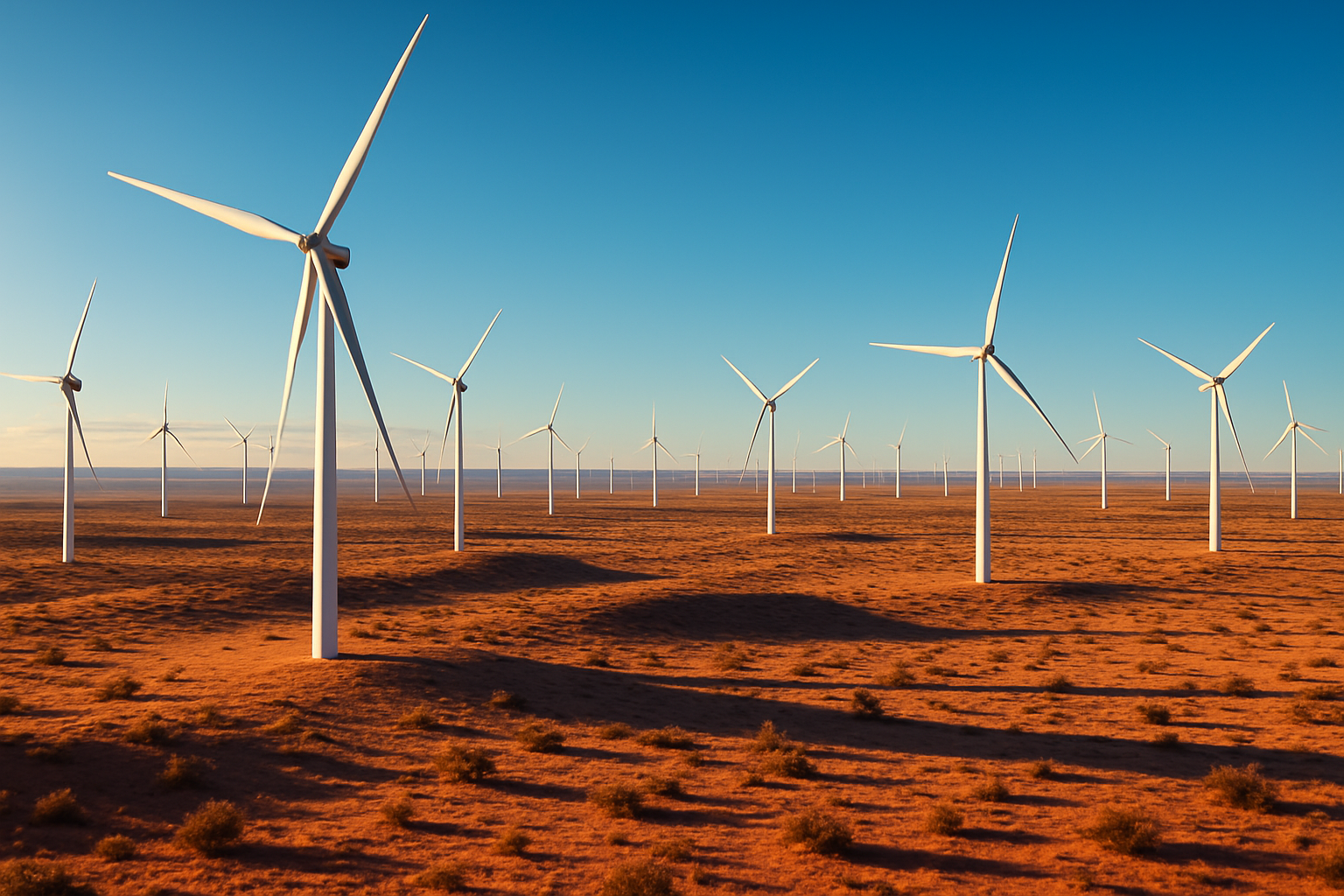
The project stretches across central New Mexico and feeds power eastward through the SunZia Transmission line — the largest new high-voltage transmission corridor built in the United States in more than 40 years. That transmission piece is arguably the less-celebrated but more consequential half of the achievement: without new long-distance lines, even the most powerful wind farms can’t move electricity where people actually need it.
SunZia Wind Project: Two Decades in the Making
Pattern Energy first proposed the SunZia corridor around 2006. The project faced permitting battles, legal challenges, route disputes, and the grinding pace of federal environmental review — hurdles that have historically stalled major infrastructure in the U.S. for years or even permanently. That it cleared every obstacle and reached commercial operation in 2026 marks a genuine milestone in American energy infrastructure.
The wind farm itself sits in one of the highest-quality wind resource zones in the country. The Estancia Valley region of New Mexico generates consistent, strong winds that make turbines far more productive than in many other parts of the country — a non-obvious edge that helps explain why developers fought so long and hard to bring this specific site online rather than pursuing easier locations elsewhere.
Scale and Clean Energy Output
SunZia Wind is rated at approximately 3,500 megawatts of capacity, making it the largest wind energy project in the Western Hemisphere. To put that in perspective, a single large natural gas plant typically generates 500 to 1,000 megawatts. The project’s green power output displaces millions of tons of carbon emissions annually, according to Pattern Energy.
The electricity travels over 550 miles of new transmission infrastructure into Arizona and beyond, connecting wind-rich New Mexico to population centers that have historically relied on fossil fuels for baseload power. Pattern Energy says the line is also built to carry future solar and storage projects, meaning SunZia’s transmission corridor could grow even more valuable as the grid expands.
What It Means for Renewable Wind Energy in the U.S.
Grid analysts have long pointed to transmission as the single biggest bottleneck holding back renewable wind energy growth in America. Developers can build turbines relatively quickly, but getting approval to run new power lines across state lines and federal land takes much longer. SunZia’s completion doesn’t solve that systemic problem, but it proves the process can eventually succeed — and sets a template for other large-scale corridors currently in planning stages.
For consumers in Arizona and New Mexico, the most immediate effect is a larger, more diversified regional grid. More supply generally puts downward pressure on wholesale electricity prices, though how much of that flows to retail customers depends on state utility regulations.
The project also created thousands of construction jobs in rural New Mexico, a state that has actively pursued clean energy development as a replacement for declining oil and gas employment in certain counties. Long-term, the wind farm will generate permanent operations and maintenance roles and ongoing land-lease payments to local landowners and tribal partners.
Pattern Energy and the Road Ahead
Pattern Energy, a privately held clean energy developer backed by the Canada Pension Plan Investment Board, has been the driving force behind SunZia from the start. The company has indicated that additional phases and interconnected projects could follow, using the newly built transmission spine as a backbone for further large-scale clean energy delivery across the Southwest.
The SunZia milestone arrives as the U.S. grid faces rising demand from data centers, electric vehicle adoption, and the ongoing electrification of homes and industry. Meeting that demand with largest wind farm capacity rather than new fossil fuel plants is central to both state and federal clean energy goals, though the pace of buildout remains hotly debated across the political spectrum.
Fans of ambitious infrastructure may also appreciate the parallel to other long-delayed but ultimately completed projects — much like the record heat gripping Europe in 2026 is sharpening public appetite for exactly this kind of large-scale climate response.
What Happens Next
With SunZia Wind now delivering electricity to the grid, attention turns to the interconnection queue — hundreds of other wind, solar, and storage projects waiting for grid access across the country. Advocates argue that SunZia’s financing model and permitting path should be studied and replicated. Regulators at the federal and state level are currently reviewing rule changes that could accelerate approvals for similar corridors.
For now, more than a million households in the Southwest are drawing power from a source that, two decades ago, existed only as a proposal. That alone qualifies as genuinely good news — and a proof of concept that the largest clean energy ambitions in America can, eventually, make it across the finish line.