Italy has crossed a threshold not seen since the medieval period: its forested areas now exceed the country’s utilized agricultural land, according to reporting by L’Indipendente published earlier this month. Wooded areas have surpassed 100,000 square kilometers and now cover more than one-third of the entire national territory.
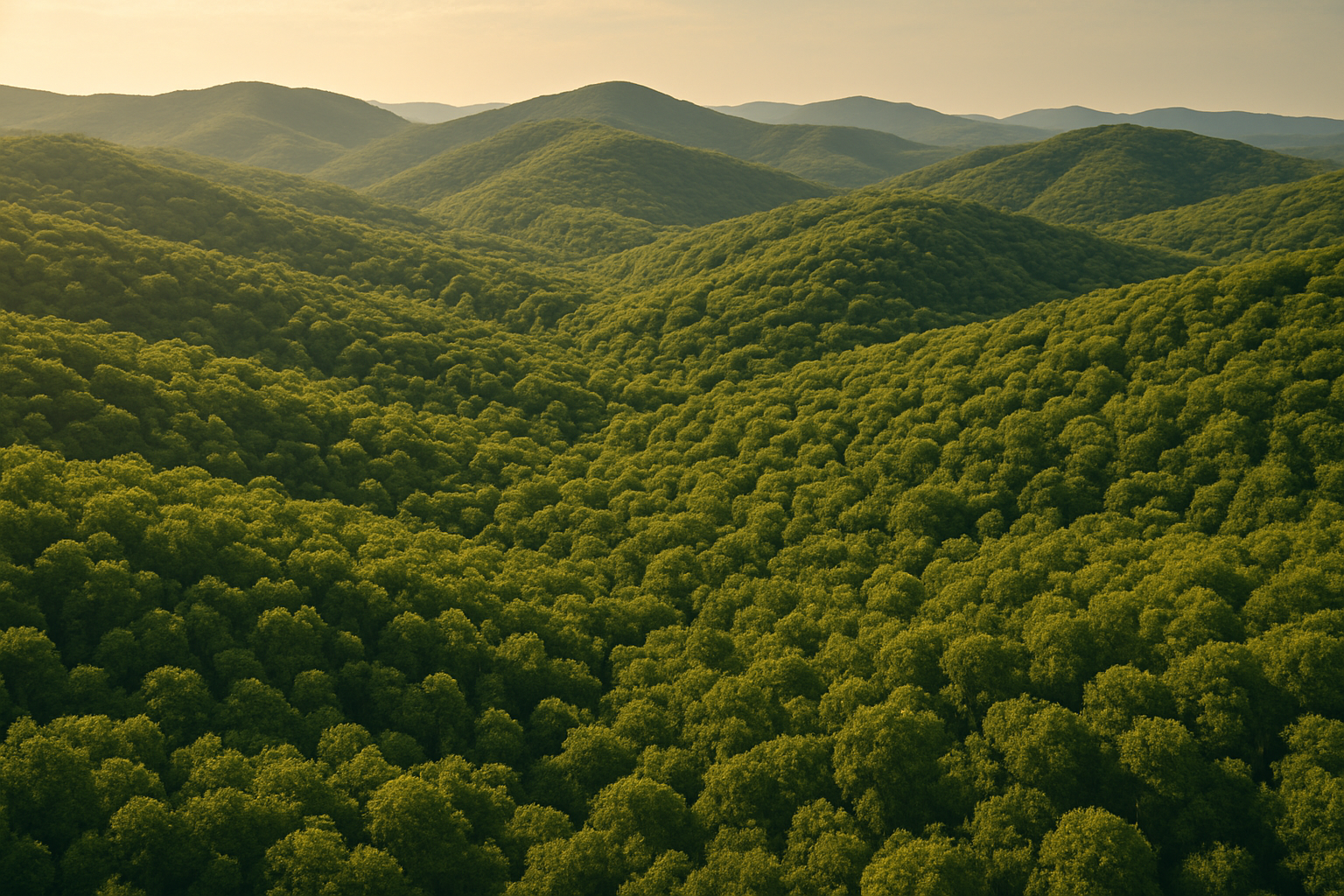
The crossover has been building for years, but 2020 was the turning point — the first time since the Middle Ages that forest area outpaced farmland in active use. Six years on, the gap is widening rather than closing.
How Italy quietly became a forest nation
The expansion is not the result of a single government planting program. It has been driven largely by rural depopulation — as Italians left hillside villages and marginal farmland over the past century, trees moved back in. Abandoned terraces and pastures across the Apennines, Sicily, and Sardinia have steadily reverted to scrub and then to mature woodland.
That organic process makes Italy’s forest growth unusual compared to managed reforestation projects in other countries. The trees are coming back on their own, reclaiming land that human agriculture once cleared. The result is a forest coverage rate that now rivals some traditionally wooded Northern European nations.
One detail that rarely makes the headlines: Italy’s woodland expansion has accelerated even as the country faces mounting pressure from wildfires, bark beetle outbreaks, and climate-driven drought. Net forest area is still growing despite those losses — meaning new tree cover is appearing faster than fire and disease remove it.
What 100,000 square kilometers actually looks like
To put the number in scale, 100,000 square kilometers is roughly the size of Iceland, or slightly larger than the state of Kentucky. Spread across a country the size of California, that means a driver crossing Italy north to south passes through forested terrain for more than a third of the journey.
The UN Food and Agriculture Organization’s global forest assessments have tracked Europe’s overall forest rebound since the 1990s, but Italy’s pace stands out. While much of Western Europe’s agricultural land has been consolidated into larger, more productive industrial farms, Italy still has millions of tiny plots — and millions of those have simply been left to go wild.
Italian reforestation is also uneven by region. The north has retained more active farming, particularly in the Po Valley, where intensive agriculture remains economically strong. The dramatic gains are concentrated in the south and in mountainous interior zones, where the economics of small-scale farming collapsed decades ago.
The tension between expanding forests and shrinking farms
Not everyone celebrates the milestone. Agricultural land decline is the mirror image of forest expansion, and for farming communities in rural Italy, the trend reflects economic hardship rather than environmental triumph. Fewer people farming means fewer local economies sustained by food production, and some regional governments have launched programs to bring abandoned land back into productive use before it fully reverts to woodland.
There is also an ecological complexity to the new forests. Spontaneously regrown woodland tends to be less biodiverse than old-growth forest or well-managed timber land in the short term. Dense monocultures of fast-growing pioneers like black locust and Austrian pine have taken hold in some areas, which ecologists note are more vulnerable to fire and disease than mixed-species forest.
Climate scientists, though, broadly view the net expansion as a carbon benefit. Italian forests now sequester substantially more carbon than they did fifty years ago, contributing to the country’s land-use emissions targets under EU climate frameworks.
Europe’s green rebound, one abandoned farm at a time
Italy is not alone in this trend. Portugal, Spain, and Greece have all seen forest coverage increase as agricultural populations shrank over the twentieth century. But the Italian case is among the most dramatic in scale — going from a country shaped by centuries of intensive terraced farming to one where forests literally cover more ground than the fields that fed it.
For those tracking large-scale environmental milestones, Italy’s shift joins a growing list of data points suggesting that land use — not just energy — is quietly reshaping what countries look like from the air.
The next benchmark to watch: whether Italy’s forest area continues to grow through the 2030s as EU agricultural subsidies are restructured, or whether new incentives to bring marginal land back into production slow or reverse the trend. Italy’s environment ministry has not yet set a formal forest coverage target, meaning the trajectory remains market- and migration-driven for now.