Camp Mystic, the century-old girls’ summer camp in Hunt, Texas, where a catastrophic flash flood killed dozens of campers and counselors, has filed for bankruptcy protection, ABC News reported. The filing comes as the camp faces an overwhelming wave of civil lawsuits from families who lost children and loved ones in the disaster.
The Camp Mystic bankruptcy filing was made in federal court, a move that will temporarily freeze most of the pending litigation against the organization. That legal pause — known as an automatic stay — is one of the primary tools distressed defendants use to consolidate claims into a single proceeding rather than fight dozens of suits in parallel courts.
A non-obvious detail: the camp sat on a known flood plain
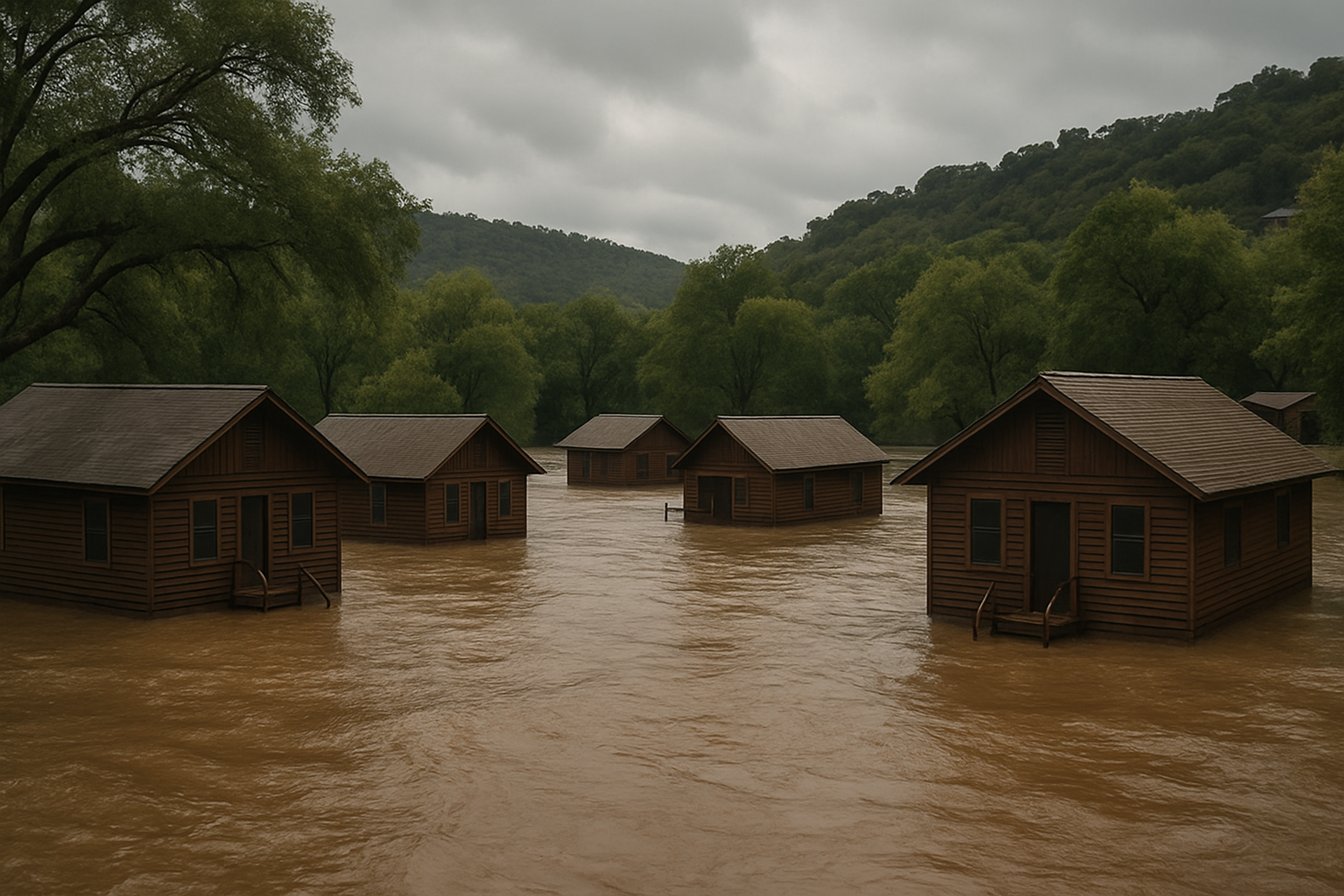
One detail that has drawn particular scrutiny in the lawsuits is that the camp’s main cabin areas were situated on a low-lying section of the Guadalupe River valley, a stretch of the Texas Hill Country that the National Weather Service has historically flagged for rapid flood risk. The river can rise several feet within minutes during heavy upstream rainfall — a pattern that has caused deadly events in the same corridor in prior decades.
The flooding struck in the predawn hours, when campers were asleep in riverside cabins. Survivors and witnesses have described walls of water arriving with almost no warning, tearing through structures before staff could fully evacuate. The death toll placed the disaster among the deadliest flash flooding events in Texas history.
Lawsuits allege the camp ignored evacuation warnings
Multiple civil complaints filed before the bankruptcy petition allege that camp leadership received weather alerts in the hours before the surge and failed to move campers to higher ground. Attorneys representing several families contend that a timely evacuation — even a partial one — could have saved lives. Camp Mystic has not publicly responded to those specific allegations in detail.
By filing for Chapter 11 bankruptcy, the camp’s operators can propose a reorganization plan that would pool all victim claims and distribute any available assets through a court-supervised process. That structure is similar to the approach used in mass-tort bankruptcies involving institutions facing hundreds of injury claims at once, such as the Boy Scouts of America settlement finalized in 2023. Victims’ attorneys have already begun pushing back, arguing that the filing is an attempt to limit payouts rather than genuinely restructure a going concern.
Whether Camp Mystic intends to reopen is unclear. The physical site sustained severe structural damage in the flood, and several families have publicly called for the camp to be permanently closed. Texas state regulators have separately opened an inquiry into whether the camp maintained adequate emergency protocols under state licensing requirements for youth camps.
Texas Hill Country flood risk has drawn wider attention
The disaster reignited a long-running debate about development and youth programs in the Guadalupe River corridor. Environmental and emergency management advocates have pointed out that the Hill Country’s thin limestone soil drains poorly, funneling rainfall directly into rivers at dangerous speed. Flash flood warnings in the region carry a standing instruction from local authorities: “Turn around, don’t drown” — a phrase that takes on grim weight when the flooding reaches people in their sleep.
Texas Governor Greg Abbott declared a disaster in Kerr County following the flooding, unlocking federal recovery resources. The Federal Emergency Management Agency deployed teams to the area, and search and rescue operations continued for days after the initial surge as crews worked the river downstream.
The tragedy also raised questions about how summer camps across flood-prone states communicate weather risk to families. Many parents have said they were not informed of any elevated weather threat on the night of the flood, and that they received news of the disaster through social media rather than official camp communications.
What the bankruptcy process means for victims’ families
For families pursuing wrongful death claims, the bankruptcy filing is a setback in the short term — it halts individual suits and forces claimants to file proofs of claim in bankruptcy court instead. However, the process does create a defined endpoint: a judge will ultimately rule on how the camp’s assets and insurance proceeds are divided among creditors, including flood victims.
The outcome will depend heavily on how much insurance coverage Camp Mystic carried and whether any of that coverage applies to negligence claims. If coverage is limited, families could be left collecting cents on the dollar. Attorneys for several plaintiffs have indicated they plan to challenge the bankruptcy filing’s legitimacy and argue that the camp’s principals should face personal liability.
A hearing on the initial bankruptcy petition is expected to be scheduled within the coming weeks in federal court. That proceeding will determine whether the case proceeds as a standard reorganization or takes a specialized mass-tort track — a distinction that will shape the timeline and outcome for every family waiting on answers.
For more on extreme weather emergencies in the U.S., see our earlier coverage of the NYC tornado and flash flooding alert and the 40 deaths tied to France’s heatwave drownings.