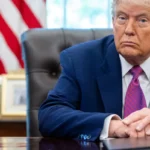
A New Orleans grand jury has indicted Louisiana Attorney General Liz Murrill on multiple felony charges, including eight counts of intimidation directed at the city’s newly-elected mayor, according to reporting by NOLA.com, which first broke the story. The indictment marks one of the most extraordinary legal actions ever taken against a sitting state attorney general in Louisiana history.
The non-obvious detail buried in the charges: the intimidation counts are specifically tied to Murrill’s conduct toward New Orleans’ newly-elected mayor — meaning prosecutors allege the state’s top law enforcement officer used her office to pressure a local elected official shortly after that official took power. That framing transforms this from a generic misconduct case into an allegation of institutional bullying at the highest level.
What the New Orleans Grand Jury Charged
The grand jury returned an indictment listing eight counts of intimidation alongside additional felony charges. Grand jury proceedings in Louisiana are secret until an indictment is handed down, so the full evidentiary record behind the charges has not been publicly released. Prosecutors in Orleans Parish — the jurisdiction covering New Orleans — presented the case, meaning the charges were brought at the local level against a statewide official.
Intimidation of a public official is a serious felony under Louisiana law, carrying potential prison time on each individual count. With eight separate counts, Murrill faces compounding exposure if the case proceeds to trial and results in convictions.
Murrill’s Role as Attorney General
Liz Murrill was elected Louisiana Attorney General in November 2023 and took office in January 2024. As the state’s chief law enforcement officer, she oversees the Department of Justice, represents the state in civil and criminal matters, and holds broad authority to investigate public corruption. The indictment puts her in the unusual position of being both the head of state law enforcement and a criminal defendant.
Her office has been active on several high-profile fronts in recent years, including legal challenges involving federal policy and state sovereignty disputes — making the New Orleans indictment a direct collision between state and local prosecutorial authority.
New Orleans Mayor at the Center of the Allegations
The indictment centers on Murrill’s alleged conduct toward the newly-elected New Orleans mayor. The timing matters: an attorney general targeting a newly-installed mayor — before that mayor has had time to consolidate political standing — is the kind of conduct grand jurors apparently found warranted felony charges rather than a civil or ethics complaint.
New Orleans has historically had a fraught relationship with state leadership, with frequent clashes over criminal justice policy, policing, and municipal authority. That backdrop adds context to why a local grand jury moved against a statewide official — though the indictment itself rests on the specific alleged acts, not the broader political friction.
What Happens to a Sitting AG Facing Felony Charges
Louisiana’s constitution does not automatically suspend a statewide official upon indictment — removal would require either a conviction or a separate legislative process. That means Murrill can continue serving as attorney general while the case works through the courts, an arrangement that legal observers have historically noted creates awkward institutional tensions when the official charged is the state’s top prosecutor.
She is entitled to a presumption of innocence, and her legal team will have the opportunity to challenge the indictment, seek dismissal on jurisdictional or procedural grounds, or contest the charges at trial. Defense attorneys in high-profile political cases often move first to argue that local prosecutors lacked the authority or standing to bring charges against a statewide official.
The case will now proceed through Orleans Parish criminal court. A arraignment date has not yet been publicly scheduled as of this reporting.
A Rare Prosecution of State Power
Indictments of sitting attorneys general are rare anywhere in the country. When they happen, they tend to reshape the political environment around them — affecting the official’s ability to litigate on behalf of the state, manage staff, and maintain credibility in ongoing cases. Louisiana’s Republican-led legislature will face pressure to clarify whether Murrill retains full authority during a pending felony prosecution.
The broader political climate in mid-2026 has already seen elevated tensions between local and state governments across the country, and this indictment is likely to accelerate that conversation in Louisiana specifically. For context on how institutions respond when authority figures face criminal accountability, the pattern seen in other recent high-profile cases — from corporate fraud to public health — shows that legal proceedings rarely stay contained to the courtroom alone.
For readers tracking public health and public trust intersections, how institutions maintain credibility under legal and political pressure has become a defining challenge of the decade.
The next concrete milestone to watch: whether Murrill’s legal team files a motion to quash the indictment, and how the Orleans Parish court rules on that challenge. That decision will determine whether this case goes to trial or collapses before it gets there.