The Africa Centres for Disease Control and Prevention has labeled the current Ebola outbreak the fastest-growing ever recorded, with more than 600 people dead since cases first spiked in mid-May 2026. The warning, reported by ABC Australia on July 10, marks a grim threshold that health officials say surpasses the pace of every previous outbreak — including the devastating 2014–2016 West Africa epidemic that killed more than 11,000 people over roughly two years.
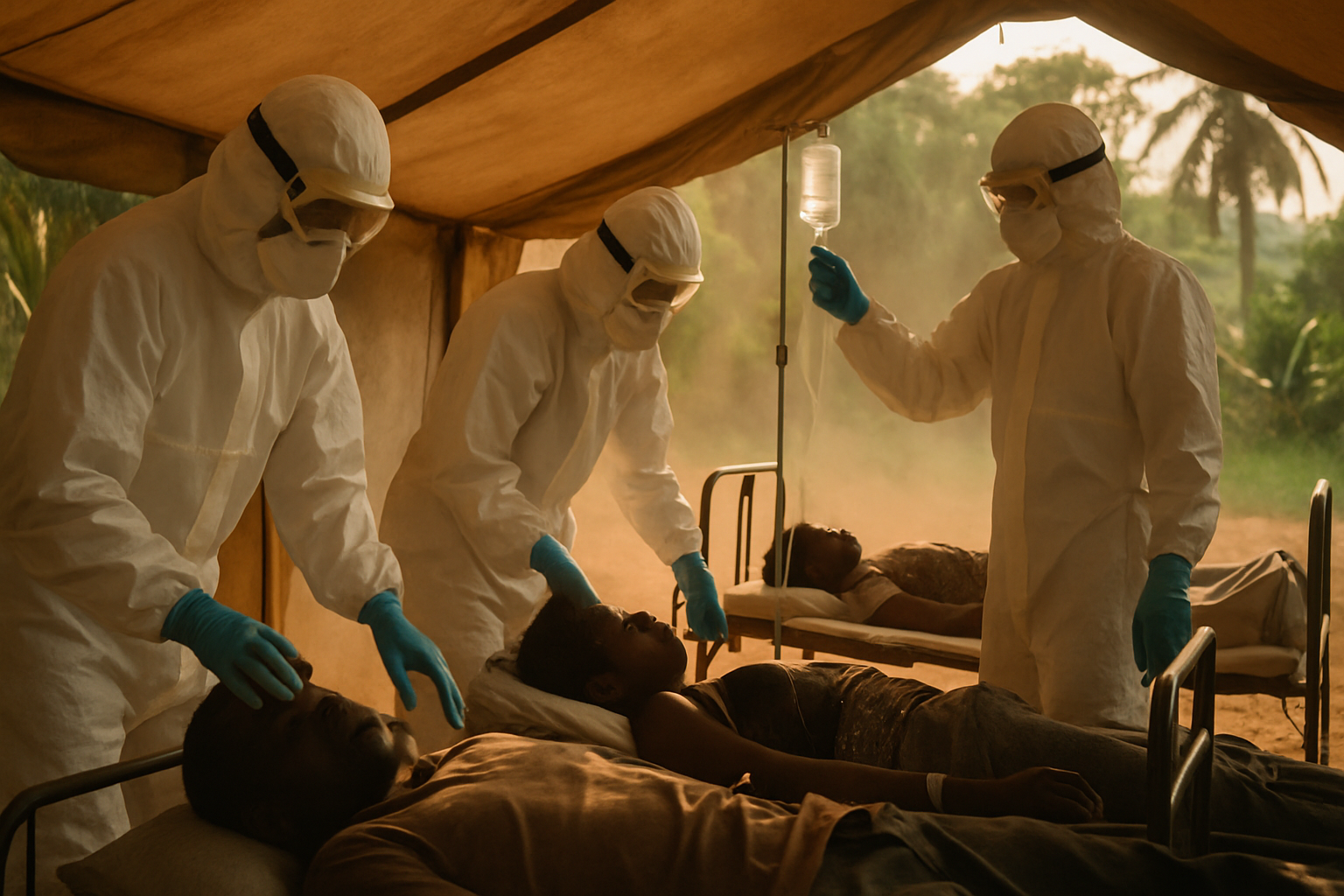
The detail that isn’t in the headline: Africa CDC officials say the speed of geographic spread, not just raw death counts, is what makes this outbreak historically unusual. Cases have appeared across multiple sub-regions in a compressed timeframe that has overwhelmed early containment protocols.
600 Deaths in Less Than Two Months
From mid-May to the first week of July 2026 — fewer than eight weeks — the death toll crossed 600. For context, the 2018–2020 outbreak in the Democratic Republic of Congo, the second-deadliest on record, took roughly 21 months to accumulate a comparable number of fatalities. The current outbreak’s fatality trajectory is climbing at a rate that Africa CDC describes as unprecedented in the pathogen’s known history since its discovery in 1976.
Africa CDC has not yet disclosed the exact country or countries at the epicenter of the latest surge, citing ongoing field verification, but the organization confirmed that cross-border movement of cases is a primary driver of the rapid spread. Weak surveillance infrastructure in affected border regions has complicated contact tracing efforts significantly.
Why Containment Has Stalled
Ebola spreads through direct contact with the bodily fluids of infected individuals, and historically it has been controllable through aggressive isolation, contact tracing, and ring vaccination — the strategy that helped end the 2018 DRC outbreak. Those tools are still available, but Africa CDC officials point to a combination of factors slowing their effectiveness this time around.
Community mistrust of health workers has re-emerged as a barrier in some areas, echoing dynamics seen during previous outbreaks in eastern DRC, where armed conflict and political instability undermined response teams. Additionally, the geographic footprint of this outbreak appears larger at onset than past events, stretching response resources thinner and faster.
The rVSV-ZEBOV vaccine, marketed as Ervebo and approved by the FDA and WHO, remains a proven tool against the Zaire strain of Ebola. However, vaccine deployment depends on cold-chain logistics and community cooperation — both of which require time and stability that an accelerating outbreak makes harder to guarantee.
Africa CDC’s Emergency Posture
Africa CDC has activated an emergency operations framework and is coordinating with the World Health Organization and national health ministries in affected countries. The organization is calling on international partners to accelerate shipments of personal protective equipment, diagnostic supplies, and vaccine doses.
The WHO has not yet declared a Public Health Emergency of International Concern (PHEIC) in connection with this outbreak as of July 11, 2026, but the Africa CDC’s “fastest-growing ever” designation will almost certainly factor into any imminent PHEIC assessment. A PHEIC declaration unlocks additional international funding streams and compels member states to report case data more rapidly.
For Americans, the risk of Ebola reaching the United States remains very low based on current data, but the CDC in Atlanta monitors all international Ebola events and screens travelers from affected regions at designated U.S. ports of entry. The 2014 West Africa outbreak produced two locally transmitted U.S. cases — both in healthcare workers — and zero community spread, demonstrating that strong hospital protocols effectively contain the virus even when it arrives on U.S. soil.
What the Next 30 Days Could Determine
Epidemiologists generally treat the first 60–90 days of an Ebola event as the window where intervention either bends the curve or loses control of it. With roughly 50–55 days already elapsed since mid-May, the next four weeks are expected to be decisive. If ring vaccination campaigns can reach a critical mass of contacts and the geographic spread can be slowed, historical precedent suggests the case count can plateau.
If not, Africa CDC’s “fastest-growing ever” description could be an understatement by August. The organization has asked for a surge in international response funding and personnel, and the pressure on the WHO to issue a formal emergency declaration is growing by the day.
For readers interested in other major public health cost stories, a U.S. nonprofit recently erased $40 billion in medical debt — a reminder of how health system capacity shapes who survives a crisis, whether the threat is a virus or a hospital bill.
Africa CDC is expected to release updated case counts and a formal situation report within 48 to 72 hours. Those numbers will be the clearest signal yet of whether the outbreak’s trajectory is bending — or steepening.