Images chosen by Narwhal Cronkite
Canada Will Not Let US Dictate Terms of USMCA Review, Says Carney
Canada’s stance on the upcoming review of the United States-Mexico-Canada Agreement (USMCA) has set a resolute tone in ongoing trade discussions within North America. Mark Carney, Canada’s decorated economist and respected voice in global finance, recently stated that Canada would not allow the United States to dictate the terms of the agreement’s 2026 review. His comments underline a more assertive approach for Canada, signaling a potential shift in how this trade agreement may evolve in the coming years.
Why the USMCA Review Matters
Signed into effect in 2020, the USMCA, the successor to NAFTA, governs nearly $1.5 trillion in annual trade between the three countries. Its scheduled review in 2026 will evaluate whether the agreement continues to serve the interests of all parties. While USMCA addressed some key trade issues like auto production and labor standards, its renegotiation has prompted concerns over which country may attempt to secure advantageous revisions at the expense of others.
Canada appears to be preparing to take a strong stance earlier than expected. While speaking to reporters, Mark Carney highlighted the importance of mutual respect in renegotiation talks. “Canada’s vision for the USMCA is simple: fairness and balance,” Carney stated. “We will not let any single nation dictate terms that undermine the interests of Canadians.”
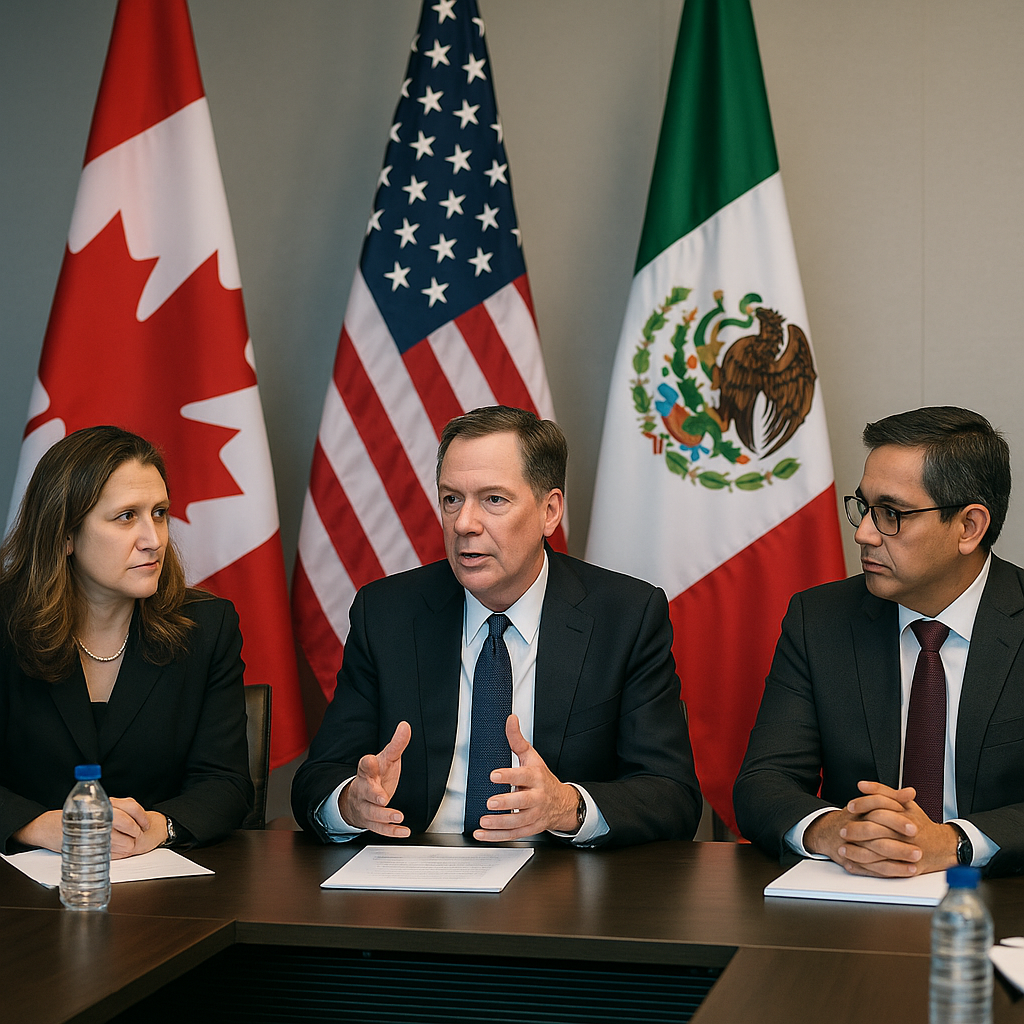
A Balancing Act Between Trade Partners
Experts are watching closely to see whether Carney’s remarks signal a recalibration of Canada’s position in North American trade relations. The US, led by influential industries and policymakers, is typically seen as the dominant player in trilateral negotiations. However, Carney’s comments may mark an expansion of Canada’s willingness to stand firm on its economic priorities.
Trade analysts note that Canada’s key industries, including agriculture, manufacturing, and energy, have felt the push and pull of US-centric trade decisions over the years. Dr. Laura Gibbons, an economist at Queen’s University, commented, “In past trade agreements, Canada often deferred to larger economies, but this rhetoric from Carney suggests a more independent approach moving forward. It’s a strategic pivot worth noting.”
Mexico will also be a vital player in determining the direction of any future amendments to the pact. Historically, Mexico has sought to solidify labor rights and energy sovereignty provisions, which sometimes put it at odds with US objectives. Observers are curious about Canada’s strategies for aligning—or possibly clashing—with its southern partner.

Major Points of Contention
As the review year approaches, several issues are poised to be hotly debated, including environmental regulations, digital trade policies, and agricultural tariffs. Of particular note is the automotive sector, one of the USMCA’s most complex issues. Stricter rules-of-origin requirements under the agreement have spurred challenges for manufacturing industries in North America.
Climate commitments also remain a gray area for all parties involved. Canada’s push for greener policies may run counter to US calls for regulatory flexibility in energy production, particularly in oil and gas-intensive states. Similarly, agricultural trade remains a sensitive sector, with Canada’s supply management systems for dairy often at odds with calls for increased US market access.
“If the Americans carry the spirit of renegotiation that we saw during NAFTA’s rebranding, Canada could find itself in a defensive position,” said Michelle Rodriguez, a senior policy analyst specializing in trade agreements. “But early positioning like Carney’s sets the tone for a Canada-first approach, which could level the playing field.”

What’s Driving Canada’s Firm Stance?
There are several factors prompting Canada to take this assertive tone. First, economic resilience will likely shape Canada’s approach, as global trade remains volatile in the wake of the pandemic and geopolitical tensions. Second, upcoming elections in both Canada and the US could influence how deeply governments are willing to compromise on trade.
Furthermore, the USMCA includes a “sunset provision” that requires members to reauthorize the agreement every 16 years, with reviews like the 2026 check-in designed to ensure compliance. Canada appears intent on using this structure to advocate for greater equity in trade terms while avoiding any perception of passivity, a common critique leveled at past administrations during NAFTA negotiations.
“Canada’s leadership is making it clear that their national interests cannot be overshadowed,” observed Gibbons. “This could mean we see a less US-dominated dynamic this time around, though much will depend on how negotiations unfold once they formally begin.”
What’s Next for North American Trade?
With the review deadline still three years away, there is ample time for tensions—and partnerships—to evolve. Analysts agree that strategic positioning by leaders like Carney is only the first step in setting the stage for a complex negotiation process. Much of the outcome will hinge upon how Canada, the US, and Mexico address their differences while finding common ground.
For Canada, the challenge will be maintaining this early momentum and unity of message while managing potential domestic criticisms. Past negotiations on NAFTA revealed sharp debates about how the government balanced protecting Canadian industries with broader trade benefits. Canada’s trade leaders will likely need to rally both political and industry support to uphold Carney’s bold declarations.
Looking ahead, industry experts like Rodriguez are keying in on rising tensions over resource management, automotive trade, and digital commerce as areas most likely to see contentious debates. Whether or not Carney’s remarks translate into substantive benefits for Canada remains to be seen, but their impact on the rhetoric surrounding USMCA negotiations is already evident.
As the timeline toward 2026 advances, both private and public stakeholders in Canada—and across North America—will find themselves drawn into discussions that may redefine the trade landscape for decades to come.
The Road Ahead
The USMCA review has the potential to reshape the trade framework of North America. Carney’s definitive comments set a strong precedent for Canada’s evolving stance in this dynamic agreement, but the road ahead is fraught with challenges and uncertainties.
Will North America’s trading bloc emerge stronger and more unified after 2026, or will unresolved tensions divide its participants further? Only time will tell, but Canada’s early positioning suggests a commitment to ensuring its interests remain not just part of the conversation—but central to it.
In the meantime, industry experts and policymakers alike will be watching closely as negotiations begin to take shape.