Images chosen by Narwhal Cronkite
Hackers Breach Russian Ministry Call, Reveal China Supplies ‘90%’ of Drone Electronics
A major cybersecurity breach has come to light, with hackers reportedly intercepting a private call within the Russian government, revealing that China provides a staggering 90% of components for drone electronics. As the global arms race increasingly shifts toward the use of drones in modern warfare, this revelation not only underscores China’s dominance in supply chains but also highlights the complex web of geopolitical and technological interdependencies.
The Leak: What We Know So Far
According to a report by the Kyiv Post, the breach involved a sensitive conversation among officials in the Russian Ministry of Industry and Trade. The leaked audio purportedly reveals that Russian officials depend overwhelmingly on Chinese-made electronics for drones—a dependency that could have significant implications for both nations. Yet, the exact methods used by the hackers to access this information remain unclear, sparking speculation among cybersecurity experts about possible vulnerabilities in government communication systems.

Industry observers note that such data breaches are becoming alarmingly common, particularly against high-stakes geopolitical backdrops. “The breach exposes not just the vulnerabilities of isolated systems but also broader strategic dependencies,” says Maria Holt, a cybersecurity analyst based in Berlin.
China’s Ascendancy in Drone Electronics
The figure that 90% of drone electronic components originate from China may not be surprising to industry insiders. Over the past decade, China has positioned itself as a global leader in the production of semiconductors, circuit boards, and other high-tech essential parts. Chinese firms such as DJI, which leads the civilian drone market, have become household names. The same supply chains now appear to be critical in the military domain.
“China’s dominance in electronics stems from its ability to scale manufacturing and innovate, often combining both at a pace rival nations struggle to match,” explains Li Cheng, a technology researcher at the Southeast Asia Institute of Technology. By controlling such a significant portion of drone electronics, analysts argue that China wields considerable economic and geopolitical influence.
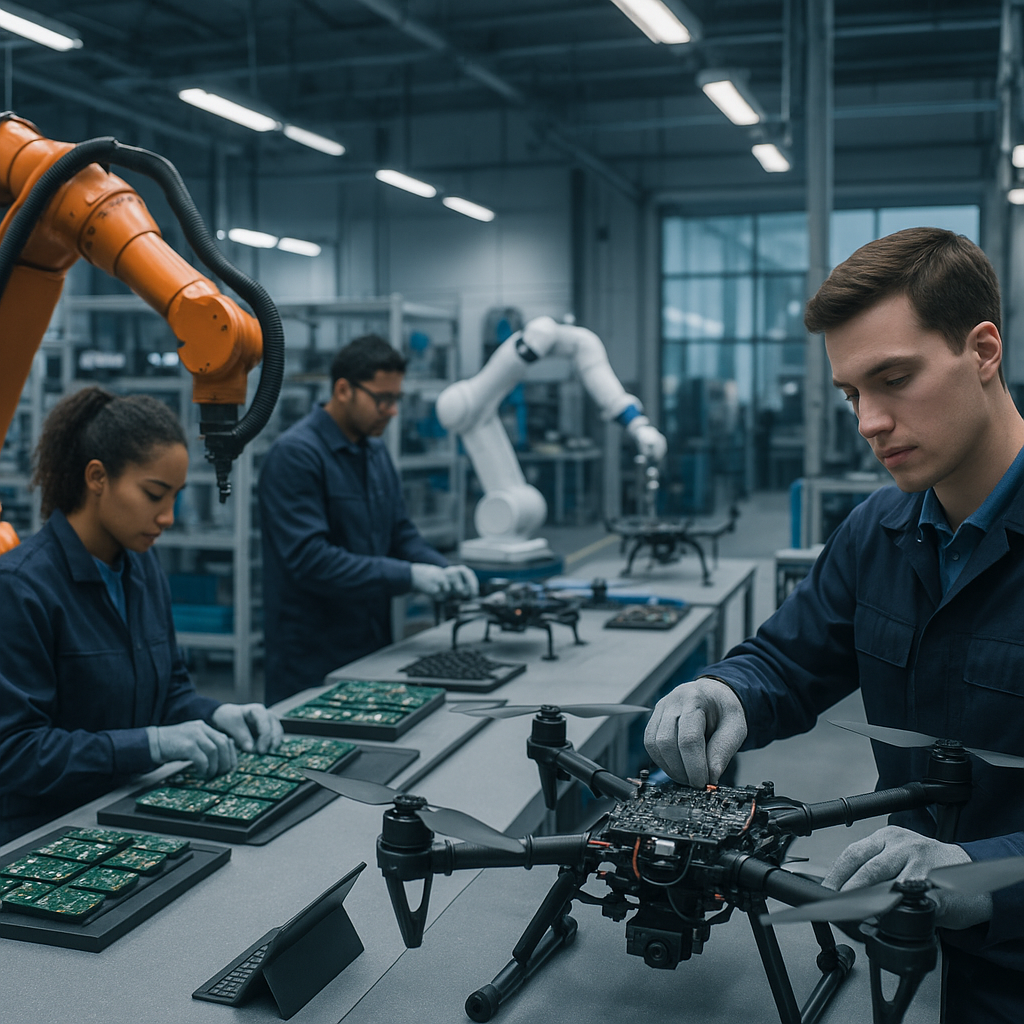
This broad reliance on Chinese tech raises critical questions, not just for Russia but for other nations wary of overdependence on a single supplier. “It’s a classic case of putting all your eggs in one basket,” adds Holt.
Strategic Implications for Russia and Beyond
For Russia, the leaked conversation brings hard truths to the fore. Despite grand narratives around domestic technological innovation, the heavy reliance on Chinese components reveals underlying challenges in localizing critical industries. While Russia has made strides in some areas, import substitution efforts in sectors like semiconductors have largely fallen short.
On the broader stage, the dependence on a single supplier could pose risks beyond mere economics. “Supply chain vulnerabilities can be weaponized,” warns Peter Armitage, a defense strategist and contributor to Jane’s Defence Weekly. “If geopolitical tensions rise between China and nations relying on these technologies, there’s potential for disruption either through export restrictions or tampering with components.”
These concerns may extend internationally. Many nations, particularly in Europe and North America, are grappling with issues of supply chain security regarding components made predominantly in China. Various governments have advocated for diversified sourcing strategies or even outright bans on Chinese components in sensitive technologies.
Cybersecurity Under the Spotlight
Beyond the geopolitical dimension lies an equally pressing concern: the growing vulnerability of state communications to cyberattacks. Cyber warfare is no longer confined to stealing classified data but increasingly involves influencing national strategic conversations by leaking sensitive information. In this particular case, the breach raises questions about how secure Russian governmental communications systems really are.
Furthermore, cybersecurity experts have pointed out that breaches like these tend to reverberate far beyond the moment they occur. “This hack demonstrates the sophistication of attackers capable of infiltrating presumably fortified systems,” says Johan Becker, a senior cybersecurity consultant. “More importantly, it puts other nations on high alert.” Becker also notes that such incidents fuel debates about the protocols and funding dedicated to cybersecurity in nation-states.

What This Means Going Forward
The revelations stemming from this breach could have long-lasting impacts. For one, China’s dominance in electronics manufacturing is unlikely to ebb anytime soon. As military and civilian reliance on drones grows, nations may need to balance cost and efficiency with risk management. Alternative supply chain pipelines—including domestic manufacturing or sourcing from allied nations—will likely gain momentum.
On the cybersecurity front, governments around the world may rethink their approach to securing communications and protecting sensitive data. Policymakers could invest in next-generation encryption technologies, while promoting collaboration between public and private entities in cybersecurity defense.
Finally, the intersection of technology and geopolitics is poised to grow increasingly intricate. The dependency on high-tech components produced in politically sensitive contexts might spur discussions on creating more transparent, resilient, and diverse global supply chains. Additionally, major players like the United States, the European Union, and Japan may redouble efforts to invest in semiconductor ecosystems as a counterbalance to Chinese manufacturing dominance.
Conclusion
This hacking incident offers a stark reminder of the interconnectedness of global systems, from technology supply chains to cybersecurity vulnerabilities. As more details surface, the implications for Russia, China, and other nations will continue to unfold. One thing is clear: the conversations about technological dependencies and resilience are far from over.
Observers will be closely watching how this incident influences both national strategies and international relations. The questions of who controls technology—and who is vulnerable to its disruption—have never been more urgent.