A US Army live-fire exercise designed to test how American armored forces would fare against Ukrainian-style drone tactics ended with an entire simulated tank brigade knocked out of action, according to a report from Ars Technica published August 15, 2026. The war game, built around lessons drawn directly from the battlefields of eastern Ukraine, is being described by participants as a stark warning about the vulnerability of traditional armored formations to inexpensive, mass-produced drones.
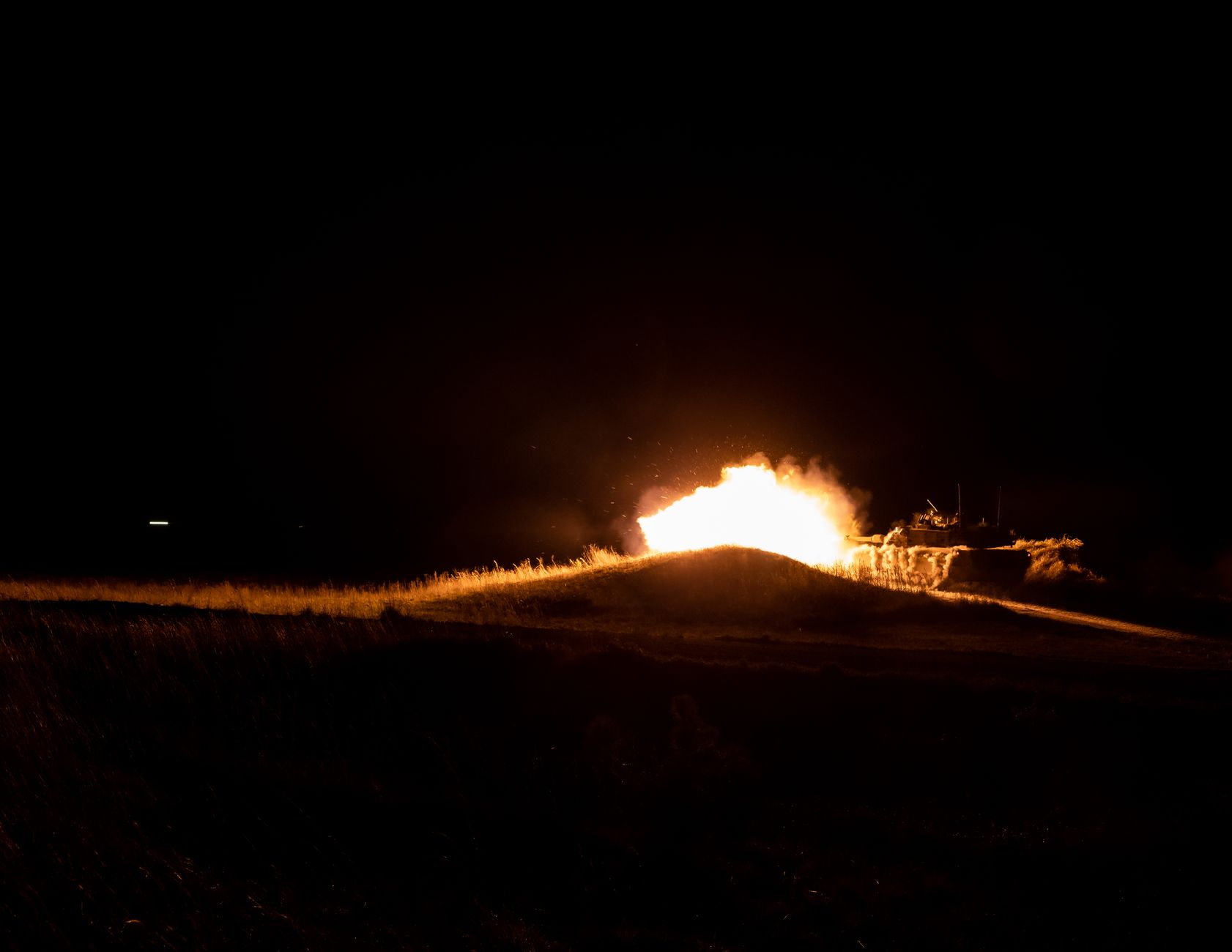
The exercise pitted a mock US armored brigade against opposing forces employing first-person-view (FPV) attack drones and reconnaissance quadcopters, mirroring the swarming tactics Ukrainian units have used to devastating effect against Russian armor since 2022. By the end of the drill, evaluators determined that the simulated brigade — a formation that would typically include dozens of Abrams tanks, Bradley fighting vehicles, and support units — had been effectively destroyed.
How the Drones Won
Military analysts have long warned that the era of cheap, expendable drones has fundamentally changed the calculus of armored warfare. Ukrainian forces have repeatedly demonstrated that a $500 FPV drone loaded with an explosive charge can disable a multimillion-dollar tank, provided operators can identify, track, and strike it before it reacts. The tactics rely on layered drone reconnaissance to spot vehicles, rapid target handoff to strike teams, and sheer volume — overwhelming a unit’s defenses with more drones than it can shoot down or jam.
In the US exercise, opposing forces reportedly replicated this approach, using low-cost drones to locate armored vehicles and then launching successive strikes faster than the simulated brigade could disperse, camouflage, or employ countermeasures. The result echoes patterns seen throughout the Russia-Ukraine war, where drone footage of disabled Russian armor columns has become a defining image of the conflict.
A Wake-Up Call for the Pentagon
The Army has increasingly leaned on observations from Ukraine to inform its modernization priorities, and officials familiar with the exercise say the outcome is likely to accelerate ongoing efforts to field counter-drone systems, improve vehicle camouflage and signature reduction, and rethink how armored formations move and mass on a modern battlefield saturated with cheap aerial sensors and munitions.
Among the areas of focus reportedly under discussion:
- Expanding electronic warfare and jamming capabilities down to the individual vehicle and squad level
- Developing active protection systems capable of intercepting small drones, not just missiles
- Reducing the visual and thermal signature of armored vehicles to complicate drone targeting
- Rewriting doctrine around dispersal, concealment, and reduced formation density
The exercise adds to a growing body of evidence — from wargames, live demonstrations, and the war in Ukraine itself — that armored vehicles designed in the Cold War era were not built to survive an environment where adversaries can field thousands of low-cost, precision-guided drones. Ukraine’s own defense industry has scaled drone production dramatically over the past two years, a shift that has also reshaped the broader economy and infrastructure inside the country, including logistics networks recently targeted by Ukrainian drone strikes on major logistics hubs.
Lessons Drawn From the Front Lines
Ukrainian officers who have advised NATO militaries on drone tactics have consistently stressed that survivability now depends less on armor thickness and more on speed of detection, dispersal, and electronic countermeasures.
Ukraine has effectively become a live laboratory for 21st-century combined-arms warfare, and Western militaries — including the US Army, British Army, and other NATO members — have sent observers and, in some cases, active-duty personnel to study Ukrainian drone units directly. Those exchanges have informed training curricula, equipment procurement, and now, apparently, the design of exercises meant to stress-test American units against realistic drone threats.
What Comes Next
The Army has not announced specific policy changes stemming from the exercise, and officials caution that a single simulation does not necessarily predict outcomes in real combat, where terrain, weather, air superiority, and layered air defenses all play a role. Still, the drill is expected to feed into ongoing budget and doctrine debates in Washington over how quickly the service should shift funding away from traditional heavy armor programs and toward drone, counter-drone, and electronic warfare capabilities.
For now, the exercise stands as one of the clearest signals yet that the Pentagon views the drone-saturated battlefields of Ukraine not as a distant conflict but as a preview of how the next major war could be fought — and lost — without significant adaptation.