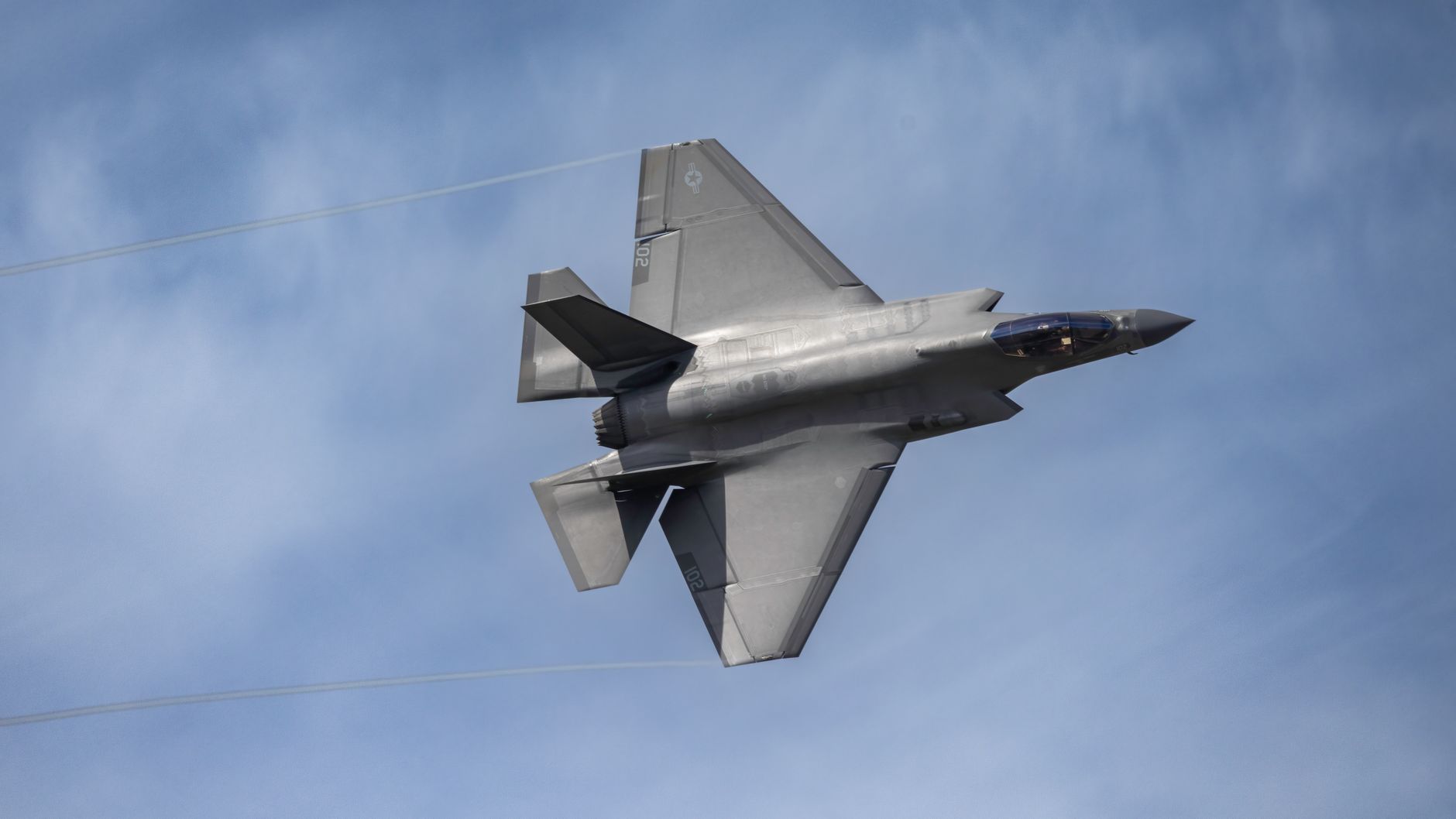
Classified components belonging to the F-35 fighter jet program have gone missing after a shipment originating in Australia was rerouted through Hong Kong, according to a new report examining gaps in the aircraft’s global logistics network. The disappearance has alarmed defense officials in multiple countries who fear sensitive stealth technology may have fallen into the wrong hands.
The report indicates the parts were part of a routine logistics transfer tied to Australia’s role in the international F-35 sustainment network, which relies on a web of contractors, freight carriers, and regional hubs to move spare parts and components to squadrons operating the jet around the world. Hong Kong, a major commercial shipping and air cargo hub, does not typically feature as an authorized stop for classified US defense materiel, raising questions about how and why the shipment was diverted there in the first place.
How the Shipment Went Astray
Details of the exact components involved have not been fully disclosed, but defense logistics experts say F-35 spare parts shipments often include sensitive avionics, sensor modules, or structural components that carry export-control restrictions under US arms trafficking regulations. Even seemingly minor hardware can reveal design details about the jet’s radar-evading capabilities if examined closely by a foreign intelligence service.
According to the report, the shipment was supposed to move through a chain of approved carriers and checkpoints before reaching its final destination. Instead, records reportedly show it was redirected to Hong Kong, where the chain of custody appears to break down. Investigators have not yet determined whether the diversion was the result of a clerical and logistics error, a breach by a compromised contractor, or a deliberate interception.
“Any break in the chain of custody for classified defense articles is treated as a serious security incident until proven otherwise,” a defense logistics analyst told reporters, describing the general protocol governing such shipments.
Why Hong Kong Raises Red Flags
Hong Kong’s status as a global trade and logistics hub has made it a frequent transshipment point for legitimate commerce, but it has also drawn scrutiny in recent years over its proximity to mainland China and concerns that Beijing has tightened its influence over the territory’s institutions since implementing a national security law in 2020. US and allied officials have repeatedly flagged Hong Kong as a potential channel through which sensitive Western technology could be diverted toward Chinese state actors, whether through smuggling networks or exploitation of commercial freight systems.
The F-35, built by Lockheed Martin, is the most advanced fighter jet operated by the United States and a coalition of allied nations, including Australia, the United Kingdom, Japan, and several NATO members. Its stealth coatings, sensor fusion systems, and mission software represent some of the most closely guarded military technology in the Western alliance. Any leakage of components or technical data has long been considered a top-tier counterintelligence concern.
Australia’s Role in the F-35 Program
Australia operates dozens of F-35A jets and serves as a regional maintenance and logistics hub for the aircraft under the broader international sustainment framework. That role gives Canberra significant responsibility for safeguarding parts as they move between countries, making any lapse in the supply chain a matter of concern not just for Australia but for every partner nation relying on the same pipeline.
Australian defense officials have not yet issued a detailed public statement addressing the specific findings in the report, though the country’s Department of Defence has previously stressed that it maintains strict protocols for handling classified US-origin materiel in line with agreements under the F-35 Joint Program Office.
What Happens Next
Investigators are expected to review shipping manifests, contractor records, and customs documentation to reconstruct exactly when and where the shipment diverged from its authorized route. Because the F-35 program operates under a multinational security framework, any confirmed breach would likely trigger a formal review involving the US Department of Defense, the F-35 Joint Program Office, and Australian defense authorities.
Analysts note that even if the missing components turn out to be lower-sensitivity items, the incident is likely to prompt a broader audit of how classified defense shipments are tracked once they leave secure military channels and enter commercial freight networks. Supply chain security has become an increasingly prominent worry for Western militaries as global logistics systems grow more complex and dependent on third-party shippers.
No arrests or formal findings of espionage have been announced. Officials caution that the investigation remains in its early stages, and it may take weeks or months before a clearer picture emerges of whether the parts were simply misplaced in transit or intentionally rerouted for other purposes.