Terminator 2: Judgment Day turned 35 on July 3rd, and a detailed behind-the-scenes breakdown shared on r/movies is reminding the internet just how technically audacious James Cameron’s 1991 sequel really was. The film opened to wide release on July 3, 1991, and its visual effects — largely executed by Industrial Light & Magic — permanently changed what audiences expected from blockbuster cinema.
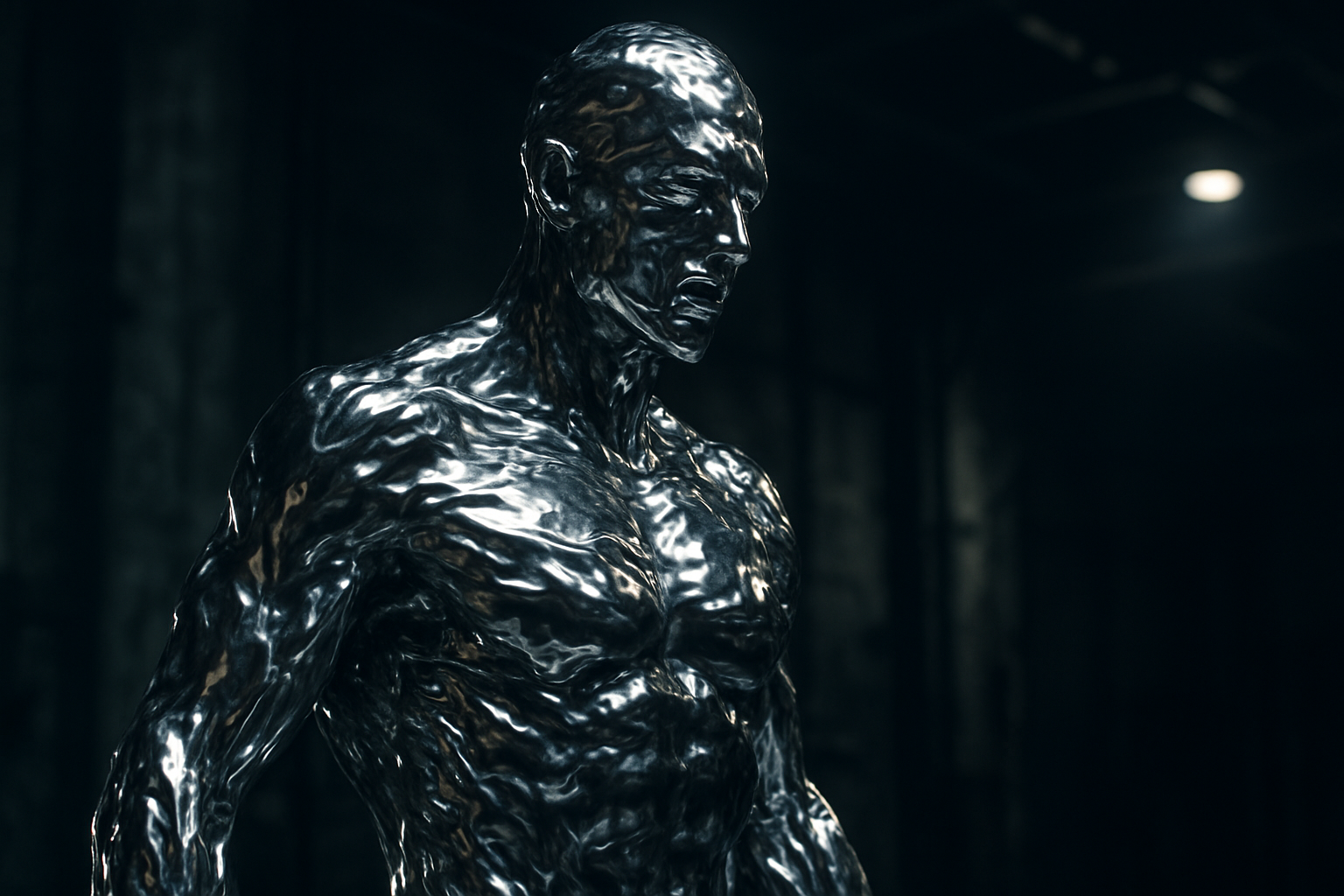
The non-obvious detail buried in most anniversary tributes: the T-1000’s liquid-metal effect required ILM to write entirely new software from scratch. No existing rendering pipeline could simulate the way polished chrome flows, reflects, and reforms around a human body. The team had to build proprietary tools before a single frame of transformation could be rendered.
How Robert Patrick’s body became a canvas for the T-1000 liquid metal effect
Robert Patrick, cast partly because of his lean, almost predatory build, spent weeks with the production team so that ILM could create a precise digital replica of his physique. That digital double became the base mesh for every morphing sequence. When the T-1000 walks through prison bars or reassembles after a shotgun blast, the geometry deforming on screen is mathematically derived from Patrick’s actual body scans — a technique that was essentially unproven at the time.
For the transformation shots, ILM composited Patrick’s real performance against computer-generated chrome surfaces frame by frame. The transitions between practical actor footage and CGI had to be seamless enough to fool audiences who had never seen anything like it. On many shots, the handoff point between “real Patrick” and “digital Patrick” is still nearly impossible to spot, even on modern 4K transfers.
Practical effects carried far more of the film than the CGI highlight reel suggests. The “bullet hole” wounds that seal themselves used a combination of on-set puppetry and prosthetics. Patrick wore custom-rigged costumes fitted with collapsible channels that could snap shut on cue, giving editors clean in-camera material to blend with the digital work. The result was that ILM’s CGI budget — approximately $5 million of the film’s $94–102 million total — went almost entirely toward the sequences where practical solutions simply could not work.
Cameron’s gamble on unproven technology paid off at the box office
T2 grossed over $500 million worldwide on its original theatrical run, becoming the highest-grossing film of 1991 and recouping its then-record production budget several times over. The film also collected four Academy Awards, all in technical categories: Best Sound, Best Sound Editing, Best Makeup, and Best Visual Effects. That last win represented ILM’s first Oscar for work that was primarily computer-generated rather than model-based.
Cameron had already pushed VFX boundaries with The Abyss in 1989, which used an early CGI water pseudopod. T2 scaled that experiment into a full character — one who appears in nearly every act of the film and whose menace depends entirely on the audience believing the effects are real. The pressure on ILM was extraordinary: if the T-1000 looked fake for even a few seconds, the film’s central threat would collapse.
Why the T-1000’s design still holds up in 2026
Terminator 2 VFX has aged better than most CGI from the same era, and the reason is largely philosophical. Cameron and VFX supervisor Dennis Muren made a deliberate choice to keep the T-1000 in motion almost whenever the digital double was on screen. A moving chrome surface self-corrects for rendering artifacts in a way that a static one cannot — human eyes are far better at detecting flaws in something that holds still.
That lesson influenced decades of subsequent blockbuster filmmaking. The practice of choreographing CGI characters to move continuously — and of grounding digital work with as much in-camera practical footage as possible — traces a direct line back to the choices ILM made on a Carolco Pictures soundstage in 1990 and 1991.
Patrick himself has spoken in multiple interviews about the physical demands of the role, which required him to maintain a sprint pace in many sequences to give the T-1000 its signature relentless quality. His lean frame and controlled, almost mechanical movement style reduced the amount of digital correction needed in post-production — a practical decision that saved time and budget.
Fans interested in Hollywood’s ongoing use of digital doubles and AI voice cloning in film and television may want to read about how a Wonka Netflix show used AI to clone Gene Wilder’s voice — a contemporary example of the same tension between honoring a performer’s likeness and pushing new technology forward. And for another major legacy sequel mobilizing two of Hollywood’s biggest names, DiCaprio and Bale have locked in for Heat 2, a production that will inevitably face its own VFX expectations.
ILM has since confirmed in archival interviews that the T-1000 work informed their approach to characters like the liquid-metal assassins in later projects throughout the 1990s and 2000s. The 35th anniversary is a reasonable moment to acknowledge that the film didn’t just raise the bar — it built the bar from materials that hadn’t existed two years prior. Whether any current production matches that level of technological novelty relative to its moment remains an open question, and one that the industry is still actively debating.