Washington DC’s annual Independence Day parade — one of the largest Fourth of July celebrations in the country — was canceled this year due to a dangerous heat wave gripping the capital, according to ABC7 WJLA, the local ABC affiliate that first reported the decision. City officials pulled the plug on the National Mall event as temperatures soared to life-threatening levels, leaving the Pennsylvania Avenue route empty for what is believed to be the first time in decades over a weather emergency.
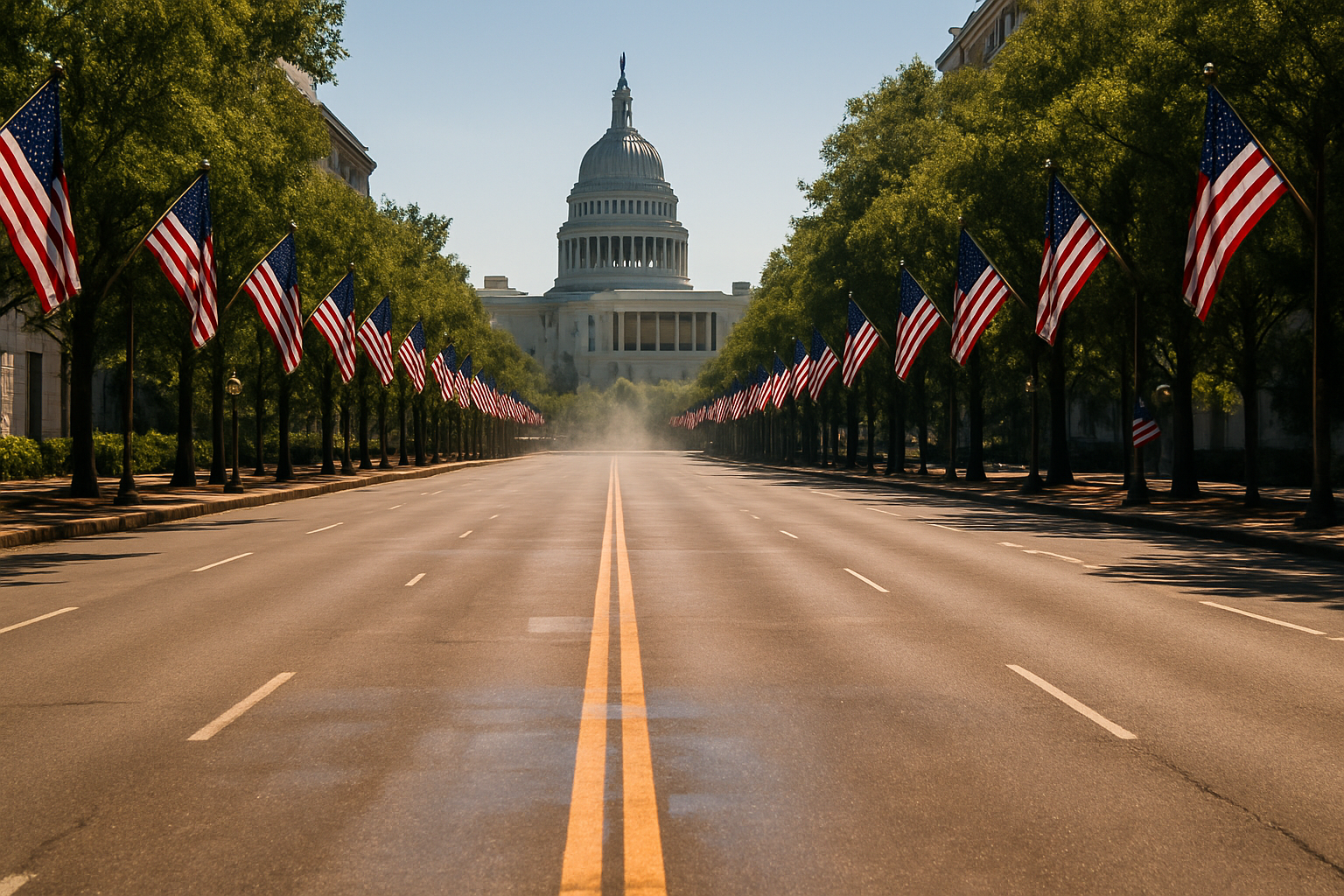
The less-reported detail: the cancellation wasn’t made on the morning of July 4th. Officials called it off in advance, citing forecasted heat index values that would have placed tens of thousands of spectators — many of them children and elderly visitors — at serious risk of heat stroke along a route with almost no shade.
How extreme heat forced DC to stand down on July 4th
The heat wave baking the mid-Atlantic this week pushed Washington DC into dangerous territory, with actual air temperatures expected to top 100°F and a heat index — the “feels like” figure that factors in humidity — climbing well above that. DC’s Department of Parks and Recreation, along with the National Park Service which oversees much of the National Mall, determined that safe crowd management under those conditions was not feasible.
Outdoor mass gatherings in direct sun on paved surfaces are particularly hazardous during extreme heat. Asphalt and concrete absorb and re-radiate heat, pushing ground-level temperatures even higher than official forecasts suggest. For a parade that typically draws hundreds of thousands of spectators standing for hours along exposed streets, the risk calculation shifted decisively.
Fireworks displays on the Mall were also affected, with organizers and city officials reviewing those separately. Cooling centers across the city were kept open through the holiday weekend to serve residents without reliable air conditioning.
A tradition stretching back to 1791, interrupted
DC’s Fourth of July parade has roots going back to the earliest years of the republic and has survived wars, rain, and political upheaval. Canceling it outright for heat is an almost unprecedented move — underscoring just how far outside historical norms this summer’s temperatures have pushed the region. Heat emergencies have disrupted or shortened individual events on the Mall before, but a full advance cancellation of the parade itself is extraordinarily rare.
The decision lands in a summer when extreme heat has already made global headlines. Europe recorded thousands of excess deaths in a single week during a July heat wave — France, Belgium, and the Netherlands among the hardest hit — making DC’s precautionary call look less like an overreaction and more like a public health necessity.
What Washingtonians were told to do instead
City officials encouraged residents to mark the holiday indoors or in air-conditioned venues and directed people to DC’s network of cooling centers if they lacked access to air conditioning at home. The National Weather Service had issued an excessive heat warning for the DC metro area, advising residents to limit outdoor activity during peak afternoon hours, stay hydrated, and check on neighbors — particularly older adults and young children.
Pet owners were also cautioned: pavement hot enough to fry food poses serious burn risks to animals’ paws, and veterinary groups recommend keeping dogs off asphalt when surface temperatures exceed 125°F — a threshold easily met on DC streets this week.
Outdoor event safety in a hotter era
The DC cancellation is part of a broader reckoning for large outdoor events as average summer temperatures climb. Marathon organizers, music festival producers, and municipal governments across the US have increasingly built heat contingency plans into their event permits. Some cities now require on-site medical staff ratios, mandatory water stations, and predefined cancellation thresholds based on wet-bulb temperature — a more precise measure of heat stress on the human body than standard thermometer readings.
July 4th celebrations are a particular pressure point because attendance is enormous, the date is fixed, and patriotic inertia makes cancellations politically awkward. That DC went ahead with the call anyway signals that the risk was genuinely severe.
For anyone still hoping to catch outdoor fireworks programming this weekend, health authorities recommend watching from shaded or indoor viewing areas, arriving after sundown when surface heat begins to dissipate, and keeping infants and elderly family members out of direct exposure entirely. The National Weather Service Baltimore/Washington office is updating heat advisories in real time as the heat dome shifts through the mid-Atlantic.
City officials have not yet announced whether a makeup event or condensed celebration will be rescheduled for later in July, but given the logistical scale of the parade, a simple postponement is unlikely. The 2026 parade will go down in the record books as the one the heat wave took away.