Campaign finance records and reporting that resurfaced online this week have renewed attention on donations that Lockheed Martin’s political action committee and company employees directed to Sen. Susan Collins of Maine during a two-month stretch in 2023 that overlapped with a critical federal watchdog assessment of the F-35 fighter program. The story, which has circulated widely on technology and politics forums since mid-October, arrives roughly three weeks before Election Day, with the Senate seat Collins has held since 1997 on the Maine ballot.
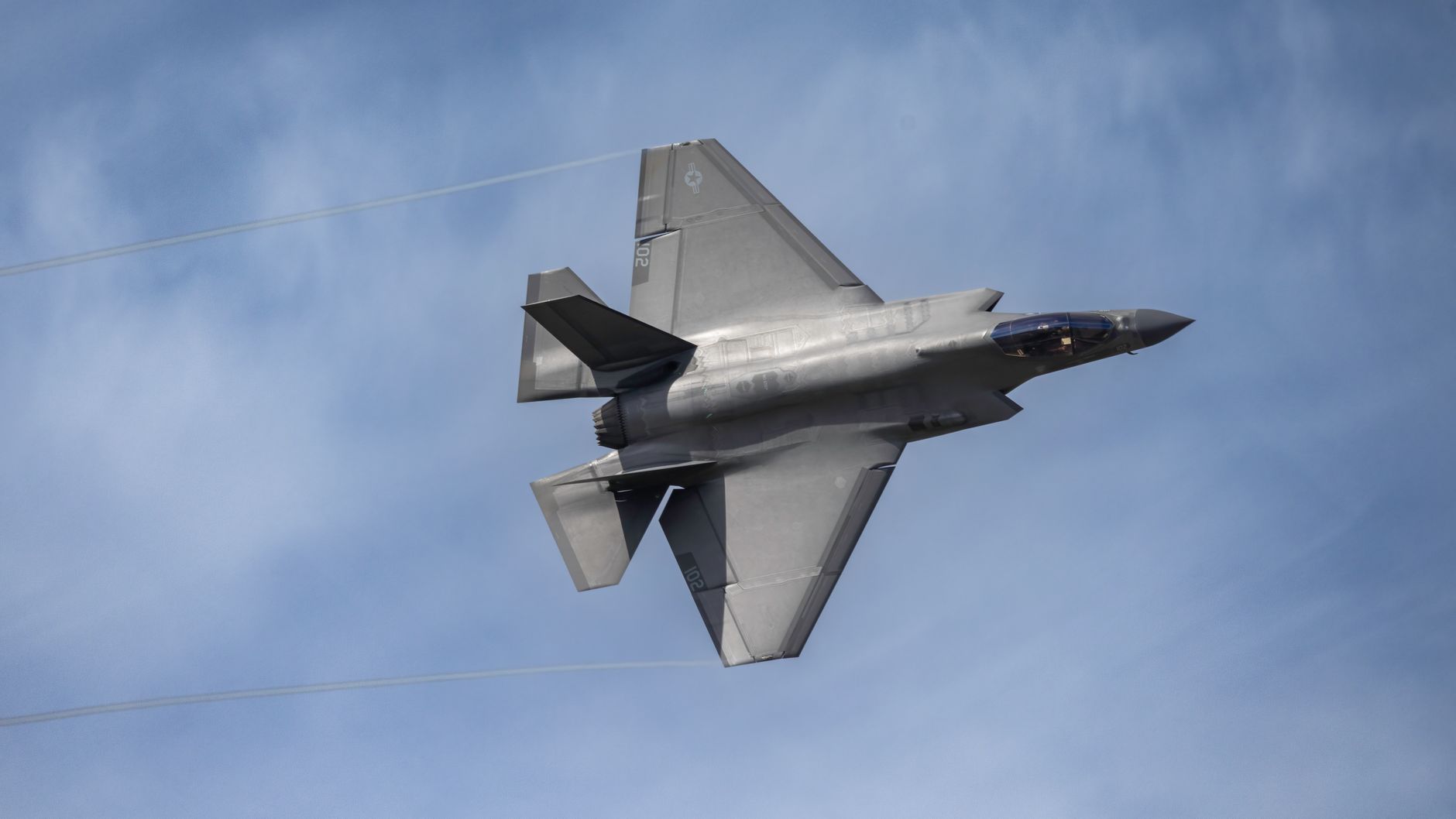
The core claim is narrow and, importantly, not an accusation of illegality: that a defense contractor with one of the largest programs in the federal budget concentrated tens of thousands of dollars in contributions to an appropriator at a moment when that program faced unflattering government findings. Contributions from corporate PACs and from employees of federal contractors are lawful, disclosed to the Federal Election Commission, and routine across both parties.
What the reporting describes
According to the accounts now circulating, the money arrived in two familiar forms. The first is Lockheed Martin’s corporate PAC, which, like all multicandidate PACs, is capped by federal law at $5,000 per candidate per election under Federal Election Commission rules. The second, and the larger share in most such tallies, is individual giving by company executives and employees, which is aggregated by researchers under the employer’s name even though the company itself does not write those checks.
That distinction matters for interpreting the figure. A headline total in the tens of thousands of dollars across a two-month window typically reflects a combination of PAC maximums for a primary and general election plus bundled personal donations from dozens of employees. Watchdog groups argue the aggregation is the point: it reveals coordinated attention from a single corporate orbit. Campaign finance lawyers counter that individual employees have an independent First Amendment right to give, and that grouping them can imply a directive that the records do not establish.
The 2023 watchdog findings
The timing hook in the story is a 2023 review of F-35 sustainment by the Government Accountability Office, Congress’s nonpartisan audit arm. The GAO’s work that year documented persistent problems keeping the fleet in the air: mission-capable rates well below the military services’ own targets, depot repair backlogs, spare parts shortfalls, and engine maintenance bottlenecks tied to the F135 powerplant built by Pratt & Whitney, a unit of RTX.
The GAO also kept raising alarms about lifetime cost. By its April 2024 estimate, the F-35’s projected acquisition and sustainment bill over the program’s life exceeded $2 trillion, making it the most expensive weapons program in US history. Auditors recommended the Defense Department reassess its sustainment strategy and improve cost transparency. Reports and recommendations from that body are published publicly at gao.gov.
None of those findings were secret, and none were directed at any member of Congress. The argument advanced by critics is contextual: that a program under audit pressure has strong incentives to maintain goodwill among the lawmakers who write its checks.
Why Maine sits inside the F-35 supply chain
Collins’s defenders point to a straightforward constituency explanation. Maine has a sizable aerospace and shipbuilding footprint, including Pratt & Whitney’s plant in North Berwick, which produces components for the F135 engine, and General Dynamics’ Bath Iron Works, a major Navy shipbuilder. Advocating for defense manufacturing employment is standard practice for senators from states with those payrolls, regardless of party.
Collins also occupies one of the most consequential seats in federal spending. She has served for years on the Senate Appropriations Committee, including as its chair in the current Congress, and has long been involved in the defense subcommittee’s work. That position makes her a routine target of donations from across the contracting industry, not only Lockheed Martin.
What the records can and cannot show
Campaign finance data establishes who gave, how much and when. It does not establish motive, and it does not demonstrate that any vote or appropriation changed hands. Proving a quid pro quo requires evidence of an explicit exchange, a standard the Supreme Court has narrowed considerably in cases including Citizens United and McDonnell v. United States. No charges, ethics complaints or formal findings have been reported in connection with the 2023 contributions.
The recurring question in defense appropriations is structural rather than criminal: whether the officials who audit, fund and oversee a trillion-dollar program can be insulated from the financial interests of the companies that build it.
That structural critique is not new, and it is bipartisan in its targets. Watchdog organizations have documented similar clustering of contractor contributions around Democratic and Republican appropriators alike. The F-35 has survived a decade of unflattering audits with strong majorities in both chambers, in part because its supply chain reaches dozens of states and hundreds of congressional districts.
The broader scrutiny of defense and tech contracting
The renewed attention lands amid wider public debate over how governments buy complex technology and who benefits. Similar questions have been raised about data and software vendors embedded in state functions, including Palantir’s expanding contracts with the British state. Pressure on discretionary budgets has sharpened the stakes as well, with inflation running at 3.7% in September, squeezing procurement budgets measured in nominal dollars.
What to watch next
Three threads are worth tracking. First, whether Collins’s office or Lockheed Martin issues a substantive response beyond the standard position that contributions are lawful and disclosed. Second, whether the story features in the closing weeks of the Maine Senate race, where defense jobs cut in multiple political directions. Third, whether the GAO’s follow-up work shows measurable improvement in F-35 readiness rates and sustainment costs, the underlying policy question that the contribution dispute tends to obscure.
For now, the documented facts are limited: legal, disclosed donations from a contractor’s PAC and employees to a senior appropriator, concentrated in a window that happened to coincide with a tough audit of the company’s flagship program. How much weight that coincidence carries is a judgment voters and oversight bodies will make, not one the filings resolve on their own.