Images chosen by Narwhal Cronkite
Plan B if Nvidia Crashes the Market Tomorrow
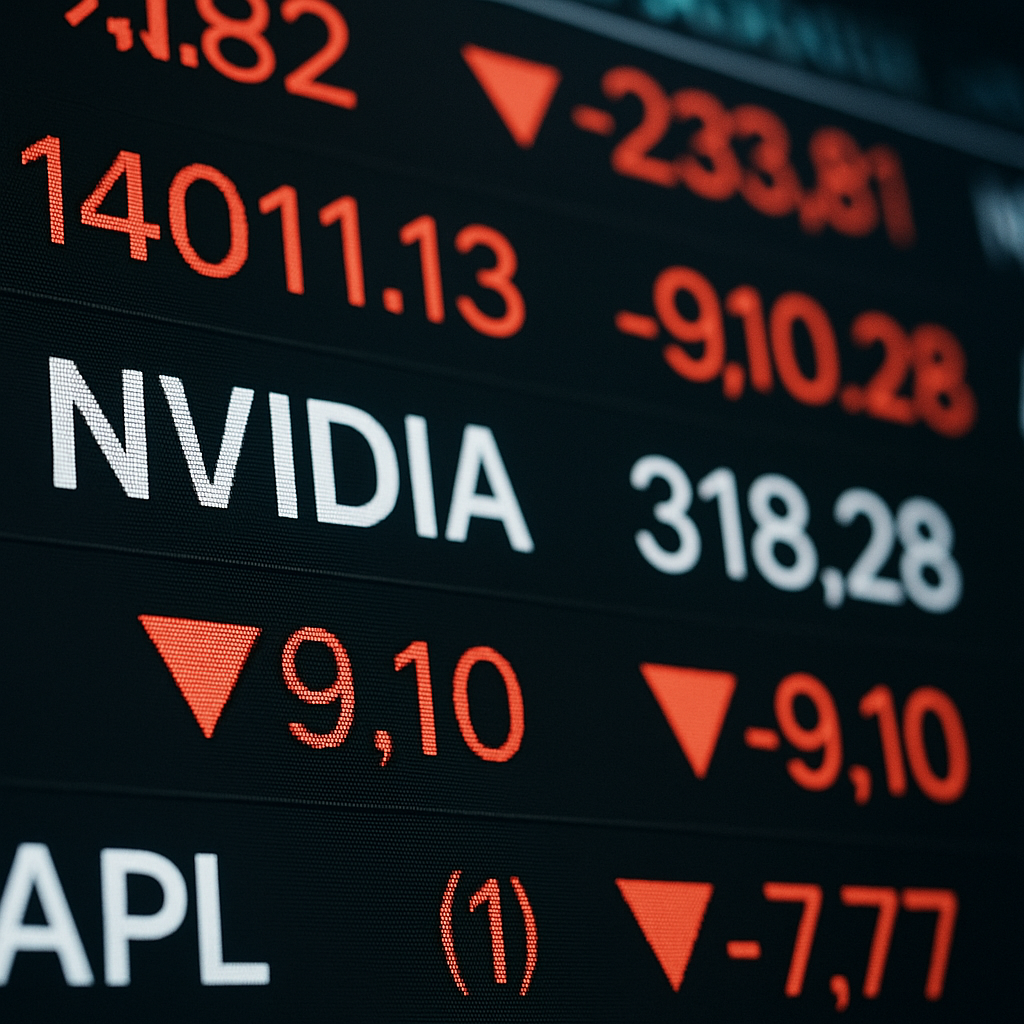
In an industry charged with anticipation and speculation, the question on everyone’s lips is: Could Nvidia spark a market meltdown tomorrow? As Wall Street holds its breath, the global tech giant’s impact on AI-driven sectors has brought immense growth—but also fears of instability. If Nvidia stumbles amid its soaring valuation, investors and industries will need a strategic fallback.
Here’s an analysis of what to expect, how it could unfold, and paths forward amidst market turbulence.
The Fragile Balance of Nvidia’s AI Empire
Nvidia has climbed to prominence as a cornerstone of the artificial intelligence revolution. Its cutting-edge GPUs power AI applications from autonomous vehicles to data centers and generative AI tools. However, the company’s towering valuations—alongside rising dependence on speculative tech sectors—may pose risks.
Industry observers point to Nvidia’s dominance in the AI hardware market as both an opportunity and a potential vulnerability. “Nvidia has become synonymous with AI innovation,” says a senior analyst at Gartner, “but outsized momentum can turn against you if earnings miss projections or geopolitical risks escalate.”

For example, recent data from GlobeNewswire highlights the AI-driven growth in autonomous vehicles, a sector expected to surge from $28.63 billion in 2025 to $103.19 billion by 2034. Nvidia’s chips are essential in enabling such advancements, making its potential fall resonate deeply across industries reliant on AI ecosystems.
What Could Trigger a Market Crash?
There are several scenarios where Nvidia’s collapse might ripple through the broader economy. Among the primary contributors:
- Earnings Failure: If Nvidia releases a disappointing earnings report or provides weak guidance, its stock could plummet, dragging down the broader tech sector heavily interlinked with AI.
- Geopolitical Headwinds: Tensions between the U.S. and China—Nvidia’s significant markets—over semiconductor supply chains could disrupt manufacturing and distribution.
- Overproduction Risk: An oversupply of GPUs in the face of slowing demand could push Nvidia’s market influence into sharp decline.
The broader implications? Tech-heavy indices like the NASDAQ could experience sizeable contractions, sparking investor fears and flight to safer assets.
Plan B: Diversify, Monitor, and Pivot
If Nvidia crashes the markets, investors and industries alike must reassess strategies. Diversification remains a time-tested method for weathering volatility. Financial advisors recommend venturing beyond tech into defensive sectors like healthcare, consumer staples, or green energy—all of which are insulated from AI-related swings.
For companies directly tied to Nvidia’s ecosystem, innovation becomes paramount. Autonomous vehicle manufacturers such as Alphabet’s Waymo and Apple—as highlighted in GlobeNewswire’s autonomous vehicle market report—may need to consider alternative suppliers or develop contingency plans to de-risk supply chain dependence.

“The key is adaptability,” says McKinsey consultant Jamie Aldrich. “Industries don’t lack alternatives—they lack readiness. Developing partnerships or in-house computing capabilities will mitigate disruptions tied to single-source suppliers like Nvidia.”
A Broader Financial Impact
Nvidia’s footprint isn’t limited to technology sectors alone. Financial markets hinged on speculative growth—crypto trading, data analytics firms, and AI startups—stand particularly exposed.
Some experts are concerned about the possibility of cascading effects. “Nvidia represents a psychological linchpin,” notes Magnus Petersson, a portfolio manager at Fidelity Investments. “Its stumble risks triggering broader investor panic because it embodies the ‘AI boom’ narrative.”
Long-time Nvidia investors, however, are optimistic. Despite cyclical downturns, the company’s core strengths in innovation and R&D make it likely to recover long term. A temporary crash, they argue, might present buying opportunities for high-risk/high-reward investors.
Implications to Watch Moving Forward
As the market anticipates Nvidia’s next move, what should stakeholders focus on?
- Monitor global AI adoption trends and whether sectors like autonomous vehicles pivot away from Nvidia’s offerings.
- Pay close attention to geopolitical developments, particularly U.S.-China trade dynamics affecting semiconductor supply routes.
- Evaluate new entrants challenging Nvidia’s dominance in AI chips—competition could dilute Nvidia’s impact in the long term.
Ultimately, Nvidia’s inevitable ups and downs highlight the importance of diversification and agility amid tech-driven markets. Whether Nvidia’s trajectory lifts markets tomorrow or disrupts them, adaptive strategies will determine who thrives amidst uncertainty.
Conclusion
Nvidia has captured the spotlight as the poster child of AI innovation, yet the specter of a crash underscores the fragility of tech’s current dominance. Investing in resilience—both individually and collectively—will be the answer to weathering turbulent waters. For now, all eyes remain on Nvidia’s immediate future and the ripple effects it may bring.