Images chosen by Narwhal Cronkite
Taiwan Reports Increased Chinese Military Aircraft Near Island
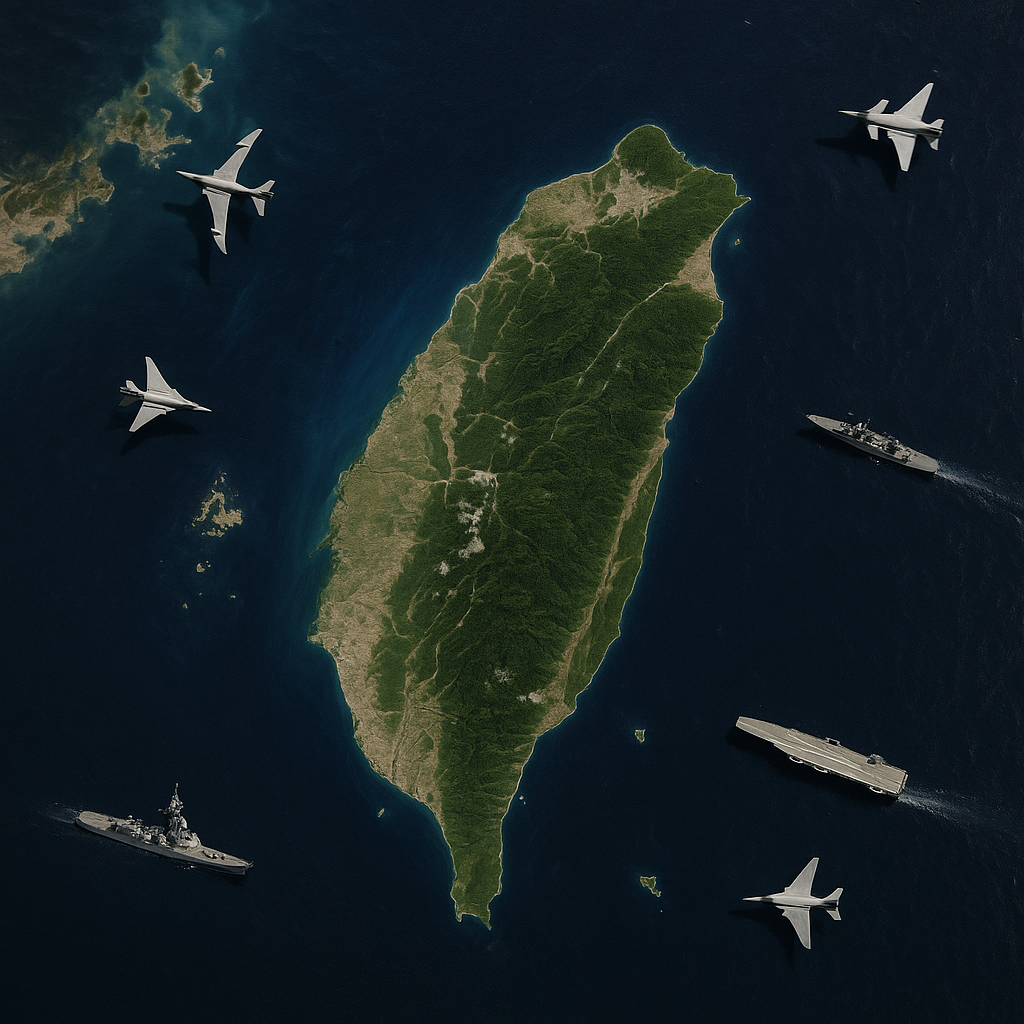
Tensions in the Taiwan Strait have escalated once again as Taiwan’s Ministry of National Defense reported the presence of over two dozen Chinese military aircraft near the island on March 15. While such incursions are not unusual, the scale and frequency of these actions demand scrutiny as they unfold against the backdrop of complex geopolitical and economic shifts in the region.
Patterns of Escalation: A Growing Concern for Taiwan
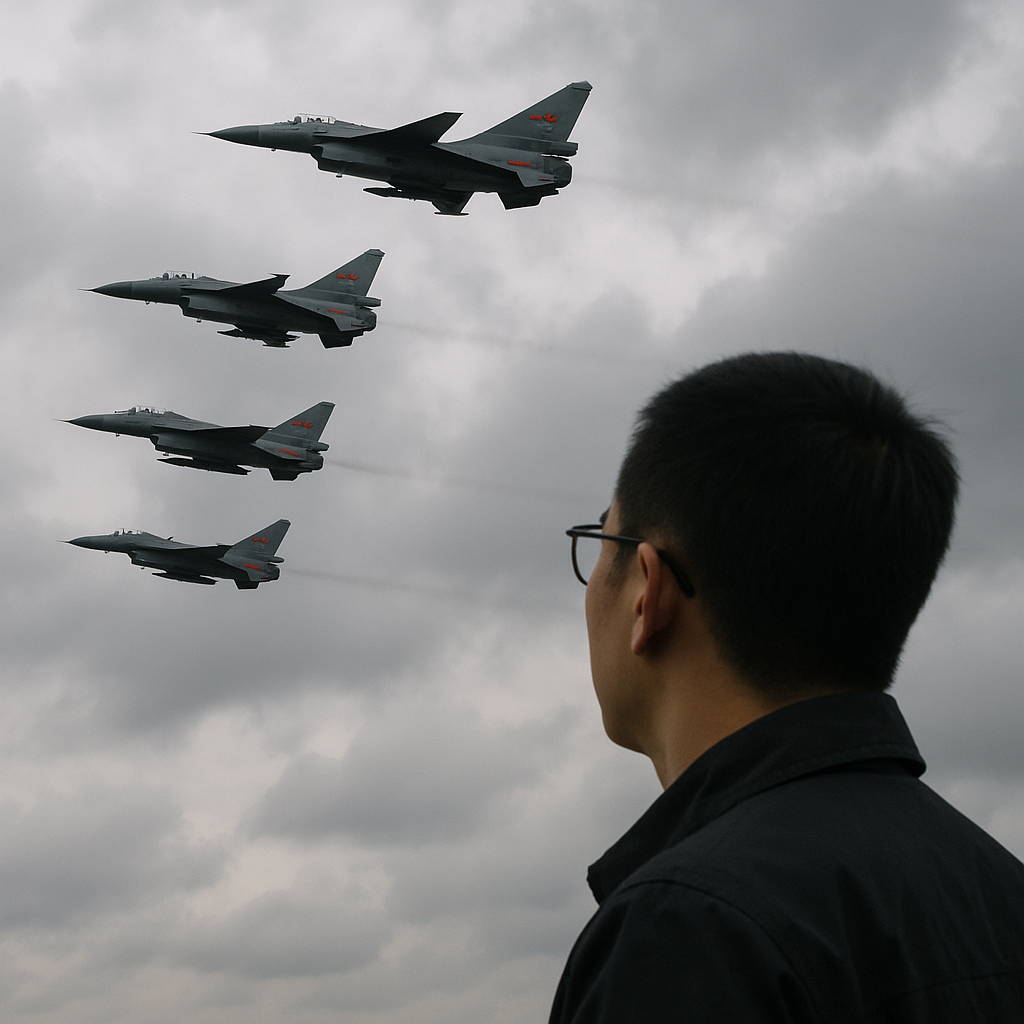
Since late 2020, the People’s Liberation Army Air Force (PLAAF) has increased its military aircraft sorties around Taiwan, often breaching the island’s Air Defense Identification Zone (ADIZ). According to Taiwan’s defense ministry, on March 15 alone, 28 Chinese aircraft were detected in the airspace, with some venturing across the median line of the Taiwan Strait—a tacit boundary that both sides had mostly respected for decades.
This rise in activity has coincided with mounting tensions between Beijing and Taipei over Taiwan’s sovereignty. A key development fueling the situation came with China’s firm opposition to what it considers “Taiwan independence” activities, which, as highlighted in a GlobalSecurity.org report, Beijing characterizes as moves to seek foreign backing against its one-China principle. Chinese defense spokespersons have called these actions “futile” and “provocative,” escalating verbal sparring between the two entities.
Military analysts point out that such exercises serve a dual purpose for Beijing: they act as deterrence against Taiwanese independence efforts while allowing China to rehearse potential scenarios for an armed invasion. A recent Insurance Journal report underscored this point, noting how Beijing may use advanced military technologies—such as masking drone activity—to simulate raids and confuse adversaries in potential conflict zones.
Strategic Implications: Taiwan’s Semiconductor Role
Beyond being a geopolitical hotspot, Taiwan occupies a unique position in global supply chains as the world’s leading producer of advanced semiconductors. Any disruption in this sector could ripple across markets and economies far beyond Asia.
China, aware of its dependence on foreign semiconductor technologies, has invested heavily in reducing this reliance. As reported by Tom’s Hardware UK, Beijing’s “Made in China 2025” initiative designated semiconductors as a critical strategic priority. However, despite hundreds of billions invested, China’s chip manufacturing capabilities remain a decade behind those of Taiwan and other leading nations like the United States. Analysts say this gap adds an economic dimension to the ongoing military tension, with Beijing potentially viewing control over Taiwan as an advantageous, if risky, path to overcome its technological shortcomings.
The apparent disconnect between economic aspirations and military actions raises questions about China’s long-term strategic calculus. “Taiwan remains central to the semiconductor supply chain,” one analyst noted, “but any instability in the region could jeopardize not just the local economy but global innovation at large.”

Global Reactions: A Balancing Act
Regional and international powers continue to walk the fine line between deterring escalation and avoiding direct involvement in the Taiwan Strait. The United States, for example, remains Taiwan’s critical security partner, supplying advanced weaponry to the island. However, recent reports from GlobalSecurity.org suggest that prominent arms sales to Taiwan have been delayed as part of Washington’s efforts to stabilize increasingly fraught U.S.-China relations.
Such moves have sparked fresh concerns in Taiwan, with some worried that they signal a lack of commitment from Washington. According to industry experts, “Taiwanese media has been speculating about the possibility of the U.S. deprioritizing its support for Taipei,” which could create doubts about whether Taiwan’s defense strategy has sufficient international backing.
Meanwhile, China has capitalized on this ambiguity to amplify its narrative. A Chinese spokesperson recently stated that “Taiwan’s attempts to involve foreign powers cannot change the fundamental reality of the one-China principle.” Despite such assertions, the U.S. has repeatedly affirmed its commitment to counter Beijing’s coercive actions through freedom of navigation operations and strong alliances in the Indo-Pacific.
Technology, Defense, and Future Risks
Adding to the complexity of the region is the role of emerging technologies, especially in modern warfare. Reports cited by the Insurance Journal described how China has employed military drones outfitted with deceptive technologies to simulate aircraft from other nations. These tactics are seen as tests for larger engagements and are part of a broader military buildup that has alarmed security experts globally.
The technological race extends into domains beyond defense, with artificial intelligence and cybersecurity becoming weapons in their own right. Analysts tracking the broader implications remind readers that Taiwan’s scenario is not just about sovereignty but also about control over key technologies that could define the next century. For some observers, Beijing’s focus on Taiwan underscores a recognition that achieving technological self-sufficiency remains tied to its geopolitical ambitions.
What Comes Next?
As military escalations near Taiwan persist, the region remains a focal point for international diplomacy and strategic maneuvering. The immediate question is whether Beijing’s increased presence signals preparation for a more aggressive strategy or serves as a calibrated show of force aimed at deterring Taiwanese officials from courting international support.
The U.S., other regional players like Japan, and alliances such as the Quad are likely to monitor these developments closely. Any misstep could escalate what is currently a cold conflict into a broader confrontation with global consequences. Observers will also keep an eye on Taipei’s domestic response—particularly as rhetoric about perceived American wavering resonates across political and public spheres.
For Taiwan, the goal remains the same: to maintain sovereignty and its critical role in the global economy. As the island continues to navigate the turbulent waters of geopolitics, its future stability may well determine much more than its own fate—it could shape the world’s geopolitical landscape for decades to come.