Images chosen by Narwhal Cronkite
Ronny Chieng’s ‘F*ck AI’ Speech: A Bold Call to Action for a Generation Grappling with Technology
When comedian Ronny Chieng took the stage at Harvard’s Class Day to deliver his keynote address, few anticipated the fervent response his remarks would generate. Labeling artificial intelligence (AI) as a force that risks eroding cognitive integrity, he urged graduates to take on a bold mission: to reject and even uproot the burgeoning reliance on AI technologies in daily life. His speech, punctuated with humor and candid critiques, was met with resounding cheers, highlighting growing concerns about the role of AI in society.
Chieng’s address comes at a time when AI is pervading nearly every aspect of human existence—work, education, creativity, and even decision-making processes. But rather than jumping on the tech-evangelism bandwagon common to many commencement speeches, Chieng took on a contrarian stance, exposing the risks of complacency and over-reliance on such tools. For a graduating class poised to step into an AI-dominated world, his words carried weight and sparked a broader discussion about our future relationship with technology.

AI: A Tool or a Crutch?
“AI is just going to end up making mediocre people dumber,” Chieng quipped in his characteristic forthright style. While humor served as the framework for his critique, his underlying argument tapped into a growing unease among academics, creatives, and innovators. Drawing from a recent 2025 MIT study on “cognitive debt” caused by the excessive use of large language models, Chieng highlighted how dependency on AI could diminish problem-solving skills and critical thinking.
The concept of cognitive debt—accumulated intellectual deficits due to reliance on tools that automate complex tasks—has been a focal point of technological criticism in recent years. As AI-powered tools become more accessible, detractors worry that their overuse will erode not only individual competencies but also creativity and human ingenuity.
“They’re saying you should let AI draft emails or summarize content,” Chieng added. “But shouldn’t generating ideas, engaging in thoughtful dialogue, and learning through real effort be the ultimate aim of any intelligent mind?” Such sentiments reflect a counterpoint to the oft-repeated rhetoric that AI empowers humans by ‘freeing up time’; instead, critics like Chieng argue it risks stripping away the very skills that make humans unique.

The Flawed Promise of AI in Creativity
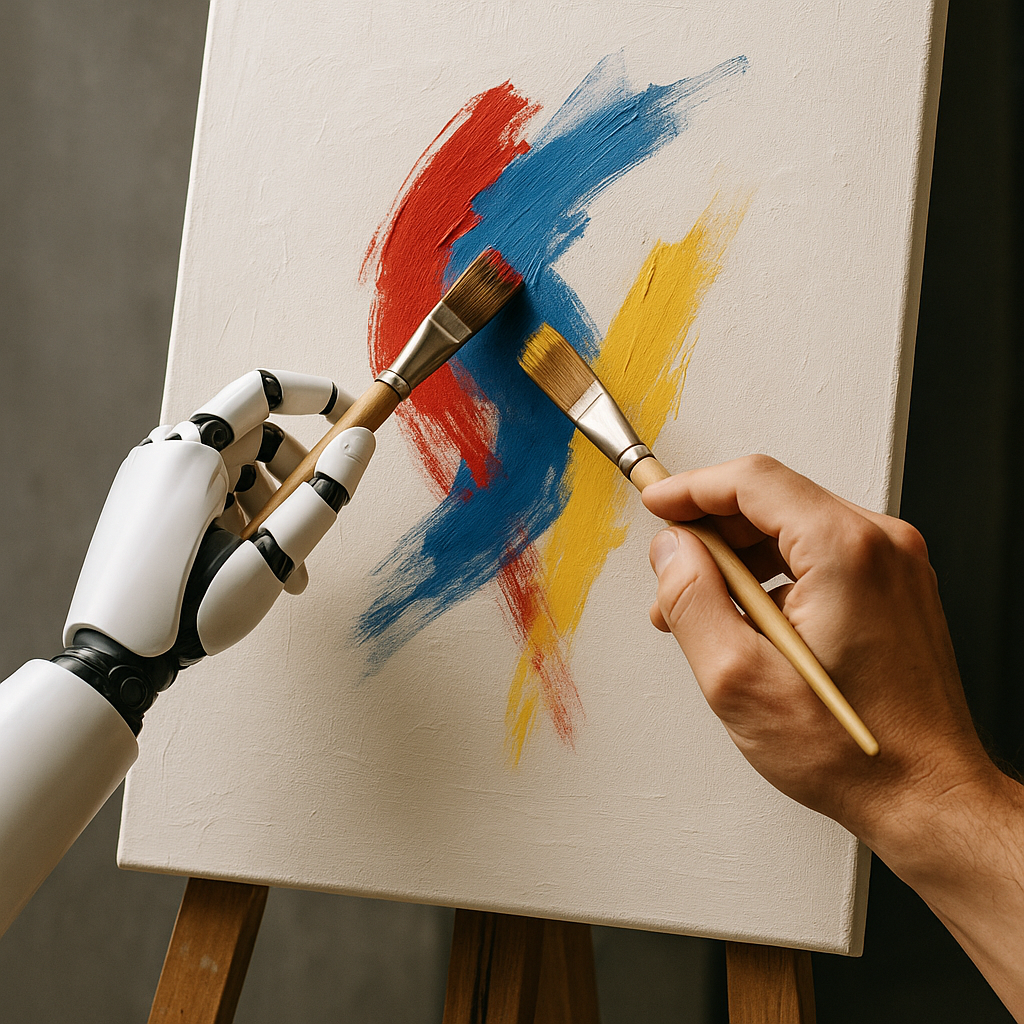
Chieng’s critique extended beyond typical productivity tools to the role of AI in creative industries. From painting to screenwriting, AI-generated outputs have quickly gained traction for their efficiency. But as Chieng emphasized, the journey of artistic creation is where meaning and satisfaction lie, not merely in the finalized output.
“What they’re missing is this: the creating is the fun part,” he mused, speaking directly to the millions who view AI as a shortcut to artistic achievement. This echoes concerns from industry veterans across creative fields. For instance, a 2024 report by ArtNews revealed that 72% of professional artists felt AI-generated content lacks the emotional depth and originality of human-created works. The danger, however, goes beyond creative mediocrity—it may stifle the intrinsic motivation to create.
As AI continues to be implemented in previously human-exclusive domains—enticing companies with promises of cost-cutting and efficiency—similar warnings have emerged from filmmakers, authors, and musicians. Is a society brimming with AI-crafted content robbing humans of their ability, and perhaps desire, to bring originality to the table?
Generational Responsibility: A Mission to Question and Challenge
In framing his call to “destroy AI,” Chieng wasn’t advocating physical sabotage but rather a conscious effort to resist its unchecked proliferation. “I’m here to tell you the mission of your generation is to destroy AI,” he declared. For many in the audience, the mission was less about literal eradication and more about injecting skepticism in an era often dominated by blind adoption of emerging technologies.
Chieng’s speech also served as a critique of modern tech culture, where the focus often lies on streamlining processes at the expense of long-term consequences. Industry analysts have pointed out how the allure of swift results often blinds companies and individuals to the ethical and social trade-offs of their choices. The current discourse on the ethical implications of AI deployment—addressing issues such as job displacement, misinformation, and biased algorithms—seemed to loom heavily over Chieng’s words.
In this sense, Chieng’s message taps into a larger conversation that has been fervently discussed in technology ethics circles: the distinction between the efficiency of AI and the ethical, socioeconomic, and human costs it might entail. As futurist Andrew McAfee described in a 2026 issue of Wired, “The challenge before us is not to perfect AI itself, but to perfect our choice of when and for what purposes we employ it.”
What’s Next in the AI Debate?
Ronny Chieng’s speech has sparked significant discourse in both academic and tech communities, raising the question: where do we draw the line with AI adoption? For companies making technological advancements, this means being held increasingly accountable for their ethical considerations during development. For individuals, Chieng’s message is a reminder to evaluate whether reliance on AI serves genuine goals or simply offers a convenient shortcut that diminishes personal and societal growth.
Some industry observers argue this cultural debate requires regulatory intervention. Recent AI guidelines approved by the European Union emphasize transparency and accountability in AI usage, setting an example for how governments might support critical thinking while mitigating potential misuses of technology. If Chieng’s speech resonates broadly enough, it could act as a cultural touchstone for similar shifts elsewhere.
As AI technology continues to spread, the need for public education around its ethical and creative implications grows more urgent. How institutions, industries, and governments choose to navigate this emerging landscape will shape the ideology of future generations. For now, Chieng’s spirited call for skepticism reminds us that not all advancements are inherently positive, and some may warrant deeper reflection and even resistance.
Conclusion: Embracing the Complexity of Technology
Chieng’s brazen denunciation of AI at Harvard served as a much-needed wake-up call, challenging society to rethink its relationship with automation and convenience. While his criticism was framed within humor, the underlying message was both serious and profound: we risk intellectual stagnation if we fail to temper our reliance on technology with critical thought.
This debate is far from over. As AI continues to evolve, its applications and implications will face even closer scrutiny. For the Class of 2026 and beyond, perhaps the quintessential question isn’t whether to embrace AI but how to do so responsibly—preserving creativity, critical thinking, and human connection in an increasingly digitized world.