Secretary of State Marco Rubio declared on July 13, 2026 that the United States intends to “dismantle” the International Criminal Court, according to CNN, which first reported the remarks. The statement goes well beyond Washington’s existing posture of sanctions and travel restrictions against ICC officials — and signals a direct campaign to undermine the court’s structural foundations.
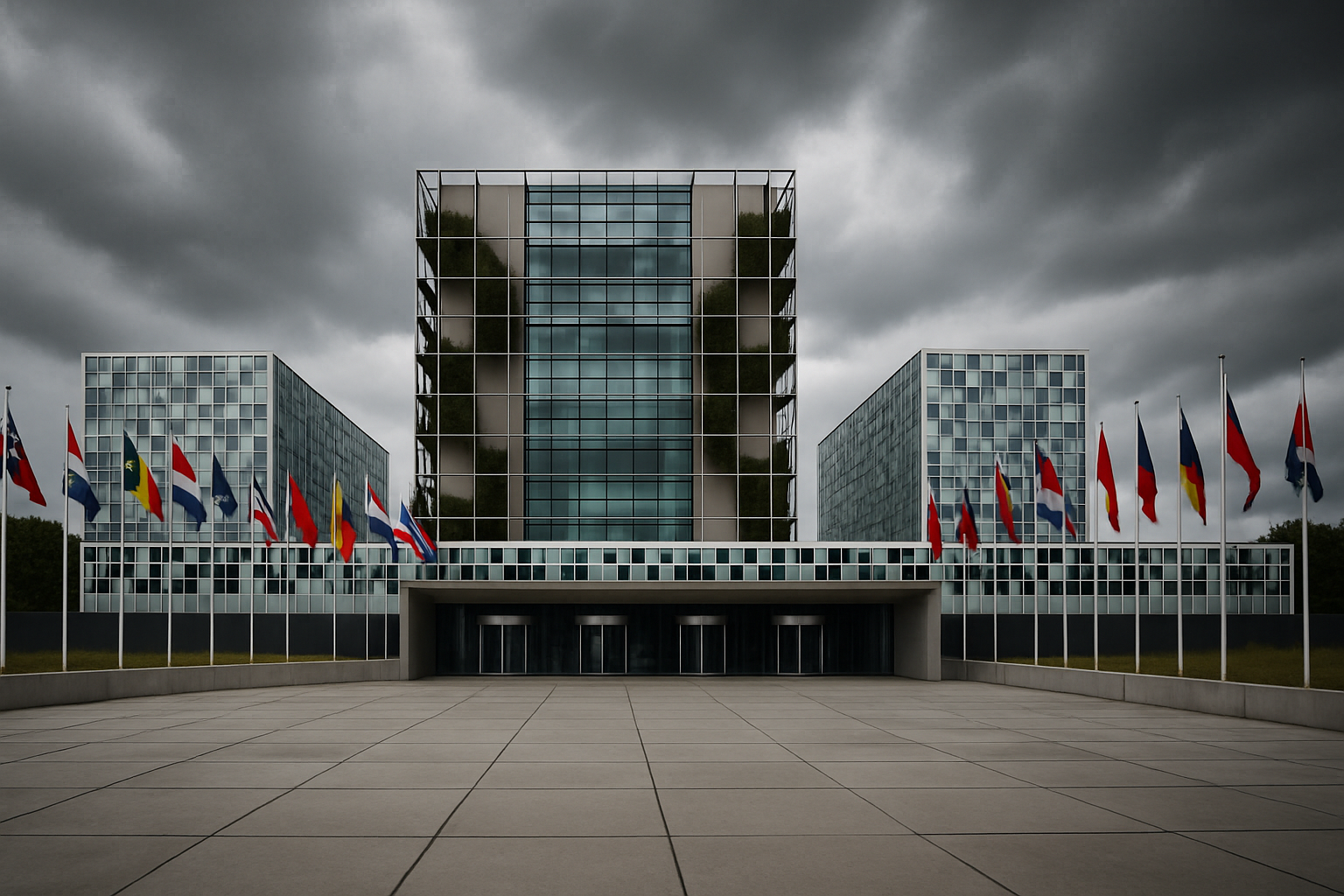
The non-obvious detail buried in Rubio’s announcement: the U.S. is not simply threatening to withhold cooperation, but is reportedly exploring coordinated pressure on member states and financial backers of the court — a strategy that, if executed, could cut off a significant share of the ICC’s roughly €170 million annual operating budget.
How Rubio’s pledge escalates earlier U.S. pressure on the ICC
The United States has never been a member of the ICC, having unsigned the Rome Statute under President George W. Bush in 2002. But the current posture is categorically different from mere non-participation. In 2025, the administration imposed asset freezes and visa bans on ICC Prosecutor Karim Khan and several court staff, following the court’s issuance of arrest warrants that touched on actions by U.S. allies. Rubio’s new vow to dismantle the International Criminal Court entirely marks a shift from punishing individuals to targeting the institution itself.
The ICC, seated in The Hague, Netherlands, was established under the 1998 Rome Statute to prosecute individuals for genocide, war crimes, and crimes against humanity when national courts fail to act. It currently counts 124 member states. The court has no standing army and depends entirely on member cooperation for arrests and funding — a structural vulnerability that critics have long noted.
Active ICC cases that put Washington on a collision course with The Hague
The timing of Rubio’s statement is not incidental. The ICC has open investigations and proceedings involving figures across multiple geopolitical flashpoints. Among the most diplomatically charged: the court’s active warrant for Israeli Prime Minister Benjamin Netanyahu and former Defense Minister Yoav Gallant, issued in late 2024 over conduct in Gaza. The U.S. has forcefully opposed those warrants.
The court also continues preliminary work connected to the conflict in Ukraine, where — in contrast to the Netanyahu situation — Western nations have largely welcomed ICC involvement. Russia’s President Vladimir Putin has been under an ICC arrest warrant since March 2023 for the alleged unlawful deportation of Ukrainian children, a warrant Ukraine and its European allies have pressed member states to enforce. Any U.S. move that weakens the ICC’s authority would, as a direct consequence, also weaken one of the few international legal mechanisms holding Russian leadership to account for actions in Ukraine.
That tension puts the Rubio announcement in a complicated position: dismantling the court to shield allies from ICC scrutiny would simultaneously benefit Moscow, which has openly celebrated Western friction with the tribunal.
What “dismantling” could look like in practice
Legal scholars and diplomats contacted by major outlets noted that the U.S. lacks the unilateral power to dissolve the ICC — the court was created by treaty among sovereign states. What Washington can do is make the court functionally inoperable through economic and diplomatic levers.
Those levers include pressuring the roughly 40 states that receive U.S. foreign assistance to withdraw from the Rome Statute, sanctioning law firms or individuals who cooperate with ICC investigations, and blocking the transfer of evidence or suspect custody. Several of these tools were outlined in the executive order the administration issued in early 2025. Rubio’s language suggests those tools are now on a path toward active deployment rather than deterrence.
The European Union, which funds a substantial portion of ICC operations and counts nearly all its members among Rome Statute signatories, has not yet issued a formal response to Rubio’s July 13 remarks. EU foreign policy chief Kaja Kallas has previously described ICC independence as “non-negotiable” for the bloc.
ICC funding and the member-state math
The court’s budget is assessed annually among member states, with contributions tied roughly to UN scale-of-assessment formulas. Japan, Germany, France, and the United Kingdom are among the largest contributors. The U.S., as a non-member, contributes nothing directly — but U.S. pressure on allied governments could create political friction around budget votes and voluntary cooperation.
Historically, African Union nations have been the most vocal critics of the ICC from within the membership, arguing the court disproportionately targets African leaders. Several AU states explored a bloc withdrawal in 2017, though most remained. A renewed U.S. push could give fresh momentum to any coordinated withdrawal effort.
For context on how U.S. posture toward international institutions shapes domestic and global debate, the ongoing proposed 20% toll on Strait of Hormuz cargo reflects the same broader pattern of Washington using economic leverage against multilateral arrangements it views as unfavorable.
The ICC has not yet issued a formal statement responding to Rubio’s pledge. A spokesperson for Prosecutor Karim Khan’s office told reporters earlier this year that the court “will not be intimidated” by sanctions, but the question of whether it can survive a sustained, coordinated dismantlement campaign from the world’s largest economy remains open. The next ICC Assembly of States Parties meeting, scheduled for late 2026, is now likely to become a flashpoint for that question.