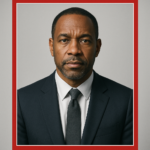
Jarron Collins accepted the Arthur Ashe Award for Courage on behalf of his twin brother Jason at the 2026 ESPYS on Wednesday, two months after Jason died of glioblastoma at 47. The posthumous honor was announced in June, and Jarron collected it on stage at the David H. Koch Theater at Lincoln Center in New York, as ESPN reported.

“I miss my brother,” Jarron said. “I wish he was here standing to accept this award. But I find myself honored to be here to accept this award on his behalf.”
Here is the part most of the tributes left out. Long before Jason Collins said anything publicly, he was already carrying the cause on his back. He wore number 98 for the Boston Celtics and the Washington Wizards during the 2012-13 season — a reference to 1998, the year Matthew Shepard was tortured and left to die on a Wyoming fence. Collins picked the number while still closeted, and told nobody why. In February 2014 he handed an autographed No. 98 jersey to Shepard’s family in Denver, and the NBA directed proceeds from his jersey sales to GLSEN and the Matthew Shepard Foundation.
Why the Arthur Ashe Award fit Jason Collins specifically
The trophy was not a generic honor handed to a famous name. Jason loved tennis — “He was actually obsessed,” his brother said — and admired Arthur Ashe as both a champion and a pioneer. The award carries the name of a man Collins personally revered.
Jarron had said as much when the honor was announced. “It is profoundly bittersweet but deeply meaningful to accept the Arthur Ashe Award for Courage on my brother’s behalf, celebrating a legacy of visibility, strength, and love that will endure forever,” he said in a statement.
The Sports Illustrated cover that ended a long private process
Collins wrote his own story in Sports Illustrated on April 29, 2013, becoming the first active male athlete in the four major North American professional leagues to come out as gay. The piece drew 3.7 million visitors to SI.com. Barack Obama called him. So did Oprah Winfrey.
Collins himself was flat about it. “When I chose to come out, there was no scandal or anything,” he said. “This was like, I feel that I am good enough to play in the NBA and by the way, I’m gay.”
Read alongside the number 98, the 2013 announcement looks less like a sudden decision than the end of something he had been doing quietly for years. The visibility he argued for has kept moving without him — Japan this year rolled out LGBTQ education nationwide for the first time.
Singapore, All-Star Weekend, and May 12
Collins made his diagnosis public in December 2025. He traveled to Singapore that winter for experimental treatments not authorized in the United States, and they worked well enough that he came home, turned up at NBA All-Star Weekend events in Los Angeles, and went to a game at Stanford, where he and Jarron had played. Then the cancer came back.
He died at his Los Angeles home on May 12, surrounded by family. He was 47. He is survived by his husband, the film producer Brunson Green, whom he married in May 2025; his parents, Portia and Paul Collins; and Jarron, according to ESPN.
Jason played 13 NBA seasons as a center between 2001 and 2014, drafted 18th overall out of Stanford and finishing with the Brooklyn Nets. Jarron, born eight minutes after him, followed the same route through Stanford and into the league, and is now an assistant coach with the New Orleans Pelicans.
What Jarron pledged from the stage
“These past few months I told my brother repeatedly, he was the bravest and strongest man I’ve ever known,” Jarron said. “He lived his life with authenticity, with grace, and strength and joy.”
He thanked Green, the twins’ parents, his own wife and children, and Jason’s teammates and coaches, along with the people who stood by his brother after he came out and through the glioblastoma. Then he made a promise. “I pledge to make sure that tonight is not the end of my brother’s legacy,” he said. “It’s just the beginning.”
He closed on the thing that had trailed the two of them their entire lives — being mistaken for one another. Standing in for Jason one more time, he let the joke land differently. “Now, that scenario has a whole different significance to me,” he said. “I’ve never been more proud of Jason than in this moment right now.”
Jarron had been accepting awards for his brother while Jason was still alive and too ill to travel. Wednesday was a continuation of that job, not the start of it — and, by his own account, not the end.