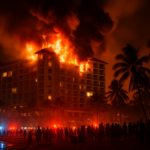
Finnish authorities have launched a criminal investigation into the clearing of forest land at a site tied to Google’s data centre expansion in Finland, examining whether the felling of trees complied with permit conditions and national environmental law. The probe, confirmed as being under way at the start of November 2026, follows complaints from local residents and conservation groups who alleged that clearance work at the site went beyond what was authorised.
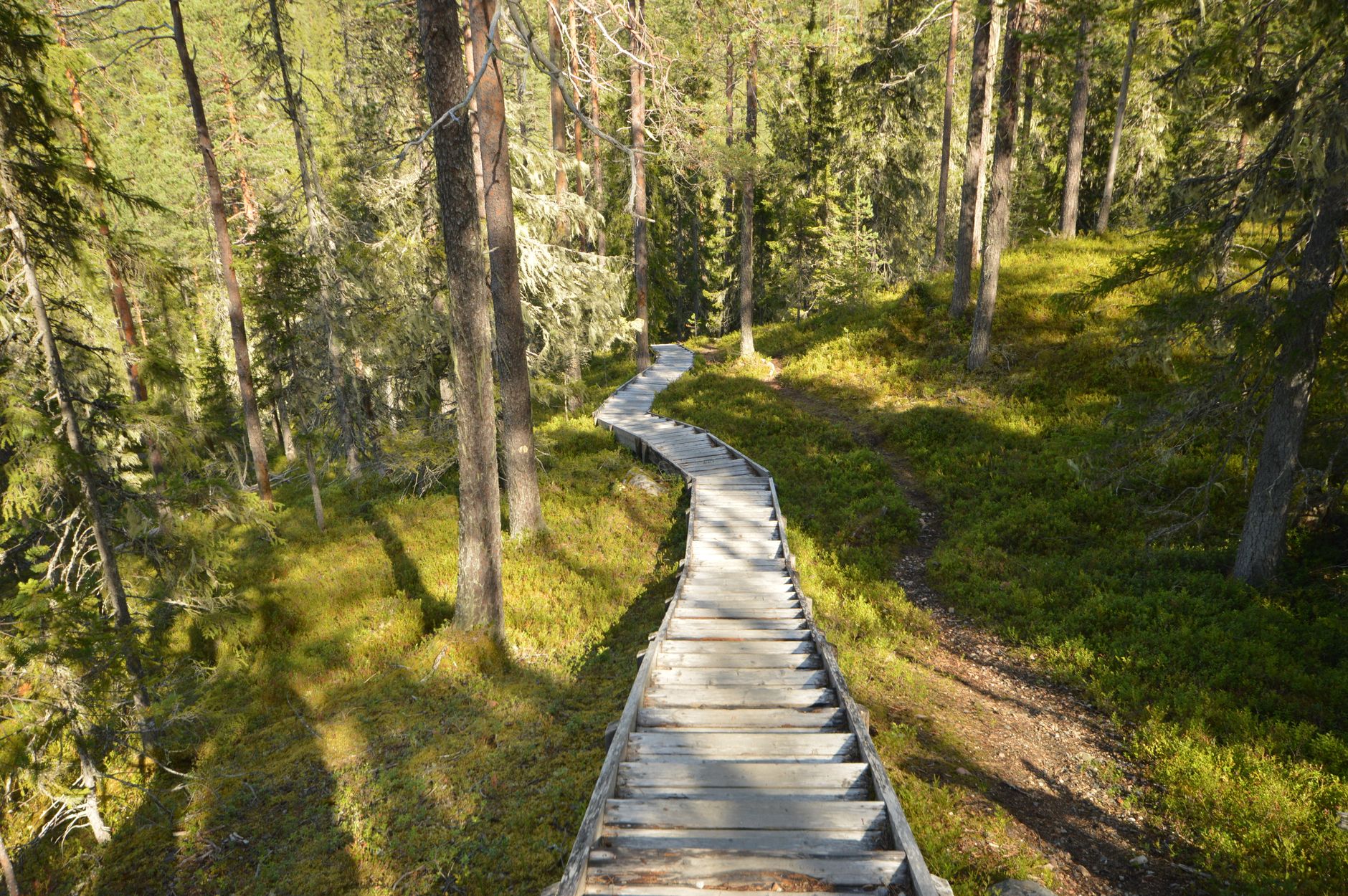
Investigators are treating the matter as a suspected environmental offence, a category under Finnish law that covers breaches of nature protection and forestry rules. No charges have been filed, and under Finland’s criminal procedure the opening of a pre-trial investigation does not imply a finding of guilt. Police must first establish whether an offence occurred and, if so, who bears responsibility — a question complicated by the fact that site preparation on large industrial projects is typically carried out by contractors rather than the end client.
What investigators are looking at
Based on the complaints that triggered the case, the central questions are narrow but consequential:
- Scope of clearance. Whether the area felled exceeded the boundaries set out in the land use and construction permits issued by the host municipality.
- Protected habitat. Whether any part of the cleared land contained habitat types or species protected under Finland’s Nature Conservation Act, which carries specific prohibitions on destroying breeding and resting sites.
- Timing. Whether work was carried out during the spring and summer bird nesting period, when heavy clearance is restricted or discouraged under Finnish forestry guidance.
- Water and drainage. Whether ditching and groundwork affected watercourses in a way that required a separate permit from the regional authorities.
Environmental offences in Finland are prosecuted under the Criminal Code and can result in fines or, in aggravated cases, imprisonment for responsible individuals, as well as corporate criminal liability for companies. Penalties in practice have tended toward fines and restoration orders rather than custodial sentences.
Why Finland, and why now
Finland has spent a decade marketing itself as an ideal location for hyperscale computing: a cold climate that cuts cooling costs, abundant low-carbon electricity from nuclear, hydro and wind, political stability, and strong fibre links to the rest of Europe. Google has operated a data centre at Hamina, on the Gulf of Finland, since 2011, built inside a converted paper mill, and has announced successive multi-billion-euro expansions in the country as demand for AI training and inference capacity has surged.
That build-out has changed the arithmetic for host communities. Where earlier data centres slotted into existing industrial land, the current generation of AI campuses requires large greenfield plots with grid connections measured in hundreds of megawatts. In practice that often means boreal forest — land that is commercially logged in Finland as a matter of routine, but whose permanent conversion to concrete and steel is a different proposition both legally and politically.
Local friction has already surfaced in Finland this year, including reports of wolves moving closer to villages after large tracts of habitat were cleared near a data centre site. NarwhalTV has previously covered the early stages of the criminal complaint that preceded this investigation.
Google’s position
Google has consistently said it operates within local permitting frameworks and works with municipal and regional authorities on site planning, environmental assessment and compensation measures. The company has also pointed to its commitments on water stewardship and carbon-free energy matching, and to the district heating it supplies from waste heat at Hamina. It has not publicly detailed its account of the clearance work now under investigation, and in cases of this kind companies typically decline substantive comment while a pre-trial process is open.
The practical risk to Google is less a fine — immaterial against capital expenditure running into the tens of billions of dollars a quarter — than delay. Finnish construction and environmental permits can be appealed, and an active criminal file gives objectors additional leverage in administrative proceedings.
A test of Europe’s AI infrastructure bargain
The case is being watched beyond Finland because it crystallises a tension running through European data centre policy. Governments are competing for AI capacity as a matter of economic and strategic sovereignty; Finland’s technology sector has simultaneously positioned itself as a security partner in Europe, including backing a sovereign satellite constellation for Ukraine. At the same time, the EU’s environmental acquis and national conservation statutes set hard limits that fast-moving construction schedules can collide with.
The compute race itself shows little sign of slowing. Hyperscaler capital spending has continued to climb through 2026, and the knock-on effects have been visible well outside the industry — from grid planning disputes to consumer memory prices squeezed by data centre demand.
What happens next
Finnish police will gather documentary evidence — permits, felling notifications, contractor instructions and survey data — and may commission an assessment of the ecological value of the cleared area. If the investigation concludes an offence is suspected, the file goes to a prosecutor, who decides on charges. Regional environmental authorities can separately order restoration or compensatory habitat measures regardless of the criminal outcome.
Residents and conservation groups have said they will press for the site boundaries to be re-surveyed and for construction to pause pending findings. For now, the legal position is unchanged: an investigation is open, Google has not been charged, and the broader question of how much forest Europe is prepared to trade for computing power remains unanswered.
This is a developing story. Details reported by Finnish media and complainants have not been independently verified by NarwhalTV, and the scope of the investigation may change as authorities proceed.