Images chosen by Narwhal Cronkite
Ask.com Shuts Down After Nearly 30 Years: A Nostalgic End to an Internet Pioneer
The curtain has drawn on Ask.com, one of the internet’s first major search engines, originally launched as Ask Jeeves in 1997. As its parent company, IAC, officially closed operations on May 1, 2026, users around the globe bid farewell to a service that defined digital curiosity in its heyday. With a heartfelt message, the website remarked, “Every great search must come to an end.” But what does this end mark for the tech industry, and how did Ask Jeeves influence the tools we rely on today?
The Rise of Ask Jeeves: A Revolutionary Concept
In the late 1990s, Ask Jeeves stood out with its groundbreaking interface. Unlike other search engines such as Yahoo, Ask Jeeves allowed users to ask full questions rather than rely on keyword-based searches. This natural language processing approach was ahead of its time, giving users direct, conversational answers rather than forcing them to sift through pages of irrelevant links. The platform’s mascot, Jeeves—the digital butler—became an iconic figure, representing helpfulness and innovation.

Ask Jeeves gained significant traction during the early days of the web. At its peak, it was considered a notable competitor to other heavyweights, such as Yahoo and Altavista. However, the internet soon evolved, and with that came the dominance of Google, whose superior indexing capabilities reshaped user expectations for search engines. Ask Jeeves rebranded as Ask.com in 2006 in an attempt to modernize its image, abandoning its quirky mascot in favor of a sleek, streamlined brand.
The Fall from Grace: Tough Competition and Changing Times
Despite its rebranding efforts, Ask.com struggled to maintain relevance as Google surged ahead with innovations like predictive search and personalized results. Compounding the challenge was the rise of alternative question-and-answer platforms like Yahoo Answers and, later, Quora. By 2010, Ask.com decided to shut down its independent web crawler, signaling a pivot that focused exclusively on its question-and-answer model. Unfortunately, this proved to be a modest niche, lacking widespread appeal in an era dominated by Google’s omnipresence.
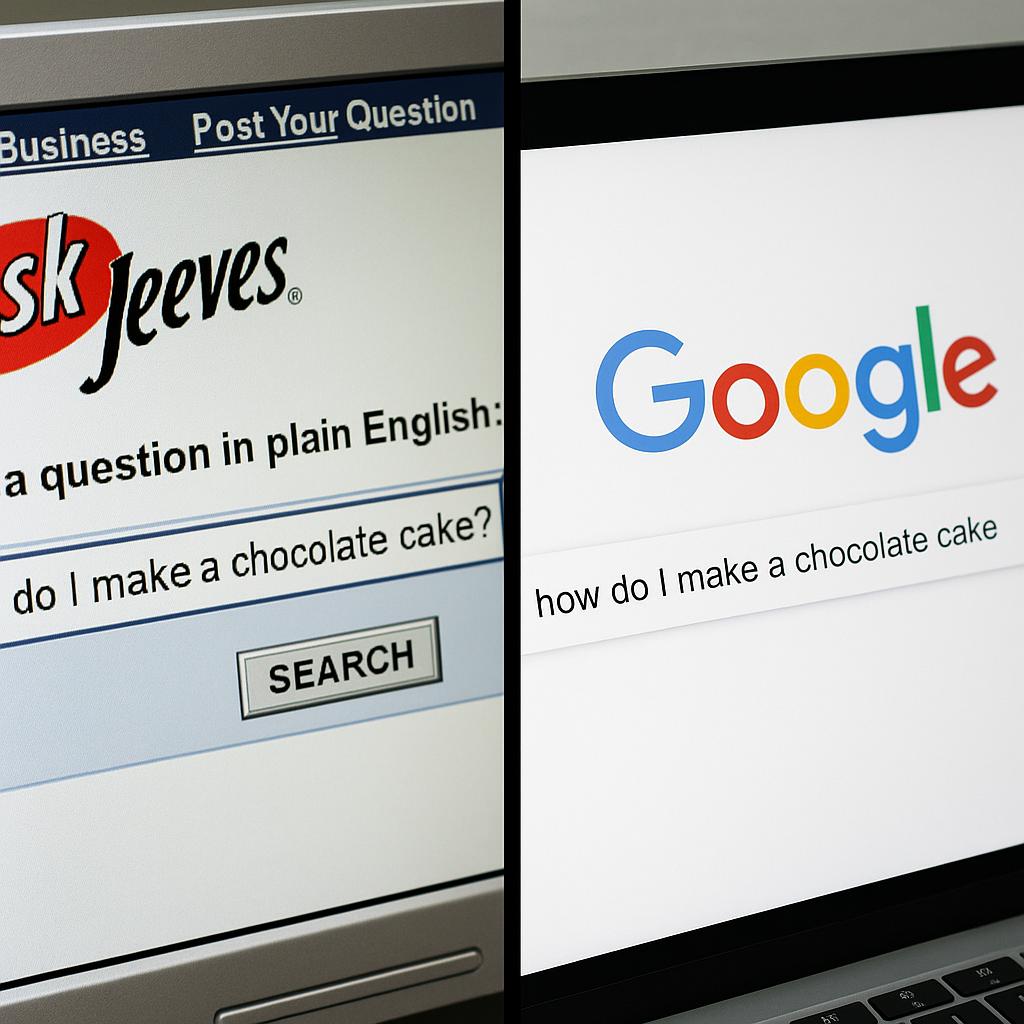
Tech analysts suggest the closure of Ask.com reflects broader changes in how users interact with the web. The rise of AI-driven tools, such as OpenAI’s ChatGPT, has firmly shifted the digital landscape. These platforms emulate conversational exchanges, demonstrating the vision Ask Jeeves had back in the late 1990s but at a vastly superior scale. “Ask Jeeves was ahead of its time and laid foundational groundwork for the conversational AI we see flourishing today,” noted an industry analyst.
Public Reaction: Nostalgia and Missed Opportunities
The internet’s response to Ask.com’s closure has been a mix of nostalgia and surprise. While many tech enthusiasts remarked that they hadn’t used the platform in years, others recognized it as a relic of the internet’s golden age. Multiple analysts have expressed regret over the lost potential to revive Ask Jeeves as an AI-driven chatbot. As one observer reflected, “Had they modernized Jeeves and injected AI technology, the platform could have been reimagined for today’s users seeking personalized assistance.”

In broader terms, Ask.com’s closure also mirrors a wave of longstanding companies ending operations due to changing user habits and technological advancements. According to TheStreet, even major retail brands are shutting down e-commerce sites and brick-and-mortar stores, reflecting seismic shifts in consumer behavior. Similarly, BlogTO notes that the closure of Toronto’s Queen West strip retailers indicates the challenges legacy businesses face amidst modern competition.
Implications for Search Technology and the Next Frontier
The end of Ask.com provides insight into the evolution of the search engine space and its future trajectory. Today’s dominant platforms rely heavily on artificial intelligence to provide relevant, context-aware answers to user queries. Companies like Microsoft and Google are now integrating generative AI models into their systems to improve search results, predict user intent, and enable conversational responses. These advancements bear striking resemblance to Ask Jeeves’ original vision.
Much like the Voyager 1 spacecraft power-downs reported by Universe Today, Ask.com’s shutdown symbolizes letting go of older systems to make way for the next frontier. As tech companies innovate, some services inevitably fall by the wayside, leaving behind lessons for the future. Ask Jeeves may no longer exist, but its legacy lives on in modern search tools that continue to push the boundaries of technology.
What Lies Ahead?
With the departure of Ask.com, one major question emerges: What will replace aging platforms that fail to adapt? The answer seems to point directly at AI-driven models redefining how we engage with technology. As reported by PetaPixel, standardizations in digital tools—like DNG files in the photography space—echo how tech evolves to meet shifting user and industry needs. For search engines, this means hyper-personalization, voice interfaces, and seamless cross-platform functionality are crucial to staying relevant.
As we bid farewell to Ask.com, the spotlight now shifts toward companies pioneering new search technologies and conversational AI systems. With platforms like ChatGPT growing increasingly popular, the next few years could redefine how we seek knowledge and interact with digital tools. The key question is whether future innovations will match the charm—and foresight—of Jeeves, the digital butler who answered humanity’s curiosities one question at a time.