A Chinese court has handed down a death sentence to a former senior state official found guilty of accepting the equivalent of $325 million in bribes, the BBC reported this week. The case centers on Wang Huning — not the Politburo Standing Committee member of the same name, but a former general manager of a major state-owned enterprise — and marks one of the largest individual corruption verdicts ever recorded in China.
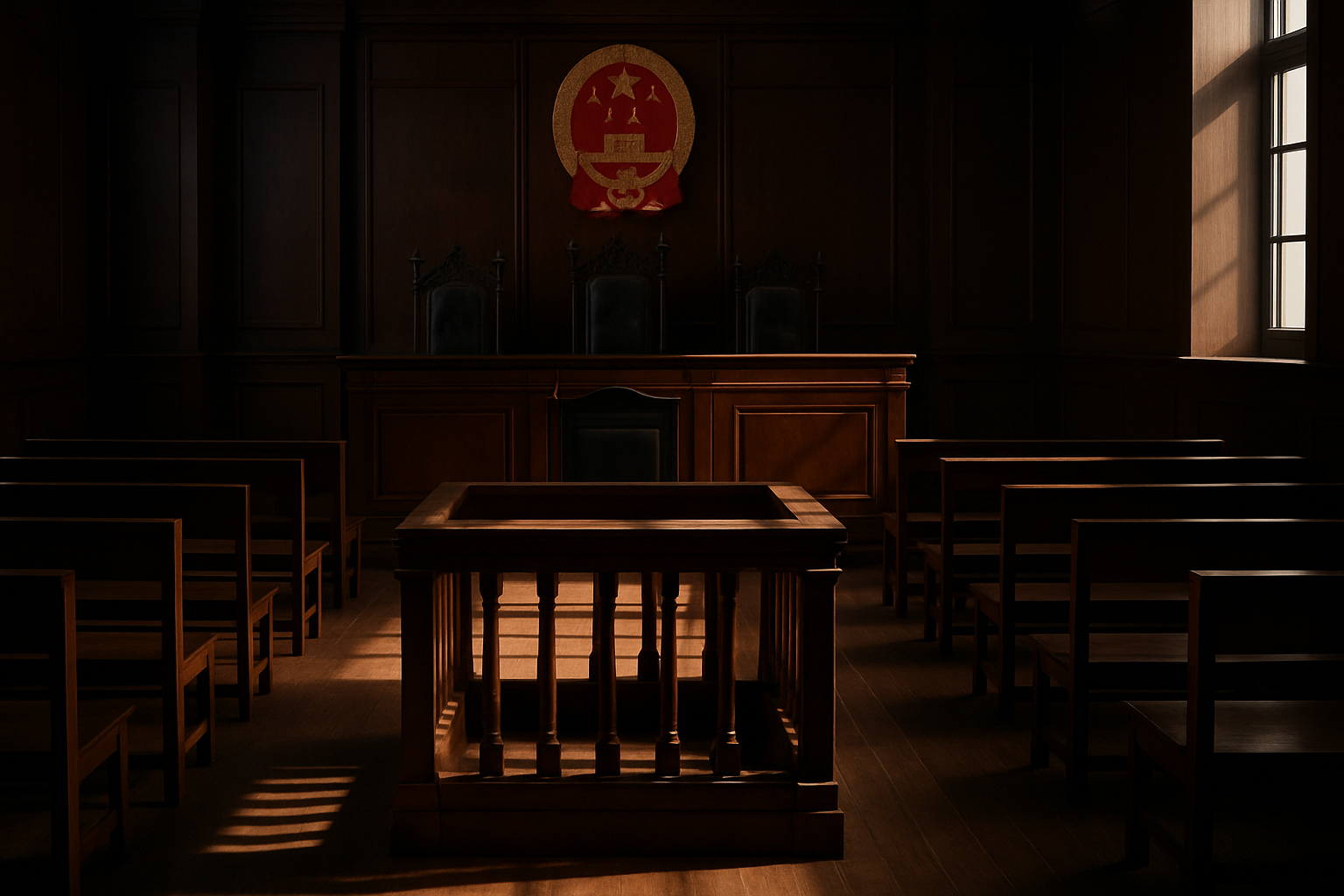
The scale of the bribery sets this case apart even within China’s sweeping anti-corruption campaign. Prosecutors say the official collected illicit payments over roughly two decades, funneling money through shell arrangements and real estate holdings across multiple provinces — a detail that only emerged during the trial’s asset-seizure proceedings.
How a $325 million corruption bribery case unfolded
Investigators with the Central Commission for Discipline Inspection (CCDI), the Communist Party’s internal watchdog, flagged the official after audits of state enterprise accounts revealed irregular fund flows. The subsequent criminal probe took several years before prosecutors filed charges, which included bribery, abuse of power, and misappropriation of public funds.
The court found that payments had come from contractors, suppliers, and private businesspeople seeking preferential treatment in procurement contracts controlled by the state firm. Sentences in Chinese corruption cases at this magnitude almost always include confiscation of all personal assets, and this verdict was no exception — the court ordered everything seized.
Under Chinese law, a death sentence for corruption can be commuted to life imprisonment if the convicted person does not appeal and demonstrates what courts call “repentance.” Whether that path is pursued here has not been confirmed publicly.
Xi Jinping’s anti-corruption drive, by the numbers
President Xi Jinping launched his anti-corruption campaign shortly after taking power in 2012, and it has since resulted in the investigation of more than 4.7 million party members and officials, according to CCDI figures. High-profile executions in corruption cases remain relatively rare — the government tends to use the death penalty in graft cases as an occasional, high-visibility warning rather than routine punishment.
The last comparably sized case to draw international attention was that of Lai Xiaomin, former chairman of state asset manager Huarong, who was executed in January 2021 after being convicted of taking bribes worth around $260 million. The current sentence surpasses that figure by roughly $65 million, making it a record in raw dollar terms for a single official.
Chinese state media coverage of the verdict has been extensive domestically, a deliberate signal that Beijing intends the case to reinforce public confidence in the campaign’s reach into the upper tiers of state enterprise management — a sector that has historically been harder to police than local government positions.
Why state-owned enterprises keep producing outsized graft cases
State-owned enterprises control enormous procurement budgets, often running into billions of dollars annually, with limited external audit pressure. That structure creates conditions where a single well-positioned executive can extract payments from vendors across a long career with relatively low short-term detection risk.
Transparency International’s Corruption Perceptions Index has consistently placed China in the middle tier globally — better than many developing economies but far below the OECD average. Analysts who study Chinese governance note that the CCDI’s increasing use of big-data auditing tools since 2022 has accelerated detection timelines, which may explain the rising number of enterprise-level cases reaching trial in 2025 and 2026.
For context on how governments respond when financial misconduct reaches institutional scale, legal settlements in high-stakes cases can take years to materialize even when evidence is strong — a contrast to China’s party-disciplinary process, which moves cases to criminal trial on its own timeline without an independent judiciary.
What happens after the verdict
The defendant has a window to appeal to a higher court, which would automatically suspend execution. Chinese legal procedure also allows the Supreme People’s Court to review all death sentences before they are carried out — a safeguard introduced in 2007 that has meaningfully reduced the number of executions that proceed in the year a sentence is handed down.
If no appeal is filed and the Supreme Court review upholds the verdict, the execution would be scheduled. Observers of Chinese judicial practice note that in bribery cases of this profile, commutation to a suspended death sentence — effectively life in prison — is a common outcome after the initial headline verdict, though Beijing has shown a willingness to carry out executions when it wants to send an unambiguous message.
The CCDI has not announced follow-on investigations into the contractors who paid bribes, but past practice suggests secondary prosecutions of key payers typically follow within six to twelve months of the main verdict.