Canada will not share the Gordie Howe International Bridge tolls with the United States until it has been paid back for building the crossing, Prime Minister Mark Carney said on July 16. Canada financed and built the entire Windsor-Detroit crossing on its own, fronting the full $6.4 billion cost, Global News reported. The bridge opens on July 27.
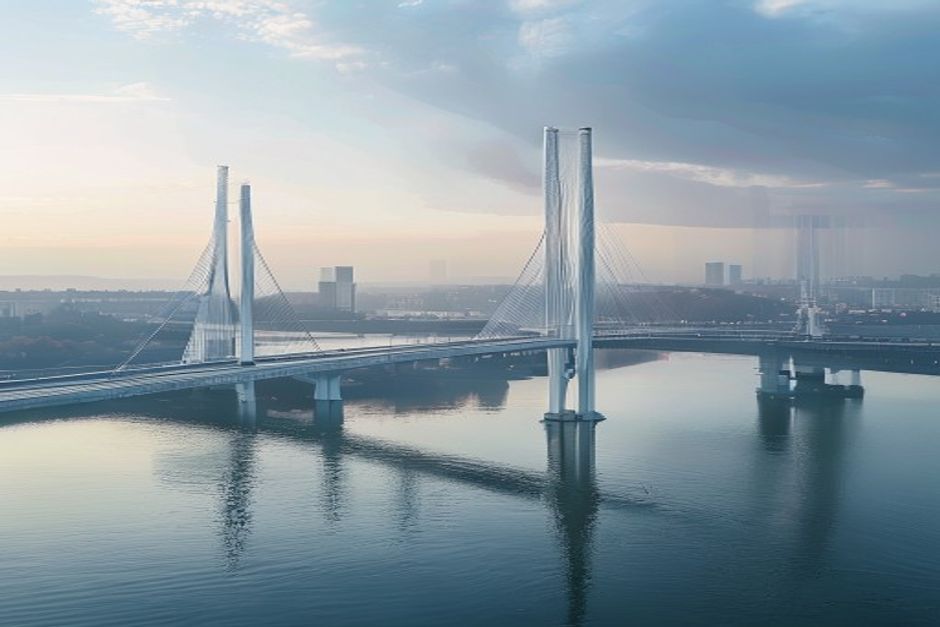
Carney was drawing a sharp line under a claim from the other side of the border. President Donald Trump had described a renegotiated arrangement as “a MUCH BETTER DEAL for America.” Carney’s answer was that there is less new here than that suggests — and that the money does not start flowing south for a long time.
How the Gordie Howe tolls actually get split
The Gordie Howe crossing sits at the Windsor Detroit border, the single busiest trade artery between the two economies. The prime minister walked through the mechanics carefully, because the difference between two words — “tolls” and “net revenues” — is the whole arrangement.
“It’s not splitting the tolls of the bridge. It is an agreement for 15 years to split net revenues.”
Net means after costs. “We will split net revenues over the course of the first 15 years and those net revenues are after operational costs — it’s manning the toll booth, it’s maintenance, it’s snow removal, a series of other operational costs,” Carney said. And none of it begins until Canada is whole: “Splitting of tolls, any sharing of the toll, won’t happen until all of the debt is repaid.”
Why the US share may be worth nothing at first
Two details in the arrangement cut against the idea of an American windfall. The first is sequencing: the $6.4 billion comes off the top before anyone splits anything, and Carney expects early-year net revenues to be modest and possibly negative as traffic builds. A 50% share of a negative number is not a payout.
The second, reported by Reuters and attributed to two unnamed sources, is that the US is to receive veto power over any toll increase above 10%. That is a genuine concession — a say over pricing — but it is a control right, not a revenue stream. When the money does come, the US half is earmarked for a regional economic development program in Michigan rather than the federal treasury.
The 2012 deal underneath the 2026 claim
The framework is not new. Under the original 2012 agreement, Canada agreed to front the entire construction cost and keep 100% of the toll revenue until it recovered its investment — exactly the sequence Carney described this week. The United States contributed nothing to construction.
That history is why Carney could push back on the “better deal” framing without announcing anything himself. He was not unveiling a tougher Canadian stance; he was restating terms that have been in place for more than a decade, since the two governments first signed off on the Gordie Howe project. The disagreement is less about the arrangement than about who gets to describe it.
A small fight inside a larger one
The toll exchange lands in a stretch of real friction between the two governments. Ottawa has already said it will not let Washington dictate the terms of the continental trade deal, and Canadian opinion of the United States has slid to the point that Canadians now rate China more favourably. A bridge is a hard thing to argue about in the abstract, which may be why it became the venue for a broader disagreement about who owes whom.
What opens on July 27
When the Gordie Howe bridge opens, it connects the busiest commercial crossing on the Canada-US border — the Windsor Detroit corridor that carries a large share of the two countries’ daily trade — with a new six-lane span that Canada owns outright until its costs are covered. For decades that traffic has funneled across the aging, privately owned Ambassador Bridge; the new public crossing was meant to add capacity and competition. The bridge tolls will be collected from day one. The sharing does not start until a $6.4 billion tab is settled — and by Carney’s own estimate, the early years may not even turn a net profit to share.